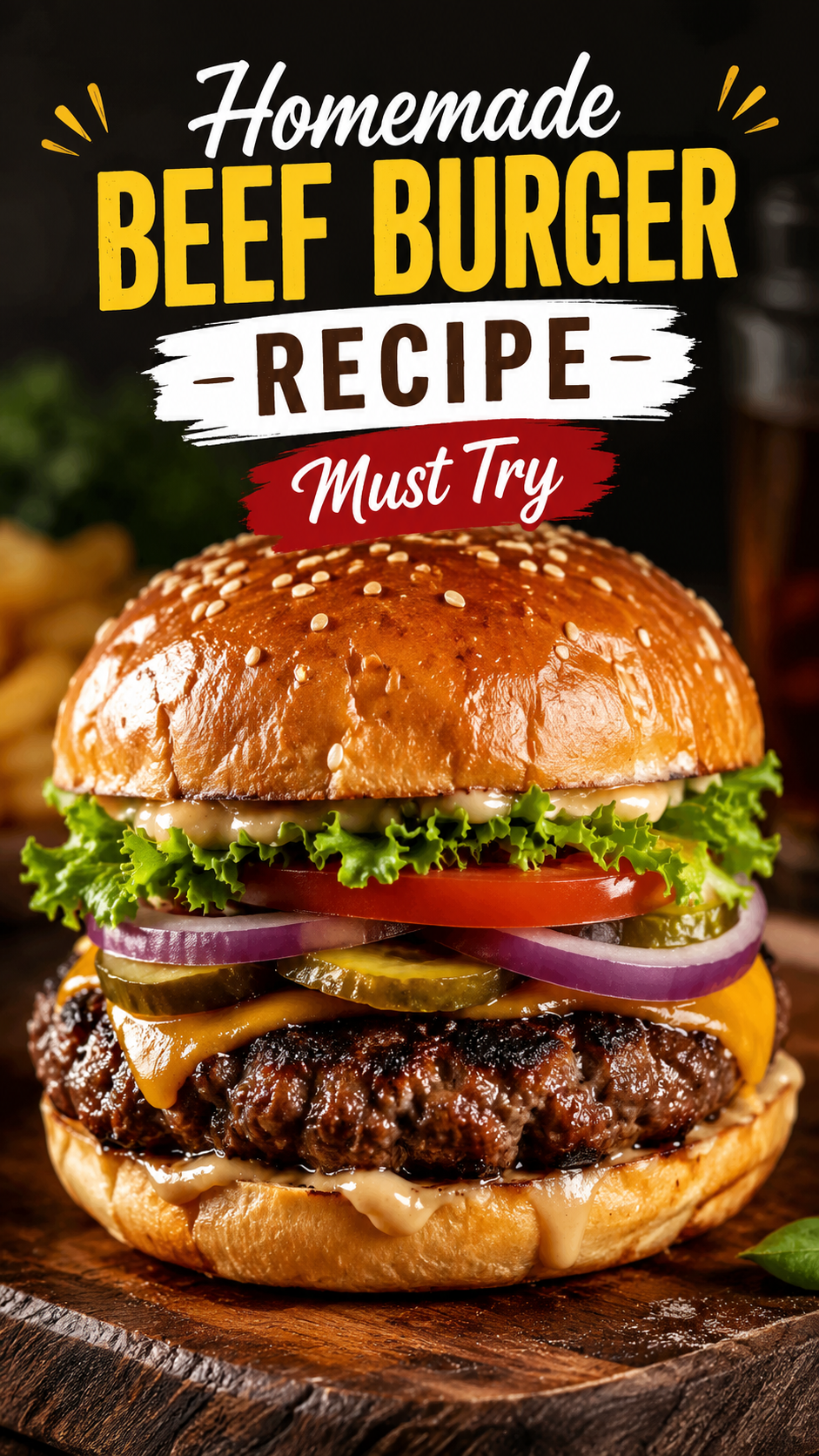
Silas has strong opinions about burgers. Almost suspiciously strong.
He grew up near a tiny drive-in that’s been flipping the same recipe since the 60s, and for years he swore nothing homemade could touch it.
I took that as a personal challenge.
It took a few burnt patties and one small kitchen fire (unrelated, mostly) to get here, but this is the recipe that finally made him stop talking about that drive-in. He’s asked for it four times in the last month alone.
If you’ve been buying pre-formed frozen patties or dry, flavorless burgers because you didn’t think homemade could be that much better, I need you to keep reading. It’s a genuinely different food.
Why This Recipe Works
Most homemade burgers go wrong in one of three places: the meat is too lean, the seasoning happens too late, or the patty gets handled way too much.
This recipe fixes all three.
We’re using 80/20 ground beef (more on why below), we’re seasoning generously and right before cooking, and we’re barely touching the meat once it’s mixed. That’s really it.
No breadcrumbs. No egg. No worrying that you’re making meatloaf by accident.
What You’ll Need
For the patties:
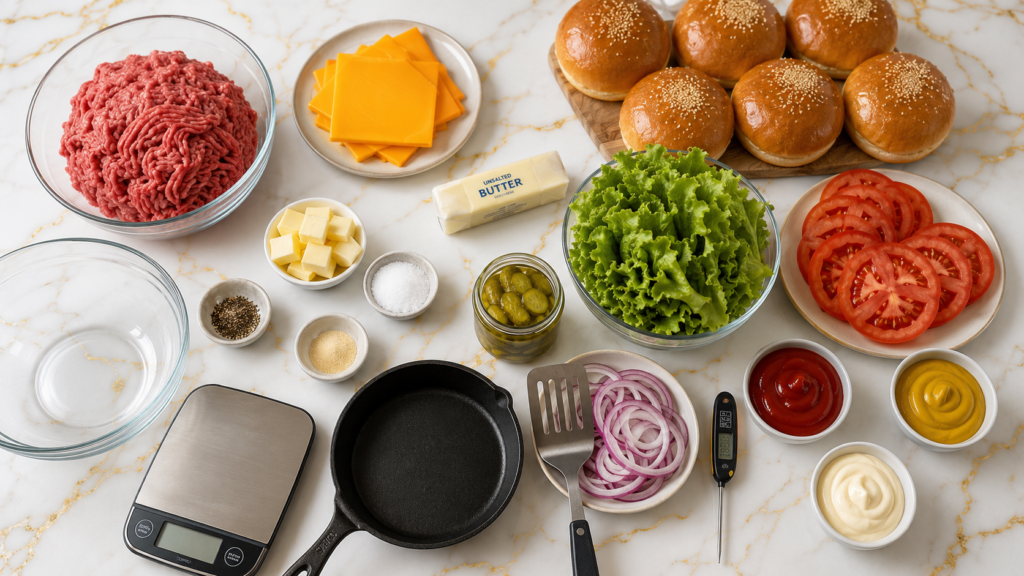
- 2 lbs ground beef (80/20 blend)
- 1½ tsp kosher salt
- 1 tsp black pepper
- 1 tsp garlic powder
- ½ tsp onion powder
- 4 tbsp cold butter, cut into small cubes
For assembly:
- 6 burger buns (brioche if you can find it)
- 6 slices cheddar or American cheese
- 1 tbsp butter, softened (for toasting buns)
- Lettuce, sliced tomato, sliced red onion
- Pickles
- Ketchup, mustard, mayo (or your go-to sauce)
Tools You’ll Need
- Large mixing bowl
- Cast iron skillet or grill
- Metal spatula (a wide one, not the thin flimsy kind)
- Meat thermometer
- Kitchen scale (optional, but helpful for even patties)
Pro Tips Before You Start
1. Don’t skip the 80/20 ratio. Anything leaner and you’ll end up with a hockey puck. The fat is what makes it juicy, not the seasoning.
2. Butter goes inside the patty, not just on top. This was the actual game changer for us. Small cold butter cubes mixed into the meat melt as it cooks and baste the burger from the inside out.
3. Make a thumbprint in the center of each patty. Burgers puff up in the middle as they cook. A shallow dent stops you from ending up with a meatball on a bun.
4. Season right before cooking, never before. Salt pulls moisture out of meat. If you season too early and let the patties sit, you’re basically brining them dry.
5. Resist the urge to press down with your spatula. I know it’s satisfying. It’s also how you push all the juice straight into the fire.
How to Make Homemade Beef Burgers
Step 1: Mix the Meat
In a large bowl, gently combine the ground beef with the cold butter cubes. Use your hands, but keep it light. Overworking the meat is the fastest way to a dense, tough burger.
Step 2: Form the Patties
Divide the meat into 6 equal portions (about ⅓ lb each). Shape into patties slightly wider than your buns, since they’ll shrink as they cook.
Press a shallow thumbprint into the center of each one.
Step 3: Season Generously
Right before they hit the heat, season both sides with salt, pepper, garlic powder, and onion powder. Don’t be shy here. A lot of it will cook off.
Step 4: Cook the Patties
Heat your skillet or grill to medium-high. Add the patties and let them cook undisturbed for 3 to 4 minutes per side.
Flip once. Just once.
In the last minute, add your cheese and let it melt with the lid on or a bowl flipped over the pan.
Step 5: Check the Temperature
Pull the patties at:
- 130°F for medium-rare
- 140°F for medium
- 160°F for well-done
They’ll climb another 5 degrees or so while resting, so pull them slightly early.
Step 6: Toast the Buns
While the patties rest, butter the cut sides of your buns and toast them in the same skillet, cut-side down, for about a minute. This one small step keeps your buns from turning into a soggy mess later.
Step 7: Assemble
Build in this order for the least sogging and most stability: bottom bun, sauce, lettuce, patty with cheese, tomato, onion, pickles, top bun.
Substitutions and Variations
| Original | Swap | Why It Works |
|---|---|---|
| Ground beef 80/20 | Ground turkey or chicken | Leaner, but add 1 tbsp olive oil to compensate for lost fat |
| Butter inside patty | Grated onion | Adds moisture and flavor without the dairy |
| Cheddar cheese | Pepper jack or blue cheese | For more of a kick |
| Brioche bun | Lettuce wrap | Low carb option, still holds up fine |
| Ground beef | Ground bison | Leaner and slightly sweeter, cook 1-2 minutes less |
Make Ahead Tips
You can form the patties up to a day ahead. Stack them with parchment paper between each one, cover tightly, and keep them in the fridge.
Don’t season them until you’re ready to cook, though. That part still needs to happen right before they hit the heat.
Patties also freeze well for up to 3 months. Freeze them flat on a tray first, then transfer to a bag once solid so they don’t stick together.
Estimated Nutrition
Per burger, includes bun and cheese, based on standard ingredient brands.
| Nutrient | Amount |
|---|---|
| Calories | ~520 |
| Protein | 28g |
| Fat | 34g |
| Carbs | 24g |
Note: These numbers are estimates. I’ll verify exact values using Cronometer with the specific brands used before this goes live, so treat this as a ballpark for now.
What to Pair With Burgers
- Classic crispy fries or sweet potato fries
- A simple vinegar based coleslaw to cut through the richness
- Grilled corn on the cob
- A cold, crisp lager or lemonade if you’re skipping the alcohol
Leftovers and Storage
Cooked patties keep in the fridge for up to 3 days in an airtight container.
Reheat them in a skillet over low heat with the lid on, or in the microwave in 20 second bursts. The microwave works better than you’d think if you don’t overdo it.
I don’t recommend freezing already-cooked patties. The texture takes a real hit once it thaws.
FAQ
Why is my burger falling apart on the grill? It’s probably overworked meat or a patty that’s too thin. Handle it gently and keep some thickness so it holds together.
Can I make these without a grill? Yes, a cast iron skillet actually gives you a better crust than most home grills.
What’s the best cheese for a burger? Cheddar and American melt the most evenly. American specifically melts fastest, which matters if you’re trying to time it with the patty.
Should I use fresh or frozen ground beef? Fresh, if you can. Frozen and thawed beef releases more moisture as it cooks, which can affect how well it sears.
Why add butter instead of just more fat content in the beef? Cold butter creates little pockets that melt and baste the meat from the inside as it cooks. Straight fat content alone doesn’t do quite the same thing.
Wrapping Up
Silas still mentions that drive-in sometimes. Old habits.
But he hasn’t asked to go back since I started making these, and honestly, that’s the only review that matters to me.
If you make these, I want to hear about it. Drop a comment and let me know how they turned out, what you swapped, or if your household has its own version of a burger loyalty test like ours.
And if you run into any trouble along the way, ask away in the comments. I read every single one.