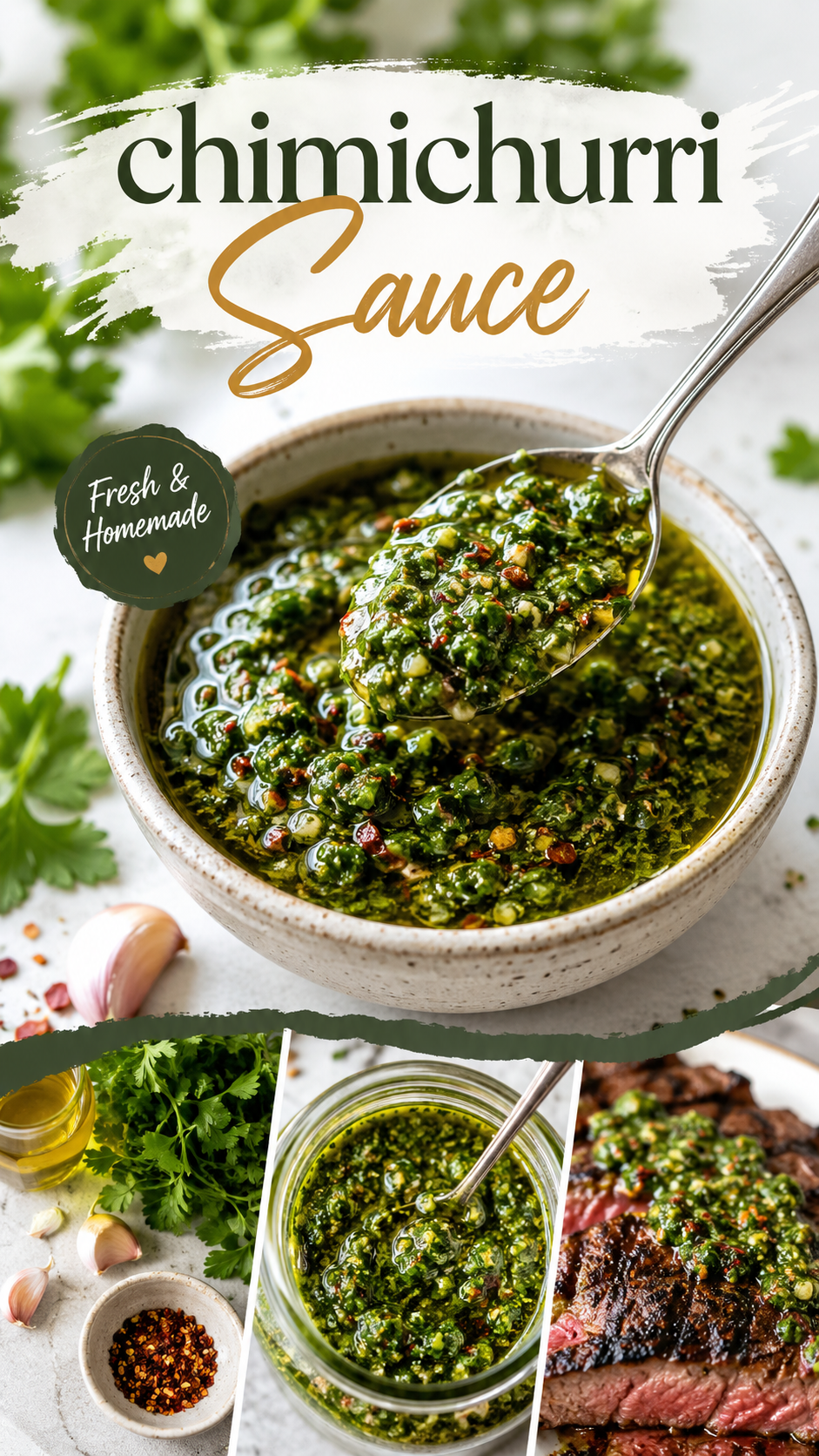
I didn’t know a sauce could change how I eat steak forever. Then I made this one.
Chimichurri is one of those things that sounds fancy but takes about 10 minutes and a cutting board. No cooking. No fancy equipment. Just a handful of fresh herbs and garlic doing all the heavy lifting.
I first had it at a tiny grill spot with red plastic chairs and a guy flipping meat on an open flame. The steak was good. The chimichurri is what I still think about.
It’s bright, garlicky, a little sharp from the vinegar, and it makes almost anything taste like you tried harder than you actually did. 🧄
If you’ve never made it, today’s the day.
What You’ll Need
Here’s everything going into this sauce. Simple ingredients, big payoff.
| Ingredient | Amount |
|---|---|
| Fresh parsley, finely chopped | 1 cup |
| Garlic cloves, minced | 4 |
| Fresh oregano leaves (or 1 tbsp dried) | 2 tbsp |
| Extra virgin olive oil | 1/3 cup |
| Red wine vinegar | 3 tbsp |
| Red pepper flakes | 1/2 tsp |
| Salt | 1 tsp |
| Black pepper | 1/2 tsp |
| Small shallot, finely diced (optional) | 1 |
That’s it. No exotic grocery run required.
Tools You’ll Need
- A sharp knife
- Cutting board
- Mixing bowl
- Measuring spoons and cups
- A spoon or small whisk for stirring
How to Make Chimichurri Sauce
- Finely chop the parsley. The finer you chop it, the better the sauce holds together. Skip the food processor here, it turns everything into a weird green paste.
- Mince the garlic and add it to the bowl with the parsley.
- Add the oregano, red pepper flakes, salt, and pepper. Give everything a quick stir so it’s evenly mixed.
- Pour in the red wine vinegar first, then the olive oil. Stir well.
- Add the shallot if using. It adds a little sweetness and bite.
- Let it sit for at least 20 minutes before serving. This isn’t optional. The flavors need time to actually talk to each other.
- Taste and adjust. More salt if it’s flat, more vinegar if it needs brightness, more oil if it’s too sharp.
That’s genuinely the whole process. No stove, no timer, no stress.
Pro Tips
A few things I learned the slightly annoying way, so you don’t have to:
- Chop by hand, not in a blender. Blending turns the herbs into mush and you lose that fresh, slightly chunky texture that makes chimichurri feel alive.
- Use fresh oregano if you can find it. Dried works in a pinch, but fresh oregano gives the sauce a sharper, more herby punch.
- Don’t skip the resting time. I rushed it once. It tasted like garlicky salad dressing instead of chimichurri. Big difference.
- Red wine vinegar matters more than people think. White vinegar is too harsh, apple cider vinegar is too sweet. Red wine vinegar hits the right note.
- Make it a few hours ahead if you’re hosting. The flavor gets better, not worse, as it sits.
Substitutions and Variations
Chimichurri is forgiving. Here’s how to bend it to what you have on hand:
- No parsley? Cilantro works, though it changes the flavor profile quite a bit (it becomes more Mexican-leaning than Argentinian).
- No red wine vinegar? White wine vinegar is a decent substitute.
- Want it spicier? Add a finely diced fresh chili along with the red pepper flakes.
- Want it smoother? Pulse it briefly in a food processor, just don’t overdo it.
- Vegan or dairy-free? It already is. This sauce needs zero adjusting.
Make Ahead Tips
Chimichurri is honestly one of those rare sauces that’s better the next day.
- Make it up to 3 days ahead and store in the fridge in a sealed jar.
- Let it come to room temperature before serving so the olive oil isn’t solid and cloudy.
- Give it a quick stir before using since the oil and vinegar tend to separate a bit.
What to Pair It With
This isn’t just a steak sauce, even though that’s where it’s most famous.
- Grilled chicken thighs
- Roasted potatoes
- Crusty bread as a dip
- Grilled vegetables like zucchini or mushrooms
- Scrambled eggs (sounds weird, tastes incredible)
Storage and Leftovers
- Store in an airtight container or jar in the fridge for up to 5 days.
- Don’t freeze it. The fresh herbs turn slimy once thawed and lose their texture.
- If the oil solidifies in the fridge, just let the jar sit out for 10-15 minutes before using.
Nutritional Breakdown (Per 2 Tablespoon Serving)
| Nutrient | Amount |
|---|---|
| Calories | ~90 |
| Fat | 10g |
| Carbs | 1g |
| Protein | 0.3g |
| Sodium | ~180mg |
Numbers will shift slightly depending on how much oil you use, but this gives you a solid ballpark.
FAQ
Is chimichurri spicy? Not really. It has a little kick from the red pepper flakes, but it’s more herby and tangy than hot.
Where is chimichurri actually from? It’s most closely associated with Argentina and Uruguay, usually served alongside grilled meats.
Can I use dried herbs instead of fresh? You can, but the flavor won’t be as bright. If you’re using dried, cut the amount roughly in half since dried herbs are more concentrated.
Does chimichurri have to be made with parsley? Traditionally, yes. Parsley is the base. Cilantro is a popular twist, but it’s technically a different style.
Can I put this on things besides meat? Absolutely. Roasted vegetables, eggs, sandwiches, even mixed into pasta.
Wrapping Up
This is one of those recipes that feels almost too simple to be this good.
Ten minutes, a handful of ingredients, and suddenly your grilled chicken or steak tastes like something from a restaurant with cloth napkins.
Make a batch this week and see for yourself.
If you try it, drop a comment below and let me know what you paired it with (or if you have your own twist on the recipe). I read every single one. 🍴