Silas came home last October holding a butternut squash the size of a small dog and announced he was “taking over dinner.”
I let him. Big mistake, but also kind of not.
He roasted the whole thing whole (skin on, seeds in, the works), and then spent forty five minutes trying to peel it while it was still hot. There was steam. There was a small amount of yelling. There was one very dramatic moment where he dropped half of it on the floor and just picked it up anyway (five second rule, apparently, applies to squash).
The soup that came out of that chaos was actually incredible. But I’ve spent the last year fixing his method, because nobody needs to burn their fingers off to eat well in October.
This is the version I make now. It’s smooth, a little sweet, a little savory, and comes together with almost no drama at all. Silas still asks for it every single week once the weather turns.
What You’ll Need
| Ingredient | Amount |
|---|---|
| Butternut squash, peeled and cubed | 1 large (about 3 lbs) |
| Yellow onion, chopped | 1 medium |
| Garlic cloves, minced | 3 |
| Carrots, chopped | 2 medium |
| Vegetable broth (or chicken broth) | 4 cups |
| Coconut milk (full fat) | 1 cup |
| Olive oil | 2 tbsp |
| Fresh ginger, grated | 1 tsp |
| Ground cinnamon | 1/4 tsp |
| Ground nutmeg | 1/4 tsp |
| Salt | 1 tsp, plus more to taste |
| Black pepper | 1/2 tsp |
| Maple syrup | 1 tbsp (optional) |
| Fresh sage or thyme, for garnish | a few leaves |
| Pepitas (pumpkin seeds), for garnish | 2 tbsp |
Tools You’ll Need
- Large pot or Dutch oven
- Cutting board and sharp knife (a good one matters here, squash is tough)
- Vegetable peeler
- Immersion blender (or a regular blender, working in batches)
- Wooden spoon
- Measuring cups and spoons
Pro Tips
Buy it pre-cubed if your store sells it. I peel my own squash about half the time. The other half, I just buy the pre-cut bags. Nobody’s handing out awards for peeling your own squash, and this soup tastes exactly the same either way.
Roast the squash first for deeper flavor. Boiling works and it’s faster, but roasting the cubes at 400°F for 25 minutes before adding them to the pot gives you a caramelized, almost nutty flavor. It’s worth the extra half hour if you have it.
Don’t skip the ginger. It’s a small amount, but it cuts through the sweetness of the squash and coconut milk so the soup doesn’t taste like dessert. 🍂
An immersion blender saves your sanity. Transferring hot soup to a blender in batches is messy and honestly a little dangerous. If you make soup even semi-regularly, an immersion blender is worth owning.
Taste before you add the maple syrup. Some squash is naturally sweeter than others. Add it at the end, a little at a time, so you don’t end up with soup that tastes like a candle.
Why This Recipe Actually Works
Butternut squash is naturally starchy and a little sweet, which is exactly why it blends into something this creamy without needing much cream at all. The starch acts almost like a thickener on its own.
That’s also why the ginger and black pepper matter so much here. Squash on its own can taste one-note, almost like baby food if you’re not careful. The ginger adds a little heat and brightness, and the pepper keeps the sweetness in check.
Roasting instead of boiling pushes this even further. High, dry heat caramelizes the natural sugars in the squash (this is the same reaction that browns onions or toasts bread), so you get a deeper, slightly nutty flavor instead of just “sweet.”
It’s a small science lesson, but it’s the difference between a soup that tastes flat and one that tastes like you actually know what you’re doing.
Cooking Time Efficiency Tips
If you’re short on time on a weeknight, a few small swaps speed this up a lot without losing much flavor.
- Skip roasting and boil the squash directly in the broth. It cuts about 25 minutes off your total time.
- Buy pre-cubed squash. This alone saves 10-15 minutes of peeling and chopping.
- Chop the onion, carrots, and garlic the night before. Store them in the fridge in an airtight container so all you have to do is cook.
- Double the batch. It takes almost the same amount of active time to make a double batch as a single one, and you’ll have dinner ready for later in the week.
How to Make Butternut Squash Soup
- Heat the olive oil in a large pot over medium heat.
- Add the onion and carrots. Cook for 5-6 minutes, stirring occasionally, until the onion turns soft and a little golden.
- Add the garlic and ginger. Stir for about 30 seconds, just until it smells amazing (don’t let the garlic burn).
- Add the squash cubes, cinnamon, nutmeg, salt, and pepper. Stir everything together so the squash gets coated in the spices.
- Pour in the broth. Bring it up to a boil, then reduce the heat and let it simmer for 20-25 minutes, or until the squash is fork tender.
- Blend the soup. Use an immersion blender right in the pot until it’s completely smooth. Or transfer it in batches to a regular blender, then return it to the pot.
- Stir in the coconut milk. Let it warm through for another 2-3 minutes.
- Taste and adjust. Add the maple syrup if you want a touch more sweetness, plus more salt if needed.
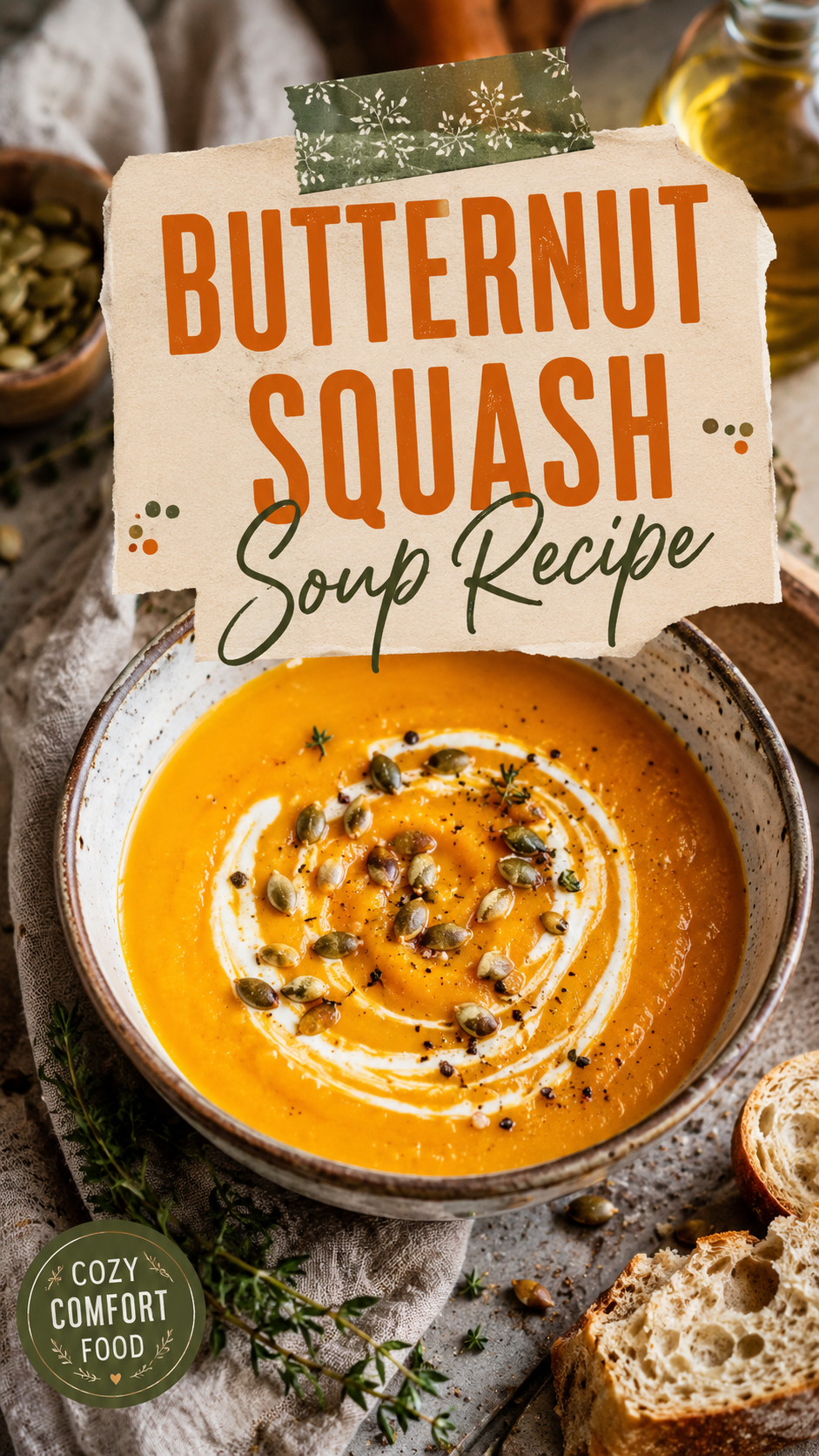
- Serve hot, topped with pepitas, a few fresh herb leaves, and a drizzle of coconut milk if you’re feeling fancy.
Substitutions and Variations
| Original | Substitution | Notes |
|---|---|---|
| Coconut milk | Heavy cream | Less coconut flavor, richer texture |
| Coconut milk | Cashew cream | Good dairy free option, slightly nuttier |
| Vegetable broth | Chicken broth | Adds more savory depth |
| Butternut squash | Pumpkin or acorn squash | Both work well, similar cook time |
| Maple syrup | Honey | Use if you’re not keeping it vegan |
| Ginger | Curry powder (1/2 tsp) | Gives the soup a warmer, spiced flavor |
Want it spicier? Add a pinch of cayenne or a diced jalapeño with the onions.
Want it heartier? Stir in a cup of cooked white beans or lentils before blending, or leave the soup partially chunky instead of fully smooth.
Make Ahead Tips
This soup is honestly better the next day, once the flavors have had time to settle in.
- Make the full recipe up to 3 days ahead and store it in the fridge.
- Freeze it for up to 3 months in a freezer safe container. Leave an inch of space at the top since it expands.
- Reheat gently on the stove over low heat, stirring occasionally. Add a splash of broth if it’s thickened up too much.
Estimated Nutritional Breakdown
Per serving (based on 6 servings). These numbers are estimates, not lab tested, so treat them as a rough guide rather than exact figures.
| Nutrient | Amount |
|---|---|
| Calories | ~220 |
| Protein | 3g |
| Carbohydrates | 24g |
| Fat | 14g |
| Fiber | 5g |
| Sugar | 7g |
Meal Pairings
This soup plays well as a starter or a full meal.
- Crusty bread for dipping, obviously.
- A simple green salad with a sharp vinaigrette to balance the sweetness.
- Grilled cheese, because soup and grilled cheese is a rule of the universe.
- Roasted chicken thighs on the side if you want more protein for dinner.
Leftovers and Storage
- Fridge: Store in an airtight container for up to 4 days.
- Freezer: Freeze in individual portions so you can grab just what you need. Good for up to 3 months.
- Reheating: Warm it slowly on the stovetop over low-medium heat. Microwaving works too, just stir halfway through so it heats evenly.
The soup thickens as it sits, so a splash of broth or water when reheating brings it right back to the right consistency.
FAQ
Can I make this soup without coconut milk?
Yes. Heavy cream or cashew cream both work well as substitutes, or you can leave it out entirely for a lighter, broth based soup.
Do I have to roast the squash first?
No, it’s optional. Boiling the squash directly in the broth works fine and saves time. Roasting just adds a deeper, slightly caramelized flavor.
Why does my soup taste bland?
It usually needs more salt than you’d think. Squash soup can taste flat until you salt it properly, so taste and adjust at the very end after blending.
Can I make this in a slow cooker?
Yes. Add everything except the coconut milk to the slow cooker and cook on low for 6-7 hours or high for 3-4 hours. Blend it, then stir in the coconut milk at the end.
Is this soup vegan?
Yes, as long as you use vegetable broth and maple syrup instead of honey.
Can I use frozen squash?
Yes, and it actually saves you the peeling step entirely. No need to thaw first, just add a few extra minutes to the simmer time.
Why is my soup too thin or too thick?
Too thin usually means you added too much broth, so let it simmer uncovered for a few extra minutes to reduce. Too thick just needs a splash of broth or water stirred in until it loosens back up.
Can I add protein to make this a full meal?
Yes. Shredded rotisserie chicken stirred in at the end works well, or top individual bowls with crispy bacon or chickpeas for some crunch and extra protein.
Wrapping Up
This soup has become one of those recipes I make without thinking twice once October hits. It’s warm, it’s simple, and it makes the whole kitchen smell like fall.
Give it a try this week and let me know how it turns out in the comments. I’d love to hear if you added your own twist, or if Silas level squash chaos happened in your kitchen too.


