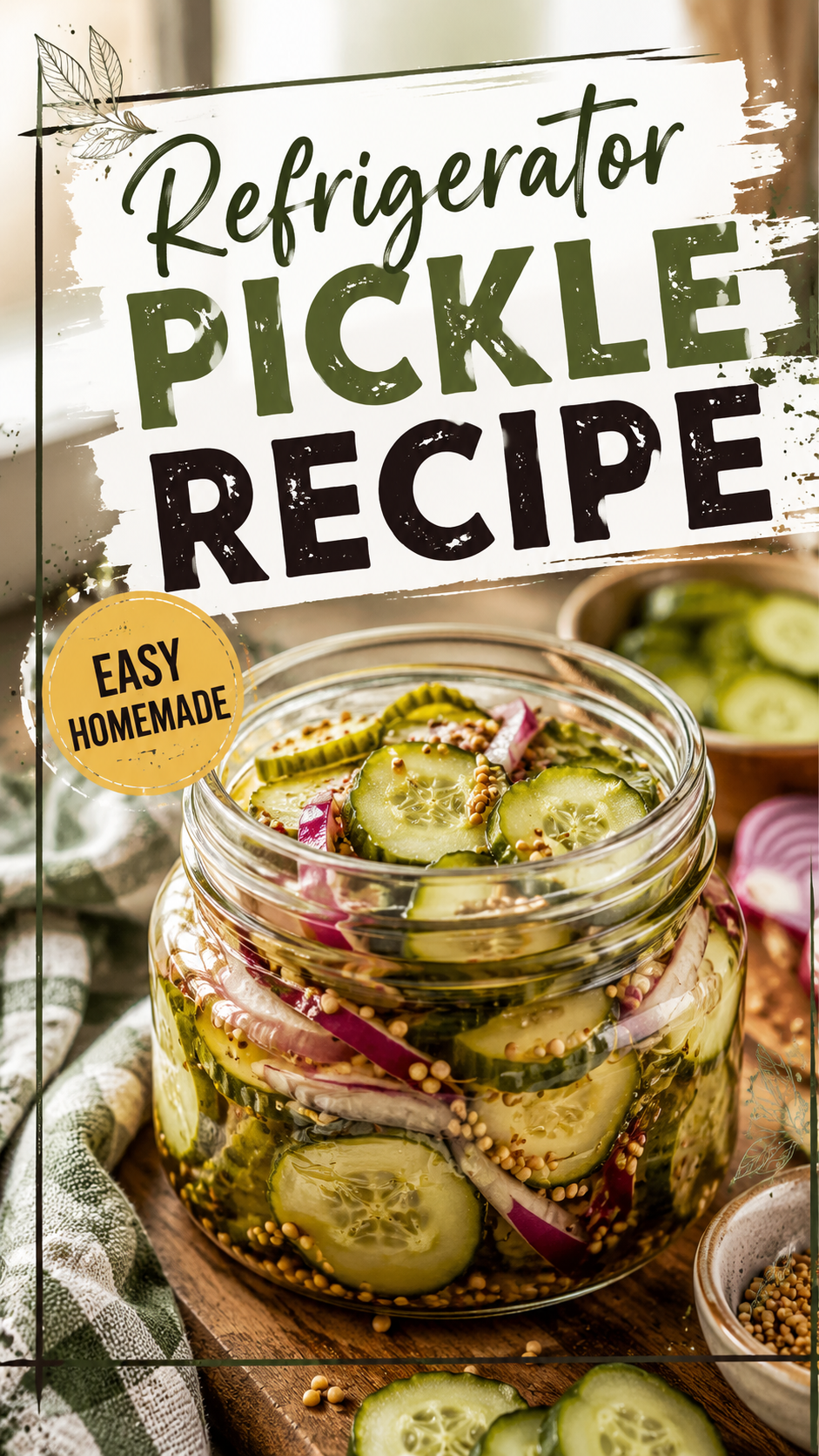
Silas opened the fridge last week, grabbed a pickle spear straight out of the jar, and ate it standing right there with the door open like it was a snack food, not a condiment.
I told him to close the fridge. He told me to make more pickles.
So here we are.
I used to think pickling was one of those intimidating kitchen projects, up there with making your own bread or figuring out what a roux actually is. Boiling jars, sealing lids, waiting weeks to taste the result. Way too much commitment for someone who just wanted a crunchy pickle with her sandwich.
Refrigerator pickles are the shortcut I wish I’d known about years ago. No canning equipment. No sealing. No waiting a month to find out if you did it right.
You mix a brine, pour it over cucumbers, and stick the jar in the fridge. That’s genuinely it. 🥒
By tomorrow you’ll have pickles. By day three, they’re incredible. And they’ll keep for weeks, which is good news for Silas and his fridge-door snacking habit.
What You’ll Need
| Ingredient | Amount |
|---|---|
| Pickling cucumbers (or Persian cucumbers) | 1.5 lbs |
| White vinegar | 1 cup |
| Water | 1 cup |
| Granulated sugar | 2 tbsp |
| Kosher salt | 1 tbsp |
| Garlic cloves, smashed | 3 |
| Fresh dill (or 1 tbsp dried dill) | 3-4 sprigs |
| Black peppercorns | 1 tsp |
| Mustard seeds | 1 tsp |
| Red pepper flakes (optional) | 1/2 tsp |
A quick note on cucumbers. Regular slicing cucumbers work in a pinch, but they get soft and watery fast. Pickling cucumbers (sometimes labeled Kirby cucumbers) stay crunchy because they have thinner skin and less water inside.
Tools You’ll Need
- A large mason jar (32 oz) or two smaller jars
- A small saucepan
- A cutting board and sharp knife
- Measuring cups and spoons
That’s the whole list. No fancy canning rack, no jar tongs, no pressure canner taking up cabinet space.
Pro Tips
Cut off the blossom end. There’s an enzyme in the blossom end of the cucumber that makes pickles go mushy over time. Slice a thin piece off that end before you do anything else, and your pickles stay crunchy way longer.
Don’t skip the ice bath. If you have a few extra minutes, soak your cut cucumbers in ice water for 30 minutes before pickling. It firms them up and gives you that satisfying snap when you bite in.
Use the hottest brine you can pour. A hot brine helps the flavors soak into the cucumbers faster, which means you get a tastier pickle sooner. Just don’t pour boiling brine straight onto ice-cold cucumbers, or you’ll shock them into going limp.
Pack the jar tight. Cucumbers float, and floating cucumbers above the brine line don’t pickle evenly. Pack them in snug so they stay submerged.
Taste on day three, not day one. Fresh pickles are fine on day one, but the flavor keeps building through day three or four. If you taste them too early, you’ll think they need more salt when really they just need more time.
How to Make Refrigerator Pickles
- Wash and trim the cucumbers. Slice off the blossom end of each cucumber, then cut them into spears, rounds, or leave them whole if they’re small enough to fit your jar.
- Make the brine. In a small saucepan, combine the vinegar, water, sugar, and salt. Heat over medium until the sugar and salt fully dissolve, about 3 minutes. You don’t need it to boil, just hot enough to dissolve everything.
- Load the jar. Add the garlic, dill, peppercorns, mustard seeds, and red pepper flakes (if using) to the bottom of your jar.
- Pack in the cucumbers. Stand them upright or stack them however they fit best, packing them in tightly.
- Pour the brine over the top. Make sure the cucumbers are fully submerged. Leave about half an inch of space at the top of the jar.
- Let it cool. Leave the jar uncovered on the counter until it reaches room temperature, about 30 minutes.
- Seal and refrigerate. Put the lid on and pop it in the fridge. Wait at least 24 hours before eating, though 3 days gets you the best flavor.
Substitutions and Variations
| Swap This | For This | Why |
|---|---|---|
| Cucumbers | Carrots, green beans, or radishes | Same brine, totally different veggie |
| White vinegar | Apple cider vinegar | Slightly sweeter, less sharp |
| Sugar | Honey or maple syrup | Natural sweetener option |
| Dill | Thai basil + ginger | Turns this into an Asian-inspired pickle |
| Red pepper flakes | 1 sliced jalapeño | More heat, more visual flair |
Want a bread and butter style pickle instead? Bump the sugar up to 1/3 cup and add a teaspoon of ground turmeric for that classic yellow color.
Make Ahead Tips
Refrigerator pickles are basically the definition of a make ahead recipe.
Make a batch on Sunday and you’ve got a crunchy, tangy snack ready to go all week. They actually taste better after sitting for a few days, so this isn’t a recipe you need to rush.
If you’re prepping for a party or a barbecue, make them at least three days in advance for the best flavor.
Estimated Nutrition (Per Serving)
This is roughly one serving, about 4-5 pickle spears.
| Nutrient | Amount |
|---|---|
| Calories | 20 |
| Carbs | 4g |
| Sugar | 3g |
| Sodium | 320mg |
| Fiber | 1g |
| Protein | 0.5g |
Disclaimer: These numbers are estimates based on standard ingredient values, not a lab-tested analysis. Actual nutrition will vary depending on your specific ingredients and portion sizes.
What to Serve These With
Refrigerator pickles go with pretty much everything, but here are a few of my favorite pairings:
- Piled on a burger or sandwich for crunch
- Alongside a cheese board with crackers and cured meats
- Chopped up in tuna or chicken salad
- Straight out of the jar (Silas’s preferred method)
Storage and Leftovers
Keep your pickles in the fridge in their sealed jar, and they’ll stay good for 4 to 6 weeks.
Always use a clean utensil or clean fingers when grabbing pickles out of the jar. Double-dipping or using a dirty fork introduces bacteria that can shorten their shelf life fast.
Don’t try to freeze these. The texture goes mushy and watery once thawed, and you’ll lose that satisfying crunch that makes the whole recipe worth it.
FAQ
Do refrigerator pickles need to be canned?
Nope, that’s the whole point. There’s no boiling water bath or sealing process involved. The vinegar and refrigeration do all the preserving work.
Why are my pickles soft instead of crunchy?
This usually comes down to one of three things: using regular cucumbers instead of pickling cucumbers, skipping the blossom end trim, or not chilling them long enough before eating.
Can I reuse the brine for a second batch?
You can, but the flavor will be weaker the second time around since a lot of the salt and vinegar already got absorbed into the first batch of cucumbers. I’d only reuse it once, and add fresh cucumbers right away.
How long before I can eat them?
Technically 24 hours, but 3 days is the sweet spot for flavor. I know that’s a hard wait when they’re sitting right there in the fridge.
Are these the same as fermented pickles?
No, and that’s actually a common mix-up. Fermented pickles use a salt brine and time to develop tangy flavor through natural fermentation. Refrigerator pickles use vinegar, which pickles them almost instantly without any fermentation involved.
Wrapping Up
Refrigerator pickles might be the easiest thing you make in your kitchen this month, and that’s exactly why they’re worth trying.
No special equipment, no all-day commitment, just a jar, a brine, and a little patience while they hang out in your fridge.
Make a batch this weekend and let me know how they turned out in the comments. Did you try one of the flavor variations? Did Silas-style fridge-door snacking happen in your house too?
I’d love to hear about it.


