I grew a giant pot of basil on our back porch this summer and genuinely had no plan for it.
It just kept growing. And growing. Until one afternoon Silas walked in, looked at the counter covered in basil leaves, and asked if we were opening a pesto shop.
So I made dressing instead. A big jar of it, whizzed up in about five minutes flat.
He put it on everything for a week straight. Salads, roasted potatoes, even a fried egg one morning (don’t knock it till you try it 🍳).
That’s kind of the whole story with this basil dressing. It’s ridiculously easy, it tastes so much brighter than anything from a bottle, and once you make it, you’ll start finding reasons to put it on things that probably don’t need dressing.
This one’s a keeper. Let’s get into it.
What You’ll Need
| Ingredient | Amount |
|---|---|
| Fresh basil leaves, packed | 2 cups |
| Extra virgin olive oil | ¾ cup |
| Red wine vinegar | 3 tbsp |
| Fresh lemon juice | 1 tbsp |
| Garlic cloves | 2, peeled |
| Parmesan cheese, grated | ¼ cup |
| Honey | 1 tsp |
| Dijon mustard | 1 tsp |
| Salt | ½ tsp, or to taste |
| Black pepper | ¼ tsp |
| Water | 1–2 tbsp, to thin if needed |
That’s it. Eleven ingredients, most of which you probably already have, minus the fresh basil.
Tools You’ll Need
- Blender or food processor
- Measuring cups and spoons
- Small jar or airtight container for storing
- Rubber spatula (for scraping down the sides)
Pro Tips
Don’t skip drying your basil leaves. Wet basil waters down the dressing and dulls the color. Pat it dry with a towel after washing, or use a salad spinner.
Blanch the basil if you want that vivid green color to last. A quick 10-second dip in boiling water, then straight into ice water, stops the leaves from oxidizing and turning that sad olive-brown color after a day in the fridge. Totally optional, but it makes a difference if you’re making a big batch ahead of time.
Taste as you go. Basil varies a lot depending on how fresh it is and what variety you’re using. Start with less garlic than you think you need. You can always add more, but you can’t take it out.
Use good olive oil here. This dressing has so few ingredients that a cheap, flavorless oil really shows. It doesn’t need to be fancy, just something you’d actually enjoy the taste of on its own.
Thin it out gradually. Add water one tablespoon at a time until you hit the consistency you want. It thickens up a bit once it’s chilled, so don’t go overboard trying to get it thin in the blender.
How to Make Homemade Basil Dressing
- Add the basil, garlic, and parmesan to your blender. Pulse a few times to break everything down before adding the liquids.
- Pour in the olive oil, vinegar, and lemon juice. These help everything blend smoothly and keep the basil from just clumping around the blades.
- Add the honey, mustard, salt, and pepper. These are the flavor balancers, so don’t skip them even if the recipe feels simple.
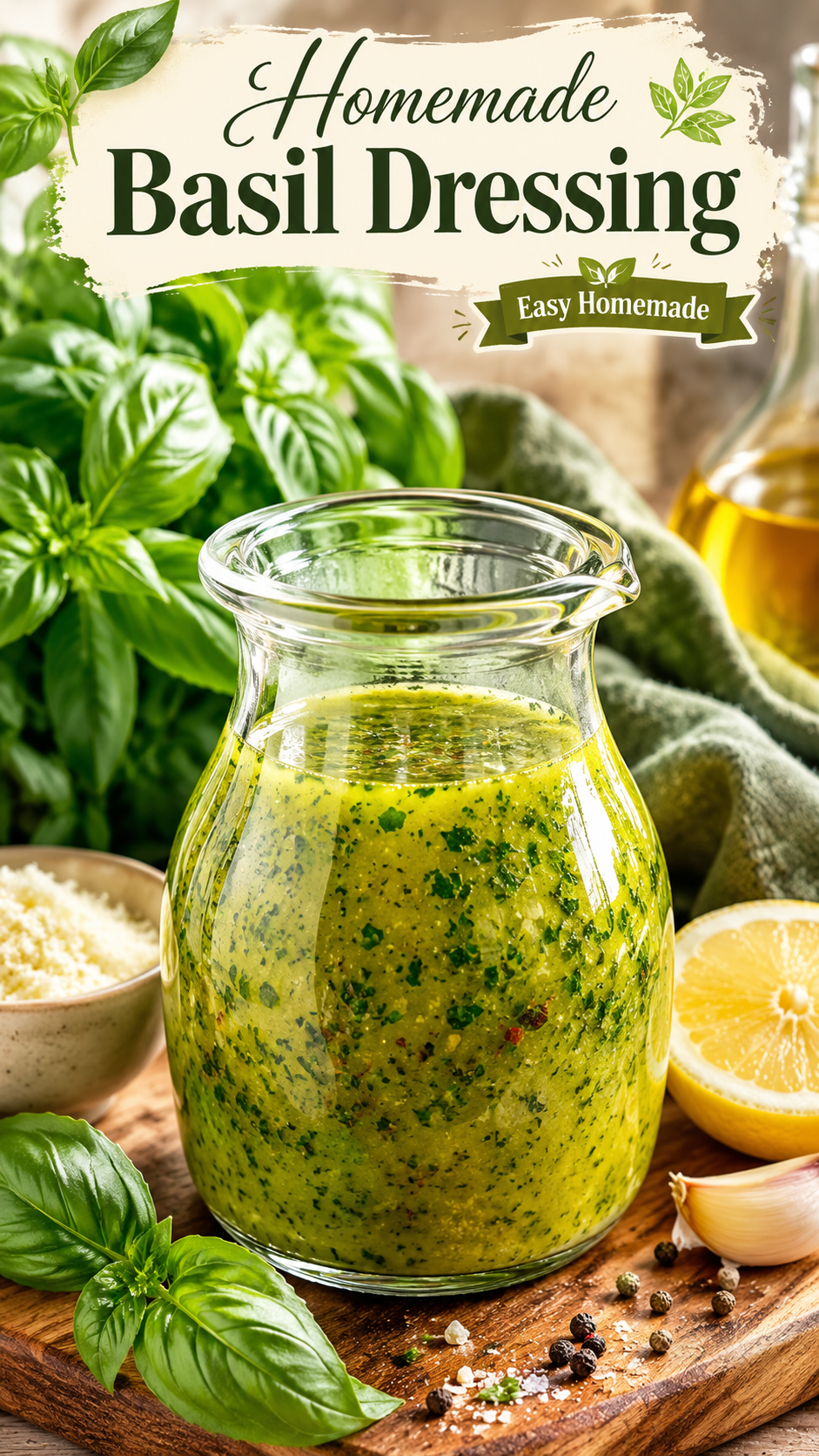
- Blend on high for 30 to 45 seconds, stopping to scrape down the sides once if needed, until the dressing is smooth and bright green.
- Check the consistency. If it’s thicker than you’d like, add water one tablespoon at a time and blend again briefly.
- Taste and adjust. Add more salt, a splash more lemon, or an extra pinch of pepper depending on your basil and your mood that day.
- Pour into a jar and chill for at least 20 minutes before serving. It tastes even better once the flavors have had a minute to settle.
Substitutions and Variations
| Original | Swap | Notes |
|---|---|---|
| Parmesan | Nutritional yeast | Good dairy-free option, adds a similar savory depth |
| Red wine vinegar | Apple cider vinegar | Slightly sweeter, still works great |
| Honey | Maple syrup | Keeps it vegan |
| Dijon mustard | Yellow mustard | Milder flavor, still adds emulsifying power |
| Olive oil | Avocado oil | Neutral flavor if you want the basil to stand out even more |
| Fresh basil | Half basil, half spinach | Great if your basil supply is running low |
You can also spice things up by adding a small pinch of red pepper flakes, or make it creamier by blending in two tablespoons of Greek yogurt or mayo.
Make Ahead Tips
This dressing genuinely gets better after sitting in the fridge for a couple hours, so it’s a great one to prep the day before.
Store it in an airtight jar or container. Give it a good shake or stir before using since the oil naturally separates as it sits.
I wouldn’t freeze this one. The texture gets weird and grainy once it thaws, and basil doesn’t hold up well to freezing in general.
Estimated Nutrition (Per 2 Tablespoon Serving)
These numbers are estimates and will vary depending on your exact ingredients and brands.
| Nutrient | Amount |
|---|---|
| Calories | 110 |
| Fat | 11g |
| Carbohydrates | 2g |
| Protein | 1g |
| Sodium | 140mg |
| Sugar | 1g |
Diet-Friendly Swaps
- Vegan: Skip the parmesan or use nutritional yeast, and swap the honey for maple syrup.
- Dairy-free: Same swap as above, just leave out the cheese entirely.
- Low-carb / Keto: Skip the honey or use a keto-friendly sweetener instead.
- Nut-free: Naturally nut-free as written, just double check your mustard brand for any cross-contamination if that’s a concern for you.
Meal Pairing Ideas
This dressing works well on more than just salads, honestly.
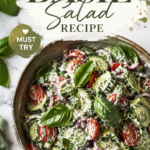
- Drizzled over a caprese salad with fresh mozzarella and tomatoes
- Tossed with roasted baby potatoes right out of the oven
- Spooned over grilled chicken or salmon
- Mixed into pasta salad for a fresh, herby twist
- Used as a dip for crusty bread alongside soup
Leftovers and Storage
Store any leftover dressing in an airtight jar in the fridge for up to 5 days.
The color may darken slightly after a day or two, that’s totally normal and doesn’t mean it’s gone bad. Give it a good stir before each use since separation happens naturally with oil-based dressings.
If it smells off or tastes noticeably sour beyond the vinegar, it’s time to toss it.
FAQ
Can I use dried basil instead of fresh? Not really recommended for this one. Dried basil doesn’t have the same bright flavor or vibrant color, and the texture of the dressing depends on blending fresh leaves.
Why did my dressing turn brown? This happens from oxidation, especially if the basil wasn’t blanched first or if it sat in the fridge for several days. It’s still safe to eat, just less pretty.
Can I make this without a blender? You can finely chop the basil and garlic by hand, then whisk everything together, but the texture will be chunkier and less smooth.
Is this dressing gluten-free? Yes, as written, all the ingredients are naturally gluten-free. Just double check your mustard brand if you’re being extra careful.
Can I double the recipe? Absolutely. This scales up really easily, just make sure your blender has enough room to actually blend everything well.
Wrapping Up
This basil dressing turned what could’ve been a pile of wasted porch basil into something Silas now asks for by name.
It’s fast, it’s fresh, and it makes even a boring bag of lettuce feel like something worth eating.
Give it a try this week and let me know in the comments how it turned out, or what you ended up putting it on. I have a feeling it won’t just stay on salads for long.