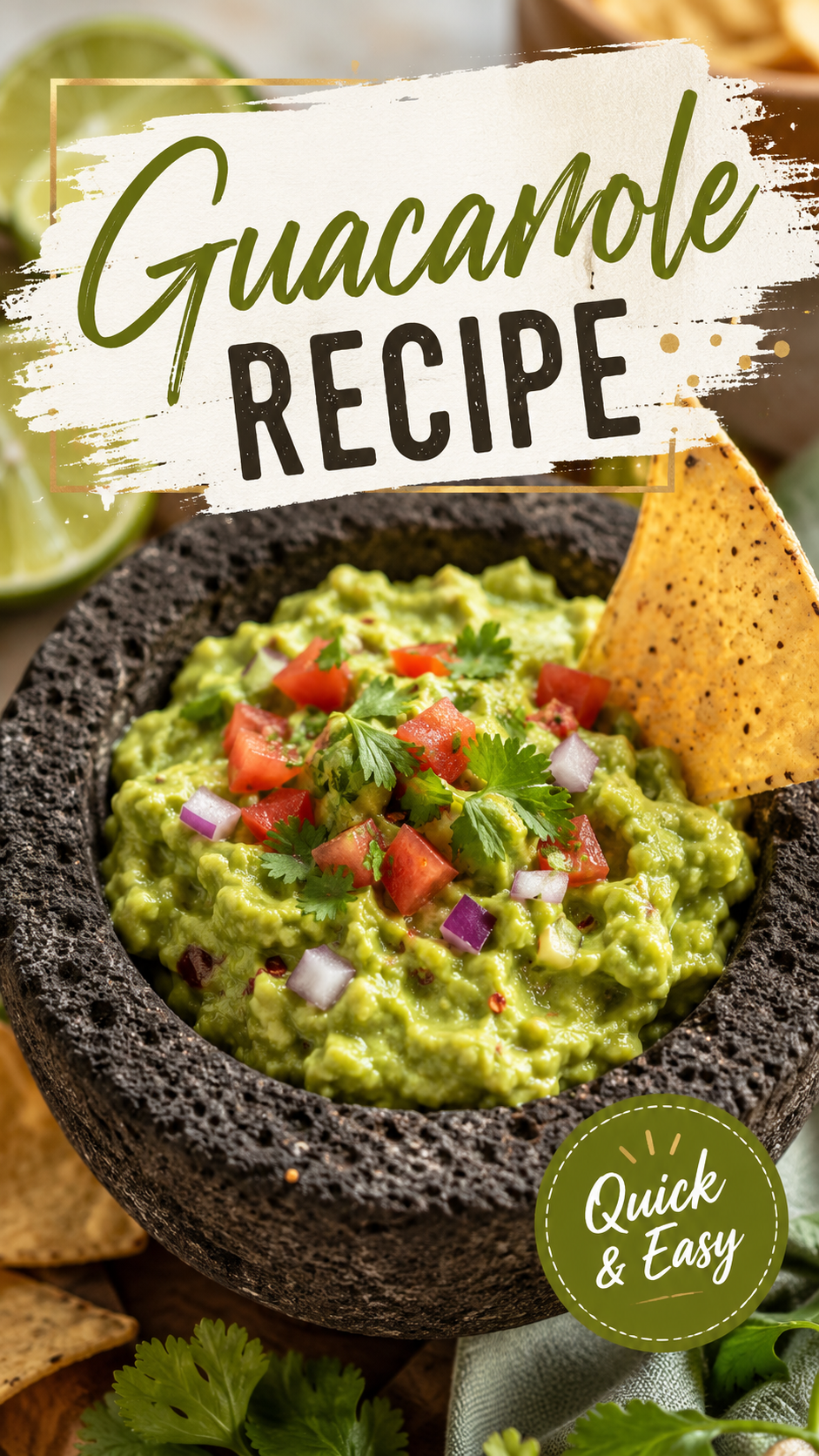
Silas used to buy those little plastic tubs of guacamole from the grocery store. Every single week.
I’d watch him peel back the lid, and honestly, it kind of hurt my feelings. 🥑
So one Saturday I bought six avocados, sat him down at the counter, and made a batch from scratch right in front of him. He took one bite and just stopped talking for a second.
“Wait. This is way better than the tub stuff.”
That was almost two years ago. We haven’t bought store guacamole since.
This recipe is the exact one I made that day. It’s simple, it takes about 15 minutes, and it uses only real ingredients you can actually pronounce. No stabilizers, no citric acid powder, no mystery preservatives.
Just avocados, lime, salt, and a few fresh add-ins that make it taste like something you’d get at a really good taqueria.
Let’s get into it.
What You’ll Need
| Ingredient | Amount |
|---|---|
| Ripe avocados | 4 large |
| Lime juice (fresh) | 2 tablespoons |
| White onion, finely diced | 1/4 cup |
| Roma tomato, diced and seeded | 1 medium |
| Fresh cilantro, chopped | 3 tablespoons |
| Garlic, minced | 1 clove |
| Jalapeño, seeded and minced | 1 small |
| Salt | 1/2 teaspoon, or to taste |
| Ground cumin (optional) | 1/4 teaspoon |
That’s it. Nine ingredients, most of which you probably already have sitting in your fridge.
Tools You’ll Need
- A mixing bowl
- A fork or a potato masher
- A sharp knife
- A cutting board
- A citrus juicer (optional, but it helps)
You genuinely do not need a food processor for this. In fact, please don’t use one. I’ll explain why in a second.
Pro Tips
1. Test avocado ripeness by the stem, not the squeeze. Everyone squeezes avocados at the store, but that bruises them. Instead, flick off the little stem nub at the top. If it’s green underneath, it’s ripe. If it’s brown, it’s overripe. If it won’t budge, give it a few more days.
2. Do NOT use a food processor. This is the mistake that ruins most homemade guac. A food processor turns avocado into a smooth, whipped paste that looks more like baby food than guacamole. You want texture. Mash by hand with a fork, leaving some chunks.
3. Add the lime juice immediately. As soon as you cut into your avocados, toss them with lime juice before doing anything else. This slows down the browning process and keeps your guac green for hours instead of turning that sad grayish color.
4. Seed your tomatoes. Tomato seeds and their surrounding gel add unwanted liquid to your guacamole, which waters down the flavor and makes it soupy. Slice the tomato in half and scoop the seeds out with a spoon before dicing.
5. Salt at the end, taste as you go. Salt brings out every other flavor in this dish. Add a little, taste, add a little more. You’ll know when it’s right because everything else on the plate will suddenly taste more like itself.
How to Make It
- Cut the avocados in half and remove the pits. Scoop the flesh into your mixing bowl.
- Add the lime juice right away and give it a quick toss with the avocado before mashing. This is your browning insurance.
- Mash with a fork, leaving some chunks. You’re not going for smooth here. Think rustic, not baby food.
- Fold in the onion, tomato, cilantro, garlic, and jalapeño. Use a spatula and fold gently so you don’t turn everything to mush.
- Season with salt and cumin, if using. Taste it. Adjust as needed.
- Let it sit for 5 minutes before serving. This gives the flavors time to actually mingle instead of tasting separate.
- Serve immediately with chips, tacos, or literally a spoon. No judgment here.
Substitutions and Variations
| Original | Swap | Why It Works |
|---|---|---|
| Jalapeño | Serrano pepper | Spicier kick if you like heat |
| Jalapeño | Skip entirely | Kid-friendly, mild version |
| White onion | Red onion | Slightly sweeter, milder bite |
| Cilantro | Parsley | For the cilantro-tastes-like-soap crowd |
| Roma tomato | Cherry tomatoes, quartered | Sweeter flavor, less watery |
| Lime juice | Lemon juice | Works in a pinch, slightly less tangy |
| Fresh garlic | Garlic powder (1/8 tsp) | Faster, still adds depth |
Some people also add a diced mango or pomegranate seeds for a sweeter twist. I’ve tried both. The mango version is genuinely incredible in the summer.
Make Ahead Tips
Guacamole is best fresh, but life happens. If you need to make it a few hours ahead:
- Press plastic wrap directly onto the surface of the guacamole, pressing out any air pockets. Oxygen is what turns it brown, not just time.
- Store in an airtight container in the fridge for up to 24 hours.
- Leave the avocado pit in the container. It’s a myth that it stops browning on its own, but it doesn’t hurt.
- Give it a fresh squeeze of lime juice and a quick stir before serving.
Estimated Nutritional Breakdown
Please note these are estimates only, not lab-tested values. Actual nutrition will vary based on exact ingredients and portion sizes.
| Nutrient | Per Serving (about 1/4 cup) |
|---|---|
| Calories | 120 |
| Fat | 10g |
| Carbohydrates | 8g |
| Fiber | 5g |
| Protein | 1.5g |
| Sodium | 140mg |
This recipe makes about 6 servings.
Meal Pairings
Guacamole is one of those rare dishes that works with almost everything, but here are a few of my favorites:
- Tacos of any kind, especially carne asada or grilled shrimp
- Grilled chicken with a squeeze of lime on the side
- Fajitas, piled generously on top
- Eggs, especially scrambled or over a breakfast burrito
- Just chips, because sometimes that’s the whole meal and that’s fine
Storage and Leftovers
Guacamole doesn’t love sitting around, but here’s how to keep it as fresh as possible:
- Store in an airtight container with plastic wrap pressed directly onto the surface.
- Keep refrigerated for up to 1 to 2 days. After that, the flavor and texture start to decline fast.
- If it browns on top, don’t panic. Just scoop off the top layer. The guac underneath is usually still green and perfectly fine to eat.
- Do not freeze guacamole. The texture turns watery and grainy once thawed, and honestly it’s not worth the disappointment.
FAQ
Why did my guacamole turn brown so fast? It’s oxidation, plain and simple. Avocado flesh reacts with air. Lime juice and minimal air exposure (like pressing plastic wrap directly onto the surface) slow this down significantly.
Can I make guacamole without cilantro? Absolutely. Some people genuinely taste soap when they eat cilantro, which is actually a real genetic trait. Swap in fresh parsley or just leave it out.
How do I know if my avocado is ripe enough? Flick off the little stem at the top. Green underneath means ripe and ready. Brown means it’s overripe. Nothing budging means it needs more time.
Is guacamole healthy? Avocados are packed with healthy monounsaturated fats, fiber, and potassium. In moderation, guacamole is genuinely one of the better dips you can reach for.
Can I make this spicy? Yes. Add a second jalapeño, swap in a serrano pepper, or leave the seeds in your jalapeño instead of removing them. That’s where most of the heat lives.
What’s the best avocado variety for guacamole? Hass avocados are the gold standard. They have a creamier texture and richer flavor than the larger, watery green-skinned varieties.
Wrapping Up
Guacamole seems like it should be complicated, but it genuinely isn’t. Ripe avocados, a squeeze of lime, a little salt, and a few fresh ingredients folded in by hand.
That’s the whole secret.
Silas still brings up that Saturday when I tell this story, mostly because he’s a little embarrassed about how many plastic tubs he went through before that. But I get it. Most people just haven’t tried the real thing yet.
Make a batch this week. Taste the difference for yourself.
And when you do, come back and leave a comment below telling me how it turned out. I’d love to hear if you tried any of the variations, or if you have questions about getting the texture just right.


