I made my first inclusion loaf by accident.
I had leftover rosemary, half a bag of walnuts, and a sourdough starter that needed using. Twenty minutes later, my kitchen smelled like a bakery I couldn’t afford.
That loaf disappeared in one day. My neighbor still asks about it.
If you’ve ever wondered how bakeries get those loaves studded with cranberries, cheese, or olives, this is exactly how. And it’s a lot simpler than it looks. 🍞
Once you know the basic ratio and timing, you can throw almost anything into your dough. Chocolate chips. Roasted garlic. Sun-dried tomatoes. The bread becomes a blank canvas.
Let’s get into it.
What You’ll Need
For the dough:
- 500g bread flour
- 350g water (room temperature)
- 100g active sourdough starter
- 10g fine sea salt
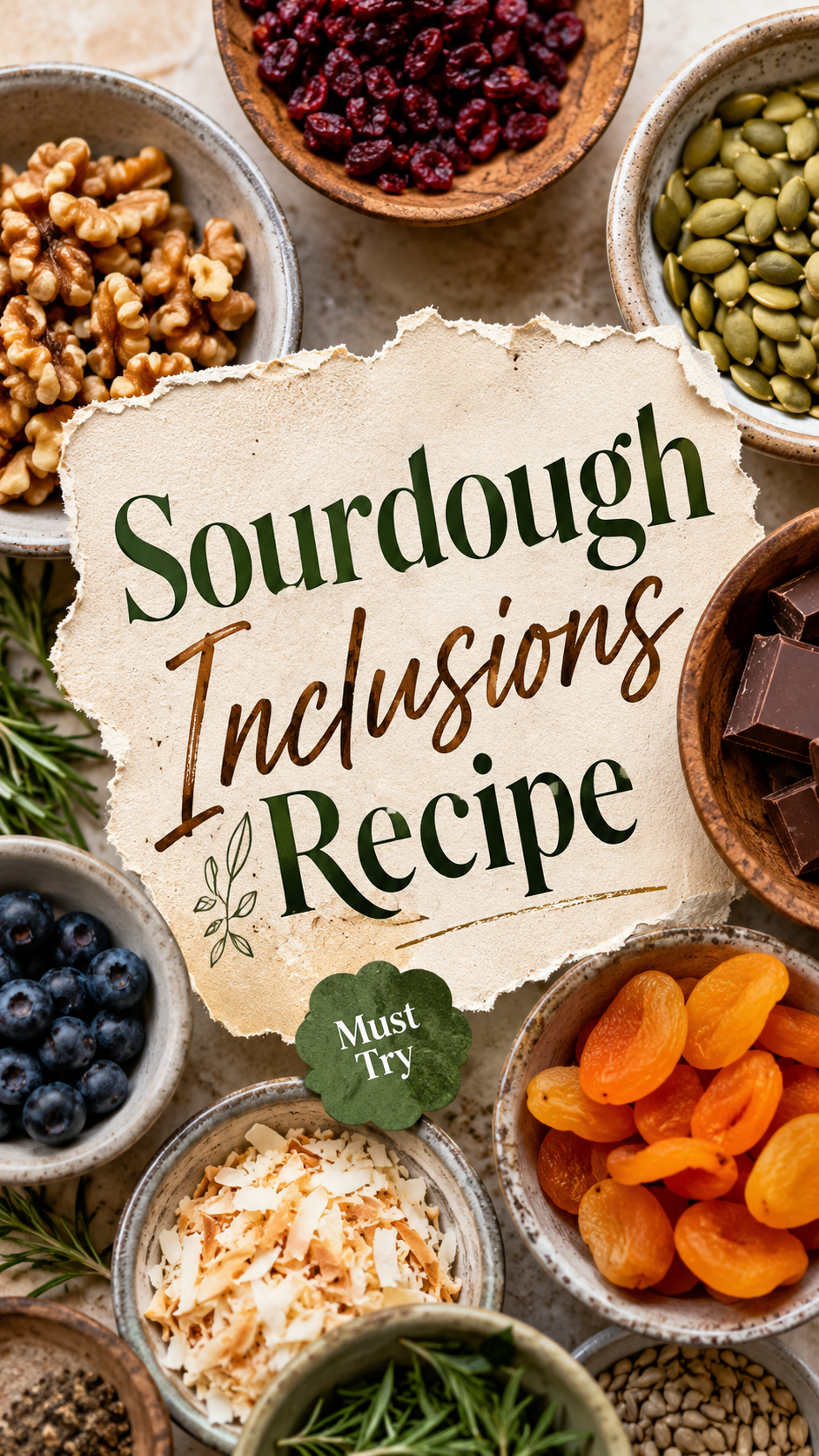
For the inclusions (choose one combo or mix your own):
- 100g walnuts, toasted and roughly chopped
- 2 tablespoons fresh rosemary, chopped
- 80g dried cranberries
- 100g sharp cheddar, cubed small
- 60g kalamata olives, pitted and halved
You don’t need all five of these. Pick a combo based on the variations section below.
Tools You’ll Need
- Large mixing bowl
- Kitchen scale (this matters more than measuring cups)
- Bench scraper
- Banneton or bowl lined with a floured towel
- Dutch oven with lid
- Parchment paper
- Sharp bread lame or razor blade
How to Make Sourdough With Inclusions
Step 1: Mix the dough
Combine the flour and water in a large bowl. Mix until no dry flour remains.
Let it rest for 30 minutes. This is called autolyse, and it makes the dough easier to work with later.
Step 2: Add starter and salt
Add your active starter and salt to the rested dough. Mix by hand until fully incorporated.
The dough will feel shaggy and a little sticky. That’s normal.
Step 3: Bulk fermentation and folds
Let the dough rest at room temperature for 4 to 6 hours.
Every 30 minutes for the first 2 hours, do a set of stretch and folds. Wet your hand, grab one side of the dough, stretch it up, and fold it over itself. Rotate the bowl and repeat on all four sides.
This builds strength without kneading.
Step 4: Add your inclusions
Around the third fold, it’s time to add your mix-ins.
Spread them across the dough, then fold the dough over them like you’re wrapping a package. Do one more set of folds after this to distribute everything evenly.
Heavy inclusions like cheese and olives need this careful folding, or they’ll sink straight to the bottom of your loaf.
Step 5: Shape the loaf
Once the dough has risen by about 50% and feels airy, turn it onto a lightly floured surface.
Shape it into a round using your bench scraper, creating tension on the surface as you go. Place it seam-side up in your floured banneton.
Step 6: Cold proof overnight
Cover the banneton and refrigerate for 12 to 15 hours.
This slow, cold rise is what gives sourdough its tangy flavor and open crumb. Skipping this step changes the bread completely.
Step 7: Bake
Preheat your oven to 475°F with the Dutch oven inside for at least 45 minutes.
Turn the dough onto parchment paper, score the top with your lame, and carefully lower it into the hot Dutch oven.
Bake covered for 20 minutes, then uncover and bake for another 20 to 25 minutes until deeply golden.
Let it cool for at least an hour before slicing. I know that’s hard. Do it anyway.
Pro Tips
- Toast nuts before adding them. Raw walnuts or pecans turn soggy inside the dough. Toasted ones stay crunchy and taste ten times better.
- Pat wet inclusions dry. Cranberries, sun-dried tomatoes, and anything packed in liquid need a paper towel pat-down first, or your dough gets gummy.
- Cut cheese small. Big cubes melt out during baking and leave gaping holes. Small cubes melt just enough to create pockets of gooey cheese.
- Don’t overload the dough. Stick to around 150 to 200g of total inclusions for a 500g flour recipe. More than that and the dough struggles to hold its structure.
- Score deeper than you think. Loaves with heavy inclusions rise unevenly, and a shallow score won’t let steam escape properly.
Substitutions and Variations
Sourdough inclusions are incredibly forgiving. Here’s a quick table of combos that work well together:
| Sweet | Savory | Bold |
|---|---|---|
| Cranberry + orange zest | Rosemary + walnut | Jalapeño + cheddar |
| Chocolate chip + sea salt | Sun-dried tomato + parmesan | Everything bagel seasoning + olive |
| Fig + walnut | Caramelized onion + gruyere | Bacon + black pepper |
Gluten-free swap: Use a 1:1 gluten-free bread flour blend, though the texture will be noticeably denser.
Dairy-free swap: Skip the cheese and lean into fruit and nut combos instead.
Lower effort swap: Store-bought toasted nuts and dried fruit work just as well as homemade prep.
Make Ahead Tips
You can mix and shape the dough the day before you plan to bake.
The overnight cold proof is actually doing double duty here. Your dough develops flavor while you sleep, and it’s ready to bake straight from the fridge the next morning.
You can also prep your inclusions (toasting nuts, chopping herbs) up to 3 days ahead and store them in the fridge.
Nutrition and Pairing Notes
A typical slice with walnuts and rosemary runs around 180 to 220 calories, depending on thickness and which inclusions you chose.
Cheese-based loaves run higher in fat and sodium. Fruit-based loaves lean higher in natural sugar but stay lower in fat.
Pairing ideas:
- Rosemary walnut loaf with a soft goat cheese and honey
- Cranberry orange loaf with whipped butter for breakfast
- Cheddar jalapeño loaf alongside a bowl of chili
Leftovers and Storage
Sourdough with inclusions stays fresh on the counter for 2 to 3 days in a paper bag or bread box.
For longer storage, slice the loaf and freeze it flat in a zip-top bag. Pull out slices as needed and toast straight from frozen.
Avoid storing sourdough in plastic at room temperature. It traps moisture and the crust turns soft and chewy instead of crisp.
FAQ
Can I add too many inclusions?
Yes. Going over 200g for this recipe size makes the dough weak, and your loaf may collapse or bake unevenly.
Why did my cheese leak out during baking?
The cheese probably wasn’t folded deep enough into the dough, or the pieces were cut too large.
Can I use discard instead of active starter?
No, this recipe needs active, bubbly starter to rise properly. Discard works for pancakes and crackers, not for this loaf.
My dough didn’t rise much overnight. What happened?
Your fridge may be running colder than average, or your starter wasn’t fully active before mixing. A weak starter is the most common culprit.
Do I need a Dutch oven?
It’s strongly recommended. The enclosed heat and steam create the crackly crust sourdough is known for. A baking stone with a steam pan is a workable backup.
Wrapping Up
Sourdough inclusions turn a good loaf into one people remember.
Once you nail the base recipe, you’ll start looking at your pantry differently. Leftover cheese. Half a bag of dried fruit. A few sprigs of herbs. It all becomes bread material.
Try one combo from the table above, or build your own.
Drop a comment below with the combo you tried and how your loaf turned out. If something didn’t work the way you expected, ask away. I read every comment.


