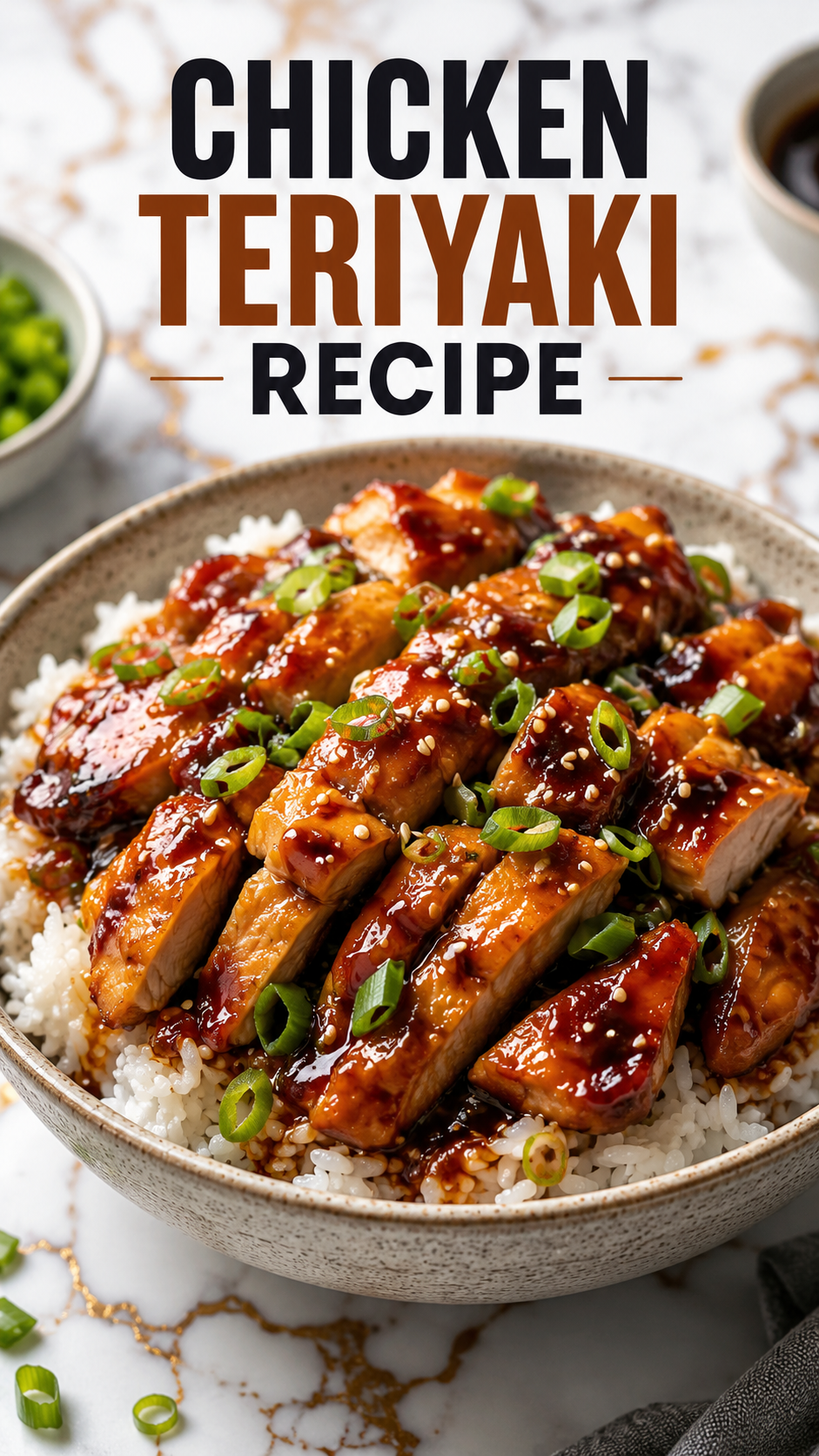
I used to order teriyaki chicken every single week. Same spot, same order, same $16 charge on my card.
Then I made it at home once and realized something kind of annoying: it takes 20 minutes and costs about $4 a serving.
I haven’t ordered it since.
This is the version I make on repeat now. It’s sticky, glossy, packed with that salty-sweet flavor you’re craving, and honestly easier than half the recipes I post here.
No marinating overnight. No weird ingredients you’ve never heard of.
Just a hot pan and a sauce that comes together while the chicken cooks.
And here’s the part that actually shocked me: the sauce most restaurants use isn’t all that different from what’s sitting in your pantry right now. Soy sauce, sugar, garlic, ginger. That’s most of the magic right there.
Let’s get into it.
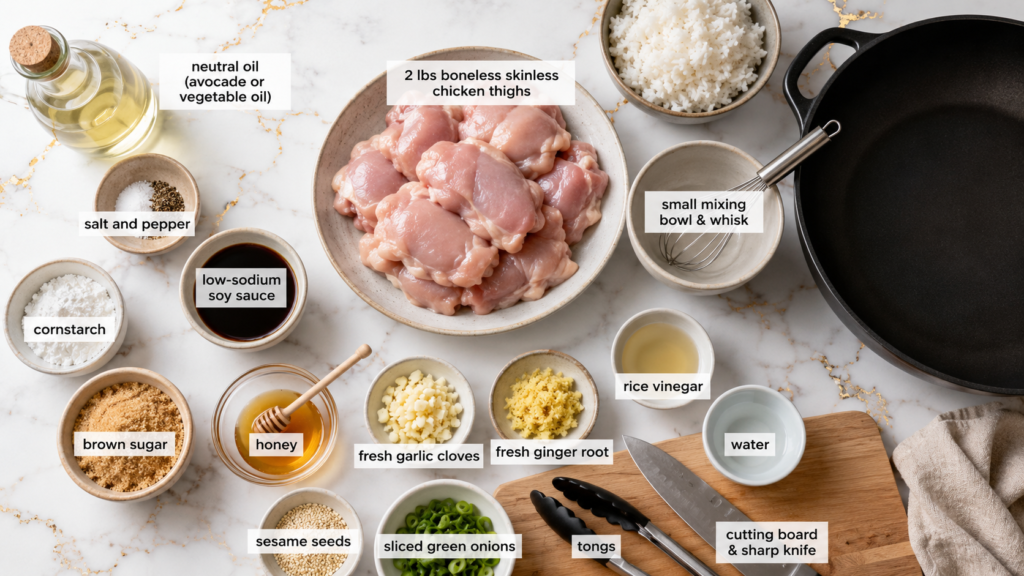
What You’ll Need
For the chicken:
- 2 lbs boneless, skinless chicken thighs (or breasts, if that’s your preference)
- 1 tbsp neutral oil (avocado or vegetable oil both work great)
- Salt and pepper, to taste
- 1 tbsp cornstarch (this is the secret to that glossy, restaurant-style sauce)
For the teriyaki sauce:
- 1/2 cup low-sodium soy sauce
- 1/4 cup brown sugar
- 2 tbsp honey
- 2 garlic cloves, minced
- 1 tsp fresh ginger, grated
- 1 tbsp rice vinegar
- 1/2 cup water
- 1 tbsp cornstarch + 2 tbsp water (for the slurry)
Optional toppings:
- Sesame seeds
- Sliced green onions
- Steamed white rice, for serving
That’s it. Nothing exotic, nothing you need to special-order.
Quick fact that surprised me when I first learned it: “teriyaki” doesn’t actually refer to a sauce. It refers to a cooking technique, “teri” means shine or glaze, and “yaki” means grilled. The sauce is just how we get there.
Tools You’ll Need
- A large skillet or wok
- A small mixing bowl (for the sauce)
- A whisk or fork
- Tongs
- A cutting board and sharp knife
Pro Tips
Here’s what I’ve learned after making this more times than I can count:
- Pat your chicken dry first. Wet chicken won’t sear, it’ll just steam. A few paper towels and 30 seconds of effort makes a real difference here.
- Don’t skip the cornstarch on the chicken. This is what gives you that slightly crispy edge that holds onto the sauce instead of just sliding off it.
- Taste your sauce before you add the slurry. Every brand of soy sauce is different. If it’s too salty, add a splash more honey. If it’s too sweet, a tiny bit more vinegar balances it right out.
- Cut your chicken into even, bite-sized pieces. This isn’t just for looks. It means everything cooks at the same rate and you’re not biting into one giant chunk while the rest is perfectly bite-sized.
- Let the sauce actually thicken before you call it done. It needs about 2 minutes once the slurry goes in. Rushing this step is the #1 reason people end up with a watery sauce.
How to Make Chicken Teriyaki
Step 1: Prep the chicken
Cut your chicken thighs into 1-inch pieces. Pat them dry, then season lightly with salt and pepper. Toss with the 1 tbsp cornstarch until every piece is lightly coated.
Step 2: Make the sauce
In a small bowl, whisk together the soy sauce, brown sugar, honey, garlic, ginger, rice vinegar, and water. Set aside.
Step 3: Sear the chicken
Heat the oil in a large skillet over medium-high heat. Add the chicken in a single layer (work in batches if needed, don’t overcrowd the pan). Sear for 4-5 minutes per side, until golden brown and cooked through.
Step 4: Add the sauce
Pour the teriyaki sauce mixture over the chicken. Bring it to a simmer and let it bubble for 2-3 minutes.
Step 5: Thicken it up
Stir together your cornstarch slurry (1 tbsp cornstarch + 2 tbsp water) and pour it into the pan. Stir constantly for about 2 minutes, until the sauce turns glossy and coats the back of a spoon.
Step 6: Serve
Remove from heat. Top with sesame seeds and sliced green onions. Serve hot over steamed rice.
That’s genuinely the whole process. Six steps, 20 minutes, done.
Substitutions and Variations
- Chicken breasts instead of thighs? Totally fine, just watch your cook time since breasts dry out faster.
- No rice vinegar? Apple cider vinegar or even a splash of lime juice works in a pinch.
- Want it spicy? Add a teaspoon of sriracha or a pinch of red pepper flakes into the sauce.
- Going low-sugar? Swap the brown sugar and honey for a sugar-free maple syrup alternative. The flavor shifts slightly, but it still works.
- Vegetarian version? Swap the chicken for extra-firm tofu or a mix of broccoli, mushrooms, and bell peppers. Same sauce, same method.
- Gluten-free? Use tamari instead of regular soy sauce and you’re set.
Make Ahead Tips
You can make the teriyaki sauce up to 5 days ahead and store it in the fridge in a sealed container. Just give it a stir before using since the ingredients can settle.
You can also marinate the cut chicken pieces in a few tablespoons of the sauce for up to 24 hours before cooking, if you want even deeper flavor. Just don’t marinate longer than that, since the salt content can start to change the texture of the chicken.
Leftovers and Storage
This keeps beautifully, which honestly surprised me the first time I tried it.
- Fridge: Store in an airtight container for up to 4 days.
- Freezer: Freeze in a freezer-safe bag for up to 3 months. Thaw overnight in the fridge before reheating.
- Reheating: A skillet over medium-low heat works best so the sauce doesn’t separate. Add a tiny splash of water if it’s looking thick. The microwave works too, just stir halfway through.
A Quick Nutritional Breakdown
This is based on one serving (about 1/4 of the recipe, chicken only, no rice):
| Nutrient | Approximate Amount |
|---|---|
| Calories | 310 |
| Protein | 28g |
| Carbs | 22g |
| Fat | 11g |
| Sodium | 680mg |
Numbers will shift slightly depending on the exact brand of soy sauce and sugar you use, but this gives you a solid ballpark.
Cooking Time Efficiency Tips
A few small moves that shave real minutes off this recipe:
- Mince your garlic and ginger while the chicken sears. No reason to do this before you turn the stove on.
- Use pre-minced garlic and ginger from a jar if you’re really in a rush. The flavor difference is small enough that I won’t judge you.
- Measure your sauce ingredients into the bowl before you start cooking. Once that chicken hits the pan, you don’t want to be digging through the pantry for honey.
- Cook your rice first, or have it going in a rice cooker in the background. By the time the chicken’s done, your whole meal is ready at the same time.
What to Serve With It
A few pairings that work every single time:
- Steamed jasmine or white rice
- Garlic fried rice, if you’re feeling extra
- Steamed broccoli or snap peas
- A quick cucumber salad with rice vinegar
- Stir-fried noodles, if rice isn’t your thing
Why This Recipe Actually Works
A couple things are happening here that make a real difference, even if they seem small.
The cornstarch on the chicken does double duty. It helps the outside crisp up in the pan, and it gives the sauce something to grip onto once it’s added.
The honey isn’t just for sweetness either. It helps the sauce go glossy and deep brown as it simmers, which is exactly the look you’re picturing when you think “teriyaki.”
And searing the chicken before the sauce goes in (instead of dumping everything in raw) means you get actual browning. That’s where a lot of the flavor comes from, not just the sauce itself.
FAQ
Can I bake this instead of using a skillet? Yes. Bake the chicken pieces at 400°F for about 18-20 minutes, then toss with the sauce (made separately on the stovetop) once they’re done.
Why is my sauce too thin? You probably need more time after adding the cornstarch slurry. It thickens as it simmers, not the second it hits the pan. Give it the full 2 minutes.
Can I use bottled teriyaki sauce instead? You can, but homemade lets you control the sugar and salt, and it tastes noticeably fresher. Once you make it from scratch, bottled sauce is hard to go back to.
Is this recipe kid-friendly? Very much so. It’s mild, sweet, and the sauce makes everything more appealing to picky eaters. I’d just skip the red pepper flakes if you’re making it for little ones.
Can I double this recipe? Yes, just use a bigger pan or work in batches when searing so the chicken still gets that golden color instead of steaming.
Wrapping Up
Once you make teriyaki chicken at home, ordering it out starts to feel like a waste of $16 you didn’t need to spend.
This one’s quick enough for a weeknight, simple enough for a beginner, and good enough that I genuinely crave it on a regular basis.
Give it a try this week and let me know how it turns out in the comments below. And if you run into any questions while you’re making it, drop them there too. I read every single one.


