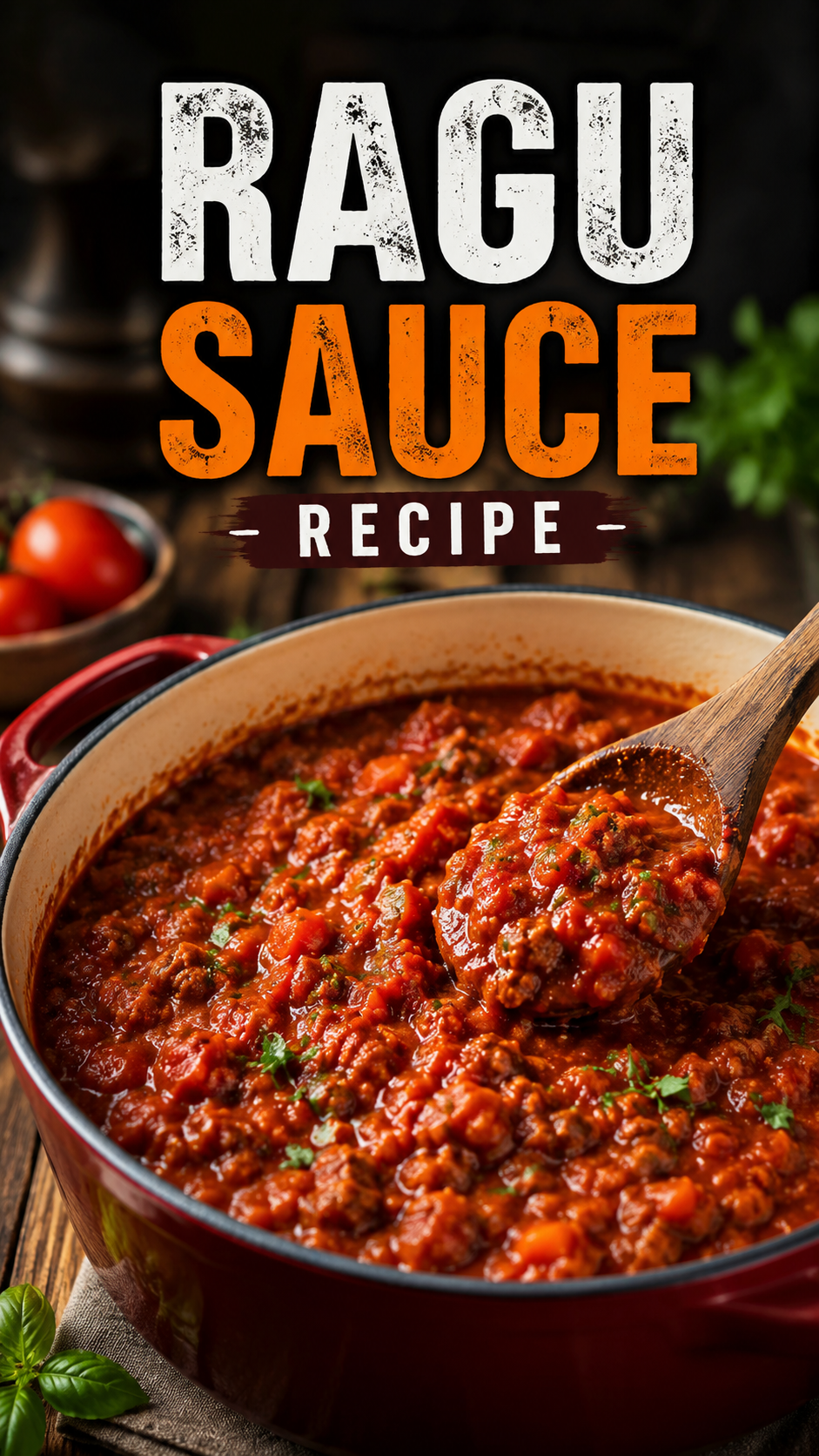
I used to think ragù and marinara were basically the same thing with a fancier name.
Then I made real ragù for the first time and just stood there, spoon in hand, kind of stunned.
It’s richer. Deeper. The kind of sauce that tastes like it’s been loved on for hours, because it has.
This isn’t a 20 minute weeknight sauce. But it’s also not complicated. It just needs a little patience, and I promise your kitchen is going to smell incredible the whole time. 🍝
Let’s get into it.
What Even Is Ragù?
Quick clarification before we start, because I get this question a lot.
Ragù is a slow simmered Italian meat sauce, traditionally from the Bologna region. Marinara is a quick tomato sauce, usually meatless.
Ragù uses way less tomato than you’d expect. The tomatoes are there to support the meat, not drown it. That’s the biggest difference and honestly the thing that changed my whole approach to making it.
What You’ll Need
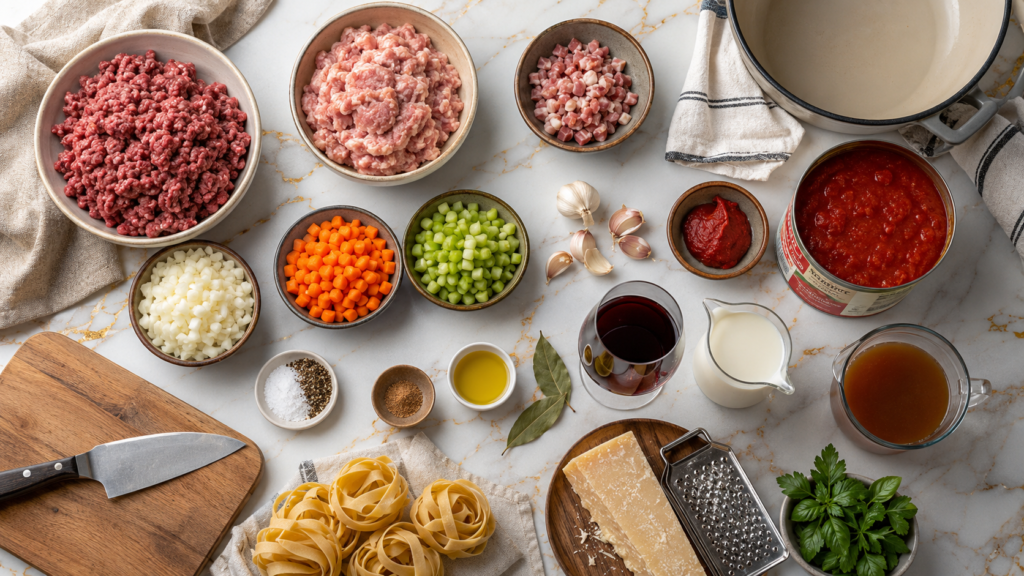
Here’s everything going into this pot.
For the ragù:
- 1 lb ground beef (80/20 works best)
- 1/2 lb ground pork
- 4 oz pancetta, finely diced
- 1 medium yellow onion, finely diced
- 2 carrots, finely diced
- 2 celery stalks, finely diced
- 4 garlic cloves, minced
- 3 tbsp tomato paste
- 1 (28 oz) can crushed tomatoes
- 1 cup dry red wine
- 1 cup whole milk
- 1 cup beef stock
- 2 tbsp olive oil
- 2 bay leaves
- 1/4 tsp ground nutmeg
- Salt and black pepper, to taste
For serving:
- 1 lb tagliatelle or pappardelle
- Freshly grated parmesan
- Fresh basil or parsley (optional, but pretty)
Tools You’ll Need
Nothing fancy here. Just:
- A large heavy bottomed pot or Dutch oven
- A wooden spoon
- A cutting board and sharp knife
- Measuring cups
- A large pot for pasta
Pro Tips
These are the things I wish someone had told me before my first attempt.
- Don’t rush the browning. Let the meat get real color before you touch it. That crusty bit on the bottom of the pot is flavor, not a mistake.
- Add the milk before the wine goes in fully, not after. It tenderizes the meat and cuts the acidity later. Trust the order.
- Simmer low and slow, lid slightly cracked. A hard boil will make it taste flat. You want the tiniest lazy bubbles.
- Salt in layers. A little when you brown the meat, a little with the vegetables, a little at the end. One big salt dump at the end never tastes as balanced.
- Taste at the 2 hour mark, not the 30 minute mark. The flavor completely transforms the longer it goes.
How to Make It
Step 1: Brown the Meat
Heat the olive oil in your pot over medium high heat. Add the pancetta first and cook until it’s crispy, about 3 minutes.
Add the ground beef and pork. Break it apart with your spoon, but don’t stir constantly. Let it sit and brown for a few minutes at a time.
Cook until deeply browned, about 8 to 10 minutes. Drain excess fat if there’s a lot.
Step 2: Build the Base
Push the meat to one side. Add the onion, carrot, and celery.
Cook for 6 to 8 minutes, stirring occasionally, until softened.
Add the garlic and cook one more minute. Your kitchen should smell amazing right about now.
Step 3: Add the Tomato Paste
Stir in the tomato paste and cook for 2 full minutes.
This step matters more than people think. It deepens the flavor and gets rid of that raw, tinny taste.
Step 4: Pour in the Milk
Add the whole milk and let it simmer until mostly absorbed, about 5 minutes.
Yes, milk before wine. It’s not a typo.
Step 5: Add the Wine
Pour in the red wine and let it simmer until it’s reduced by half, about 5 to 7 minutes.
Step 6: Add Tomatoes and Stock
Stir in the crushed tomatoes, beef stock, bay leaves, and nutmeg.
Season with salt and pepper.
Step 7: Simmer
Bring it to a gentle simmer, then drop the heat to low.
Cover with the lid slightly cracked and let it cook for 2.5 to 3 hours, stirring every 30 minutes or so.
If it looks too thick, add a splash of stock or water. It should coat the back of a spoon, not sit like paste.
Step 8: Cook the Pasta and Serve
When the ragù is nearly done, cook your pasta in salted water until just short of al dente.
Toss the pasta directly into the ragù with a splash of pasta water. Let it finish cooking together for a minute or two.
Top with parmesan and fresh herbs if you’re using them.
Substitutions and Variations
This recipe is pretty forgiving. Here’s how to make it your own.
| Original | Swap | Notes |
|---|---|---|
| Ground beef and pork | Ground turkey | Lighter, but add extra olive oil for richness |
| Pancetta | Bacon | Slightly smokier flavor |
| Red wine | Extra beef stock | For alcohol free versions |
| Whole milk | Half and half | Slightly richer |
| Tagliatelle | Any wide, flat pasta | Pappardelle, fettuccine, even mafaldine |
Want it spicier? A pinch of red pepper flakes with the garlic works great.
Want a vegetarian version? Swap the meat for finely chopped mushrooms and lentils. It’s not traditional, but it’s genuinely good.
Make Ahead Tips
Ragù is honestly better the next day. The flavors settle and deepen overnight.
Make it a day ahead, store it in the fridge, and just reheat gently on the stove before serving.
You can also make a double batch on a Sunday and portion it out for the week. Future you will be thrilled.
Leftovers and Storage
- Fridge: Store in an airtight container for up to 4 days.
- Freezer: Freezes beautifully for up to 3 months. Portion into individual containers so you’re not thawing the whole batch.
- Reheating: Low heat on the stove with a splash of water or stock to loosen it back up.
Skip the microwave if you can. It tends to make the sauce separate a little.
Additional Details
Nutrition (per serving, roughly): Approximately 480 calories, 28g protein, 22g fat, 32g carbs. This will shift depending on your exact meat ratio and pasta portion.
Time efficiency tip: Dice all your vegetables the night before and store them in the fridge. It cuts your active prep time down to almost nothing on cooking day.
Pairing suggestions: A simple green salad with lemon vinaigrette, crusty bread for the leftover sauce in the pot, and a medium bodied red wine like Chianti.
FAQ
Can I make this in a slow cooker? Yes. Brown the meat and vegetables on the stove first, then transfer everything to a slow cooker on low for 6 to 8 hours.
Why does my ragù taste flat? It usually needs more time, more salt, or both. Ragù really does get better the longer it simmers.
Can I use ground chicken instead? You can, though it’ll be noticeably lighter in flavor. Add a bit more pancetta to compensate.
Do I really need the milk? Yes. It’s a classic Bolognese trick that keeps the meat tender and balances the tomato’s acidity.
Can I skip the wine? Absolutely, just replace it with extra stock. The flavor will be slightly less complex but still good.
Wrapping Up
This is one of those recipes that rewards you for slowing down.
It takes a few hours, sure. But most of that time is just the pot doing its thing while you go live your life.
Make it once and you’ll understand why people fall for this sauce so hard.
If you try it, come back and drop a comment below. I want to know how it turned out, what you swapped, and whether your kitchen smelled as good as mine did. 🍷


