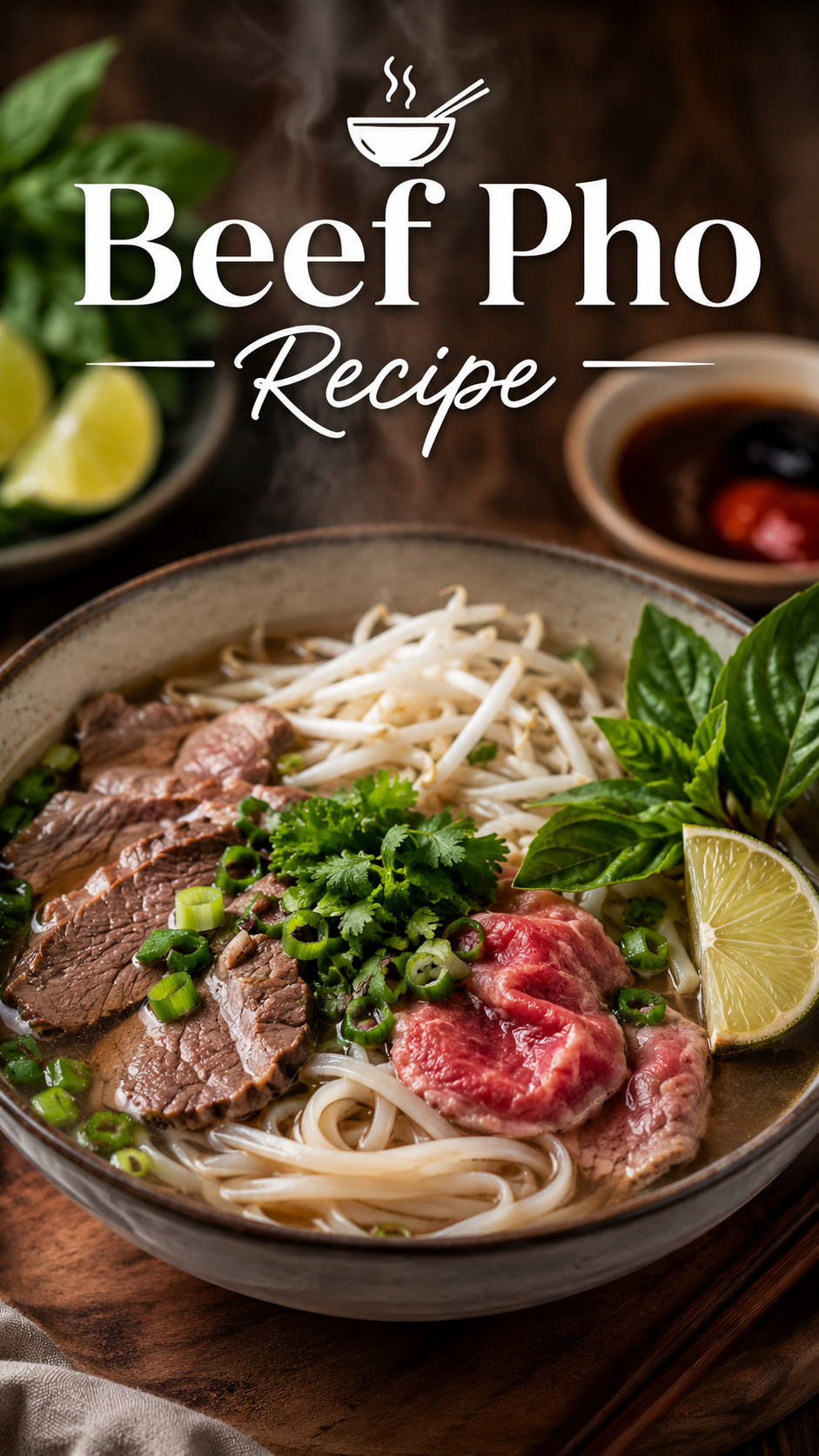
I was fully booked on a flight to Vietnam. Then I made this soup in my own kitchen and quietly canceled the trip. 🍜
Okay, that’s not entirely true. But it’s close enough that my husband still brings it up.
Beef pho is one of those recipes that sounds intimidating from across the room. Simmered bones, mystery spices, a broth that’s supposed to taste like it’s been cooking for a day and a half.
And the truth is… it kind of has been. That’s the secret nobody tells you upfront.
But once you know what’s actually happening in that pot, it stops feeling like a project and starts feeling like something you’d actually make on a random Sunday.
So let’s get into it.
Side Note: If you love a slow-simmered bowl of comfort, you’ll probably also love this Brazilian moqueca stew, another one-pot dish that rewards patience.
What You’ll Need
The ingredient list looks long. It’s not complicated, just long. Most of it is spices you toast for two minutes and then never touch again.
For the broth:
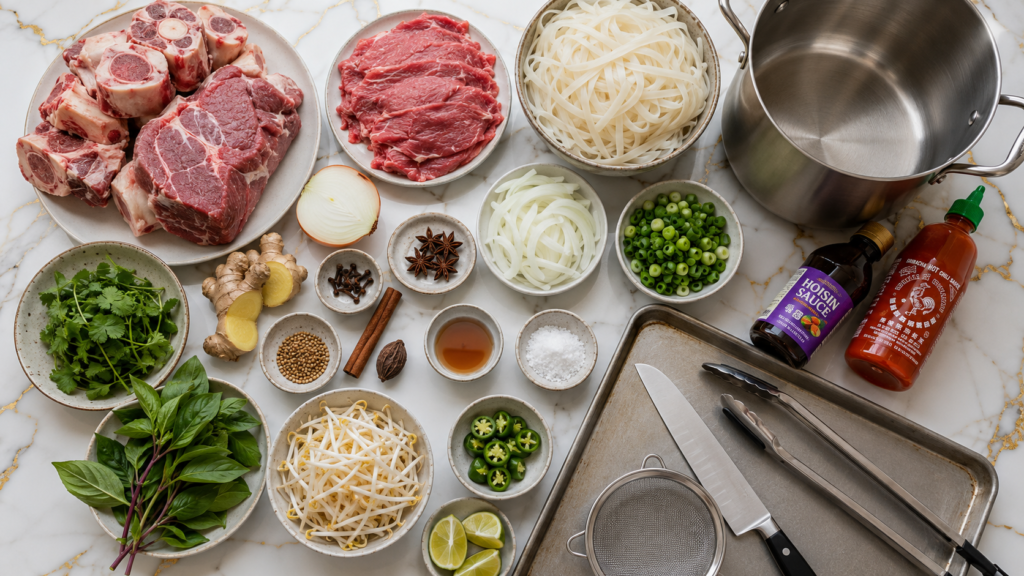
- 3 lbs beef bones (marrow and knuckle bones work best)
- 1 lb beef chuck or brisket, cut into large chunks
- 1 yellow onion, halved
- 4-inch piece of fresh ginger, halved lengthwise
- 6 whole star anise
- 4 whole cloves
- 1 cinnamon stick
- 1 tbsp coriander seeds
- 1 black cardamom pod (optional, but worth finding)
- 2 tbsp fish sauce
- 1 tbsp salt
- 1 tbsp rock sugar or brown sugar
- 12 cups water
For serving:
- 1 lb dried flat rice noodles (banh pho)
- ½ lb raw beef sirloin or eye of round, sliced paper thin
- 1 white onion, thinly sliced
- 3 green onions, chopped
- Fresh cilantro
- Bean sprouts
- Thai basil
- Lime wedges
- Jalapeño or Thai chilies, sliced
- Hoisin sauce and sriracha, for the table
Tools You’ll Need
- A large stockpot (8+ quarts)
- A fine mesh strainer or cheesecloth
- A baking sheet (for roasting the bones and aromatics)
- A sharp knife for slicing the raw beef thin
- Tongs
Pro Tips (Before You Start)
1. Char your onion and ginger first. Don’t skip this. Blister them under the broiler or over an open flame until the edges go black. This one step is basically responsible for that deep, smoky pho flavor you’re chasing.
2. Blanch the bones before simmering. Boil them for 10 minutes, dump the water, rinse the bones, then start your real broth. This gets rid of the funk and gives you that clear, golden broth instead of a cloudy, muddy one.
3. Freeze the raw beef for 20 minutes before slicing. It firms up just enough to slice paper thin, which matters because the hot broth is what cooks it right at the table.
4. Toast your spices dry, no oil. Two minutes in a hot pan until they smell fragrant. This wakes them up in a way that raw spices just can’t match.
5. Low and slow, always. A rolling boil makes the broth cloudy and bitter. You want the gentlest simmer you’ve ever seen, almost like the pot is just barely awake.
How to Make Beef Pho
Step 1: Char the Aromatics
Halve your onion and ginger. Place them cut-side up on a baking sheet and broil for 8-10 minutes, until the edges are blackened. Rinse off any loose char under water.
Step 2: Blanch the Bones
Add the beef bones to a large pot and cover with water. Bring to a boil for 10 minutes. Drain, rinse the bones under cold water, and give the pot a quick rinse too.
Step 3: Toast the Spices
In a dry pan over medium heat, toast the star anise, cloves, cinnamon stick, coriander seeds, and cardamom for 2 minutes, until fragrant. You’ll know it’s ready when your kitchen smells like a bakery crossed with a spice market.
Step 4: Build the Broth
Return the blanched bones to your clean pot. Add the charred onion, ginger, toasted spices, beef chuck, and 12 cups of water. Bring to a boil, then immediately drop to the lowest simmer possible.
Step 5: Let It Simmer
Skim any foam off the top for the first 30 minutes. Then cover partially and simmer for 3 to 6 hours. The longer, the deeper the flavor.
Step 6: Season the Broth
Remove the beef chuck once it’s tender (usually around 90 minutes) and set aside. Continue simmering the bones. Near the end, stir in fish sauce, salt, and rock sugar. Taste and adjust.
Step 7: Strain
Strain the broth through a fine mesh strainer or cheesecloth into a clean pot. Discard the solids. Keep the broth hot on low heat.
Step 8: Cook the Noodles
Cook the rice noodles according to package instructions, usually just a quick soak in hot water. Drain and divide into bowls.
Step 9: Assemble
Slice the reserved beef chuck and lay it over the noodles with a few slices of the raw beef sirloin on top.
Step 10: Pour and Serve
Ladle the boiling hot broth directly over the raw beef, which cooks it instantly. Top with white onion, green onions, and herbs. Serve with lime, chilies, hoisin, and sriracha on the side.
Substitutions and Variations
| Original | Swap | Notes |
|---|---|---|
| Beef bones | Chicken carcass | Makes it pho ga, lighter and quicker |
| Beef chuck | Oxtail | Richer, fattier broth |
| Rice noodles | Zucchini noodles | Lower carb, different texture entirely |
| Rock sugar | Honey | Slightly different sweetness, still works |
| Star anise | Skip if unavailable | Broth will be milder, still tasty |
| Raw sirloin | Meatballs (beef balls) | Common Vietnamese street-food variation |
Make Ahead Tips
The broth actually gets better overnight in the fridge. The fat rises to the top and hardens, so you can skim it off easily before reheating.
You can freeze the strained broth for up to 3 months. Just leave the noodles, herbs, and raw beef for serving day.
A Few Extra Details
Time efficiency tip: Make the broth on a Sunday while you’re doing chores around the house. It mostly just sits there simmering and doesn’t need babysitting.
For a lighter version: Skip the beef chuck entirely and just use the bones for broth, then add cooked shredded chicken or tofu instead.
Pairing suggestion: A side of fresh spring rolls with peanut sauce turns this into a full Vietnamese-inspired dinner.
Leftovers and Storage
Store the broth and noodles separately. Noodles get mushy and weird if they sit in broth overnight.
Broth keeps in the fridge for 4-5 days, or in the freezer for up to 3 months.
When reheating, bring the broth to a rolling boil before pouring it over fresh raw beef slices, since it needs to be hot enough to cook the meat.
FAQ
Can I make this in a slow cooker? Yes. Blanch and char everything first, then transfer to a slow cooker on low for 8-10 hours.
Can I make it in an Instant Pot? Absolutely, and it’s a great shortcut. Pressure cook on high for 90 minutes, then natural release.
Why is my broth cloudy? Usually it’s from boiling too hard instead of simmering gently, or skipping the blanching step.
Is pho gluten free? Traditional rice noodles are gluten free, just double check your fish sauce and hoisin sauce labels.
What cut of beef is best for the thin raw slices? Eye of round or sirloin, sliced against the grain while partially frozen.
Can I use store-bought beef broth as a shortcut? You can, but you’ll lose a lot of the signature flavor. If you’re short on time, doctor it up with the toasted spices and charred aromatics for at least an hour.
Wrapping Up
This one takes some patience, but it’s genuinely one of those recipes where the effort pays off in a way you can taste immediately.
Make a big pot of it this weekend and see for yourself.
If you try this beef pho recipe, come back and leave a comment letting me know how it turned out, and drop any questions below if something wasn’t clear along the way.


