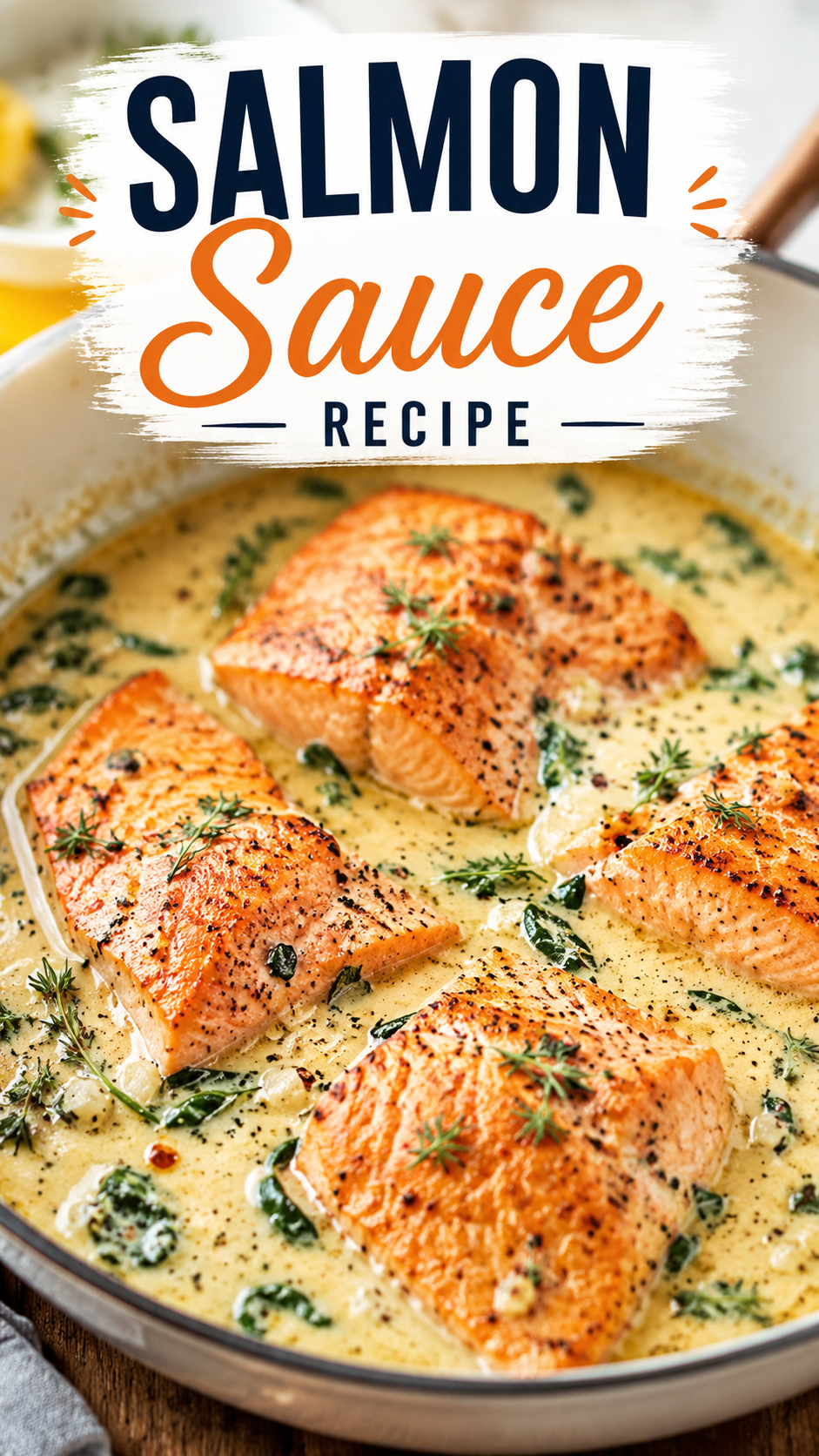
I almost didn’t make this sauce.
I had salmon in the fridge, garlic on the counter, and zero plan.
Twenty minutes later, my husband was scraping the pan with a piece of bread like it owed him money. 🧈
That’s this sauce. It’s silky, garlicky, a little bit fancy-tasting, and somehow only takes one pan.
If you’ve ever had salmon turn out dry or boring, this recipe fixes both problems at once. The sauce does all the heavy lifting.
Let’s get into it.
What You’ll Need
For the salmon:
- 4 salmon fillets (about 6 oz each, skin on or off)
- 1 tsp salt
- ½ tsp black pepper
- 1 tbsp olive oil
For the sauce:
- 3 tbsp butter
- 4 garlic cloves, minced
- 1 cup heavy cream
- ½ cup chicken or vegetable broth
- ¼ cup grated parmesan
- 1 tbsp lemon juice
- ½ tsp red pepper flakes (optional)
- 1 handful fresh spinach (optional, but so good)
- Salt and pepper to taste
That’s it. Nothing weird, nothing you have to hunt down at a specialty store.
Tools You’ll Need
- A large skillet (cast iron or stainless steel works best)
- Tongs or a fish spatula
- A whisk
- A garlic press (optional, but it saves your fingers)
- Measuring cups and spoons
Pro Tips
1. Pat your salmon completely dry before searing. Wet salmon steams instead of searing. A dry paper towel is the difference between a crispy crust and a sad gray fillet.
2. Don’t move the salmon once it hits the pan. I know it’s tempting. Leave it alone for a full 4 minutes. That’s how you get that golden crust.
3. Pull the salmon at 125°F if you like it medium. It’ll keep cooking a bit after you take it off the heat, so don’t wait for it to look “done” in the pan.
4. Add the parmesan off the heat, not on it. High heat can make the cheese clump instead of melt smoothly into the sauce.
5. Taste before you salt the sauce. Between the broth, parmesan, and butter, this sauce is already salty. Add at the end, not the beginning.
How to Make It
Step 1: Season and sear the salmon
Pat the salmon fillets dry, then season both sides with salt and pepper.
Heat olive oil in your skillet over medium-high heat until it shimmers.
Add the salmon, skin side down if using skin-on fillets. Sear for 4 minutes without touching it.
Flip and cook another 3-4 minutes, until the internal temp hits 125-130°F.
Remove the salmon and set it aside on a plate.
Step 2: Build the sauce
In the same skillet, lower the heat to medium and add the butter.
Once melted, add the garlic and cook for 30 seconds. You’ll know it’s ready when your kitchen smells incredible.
Pour in the broth and scrape up any browned bits stuck to the pan. This is where all the flavor is hiding.
Step 3: Make it creamy
Add the heavy cream and whisk until smooth.
Let it simmer for 2-3 minutes, until it starts to thicken slightly.
Stir in the parmesan and lemon juice off the heat.
If you’re using spinach, toss it in now and let it wilt in the warm sauce.
Step 4: Bring it together
Add the salmon back into the skillet, spooning the sauce over each piece.
Let everything warm together for 1-2 minutes.
Sprinkle with red pepper flakes if you want a little kick.
Serve immediately, while the sauce is still glossy and warm.
Substitutions and Variations
- No heavy cream? Half-and-half works, though the sauce will be thinner.
- Dairy-free? Full-fat coconut milk gives a surprisingly good result, just skip the parmesan or use a dairy-free version.
- Want it spicier? Double the red pepper flakes or add a small spoon of chili crisp.
- Different protein? This sauce is honestly incredible on chicken or shrimp too.
- Add veggies: Sun-dried tomatoes or mushrooms sautéed with the garlic add another layer of flavor.
Make Ahead Tips
The sauce can be made up to 2 days ahead and stored in the fridge.
Reheat it gently on the stove over low heat, whisking as it warms so it doesn’t separate.
I’d recommend searing the salmon fresh though. It really doesn’t reheat the same way.
Nutritional Breakdown (Per Serving)
| Nutrient | Amount |
|---|---|
| Calories | ~520 |
| Protein | 34g |
| Fat | 40g |
| Carbs | 4g |
| Sodium | 610mg |
This is based on a 6 oz salmon fillet with a quarter of the sauce recipe. Numbers will shift depending on your exact ingredients.
Meal Pairing Ideas
This sauce is rich, so pair it with something simple.
- Garlic mashed potatoes
- Steamed asparagus
- A crusty piece of bread (non-negotiable, for sauce-scraping purposes)
- A crisp green salad with lemon vinaigrette
Leftovers and Storage
Store leftovers in an airtight container in the fridge for up to 3 days.
Reheat gently in a skillet over low heat. Microwaving works too, but go slow so the sauce doesn’t break.
I don’t recommend freezing this one. Cream sauces tend to separate once thawed, and the texture just isn’t the same.
FAQ
Can I use frozen salmon? Yes, just make sure it’s fully thawed and patted dry before searing, or it won’t get that crispy crust.
Why did my sauce turn out grainy? This usually happens when the parmesan is added over high heat. Take the pan off the heat first, then stir it in slowly.
Can I make this sauce without garlic? You can, but it loses a lot of its flavor. I’d suggest swapping in shallots if garlic isn’t your thing.
Is this recipe spicy? Not unless you add the red pepper flakes. It’s easy to make it as mild or as spicy as you like.
What’s the best salmon cut for this recipe? Center-cut fillets cook the most evenly, but any cut will work fine.
Wrapping Up
This is one of those recipes that looks way more impressive than the effort it actually takes.
One pan, twenty minutes, and a sauce good enough to make people ask what restaurant you learned it from.
Make it this week and let me know how it turns out in the comments. I want to hear what you paired it with, what you swapped, and if your family reacted the way mine did. 🐟


