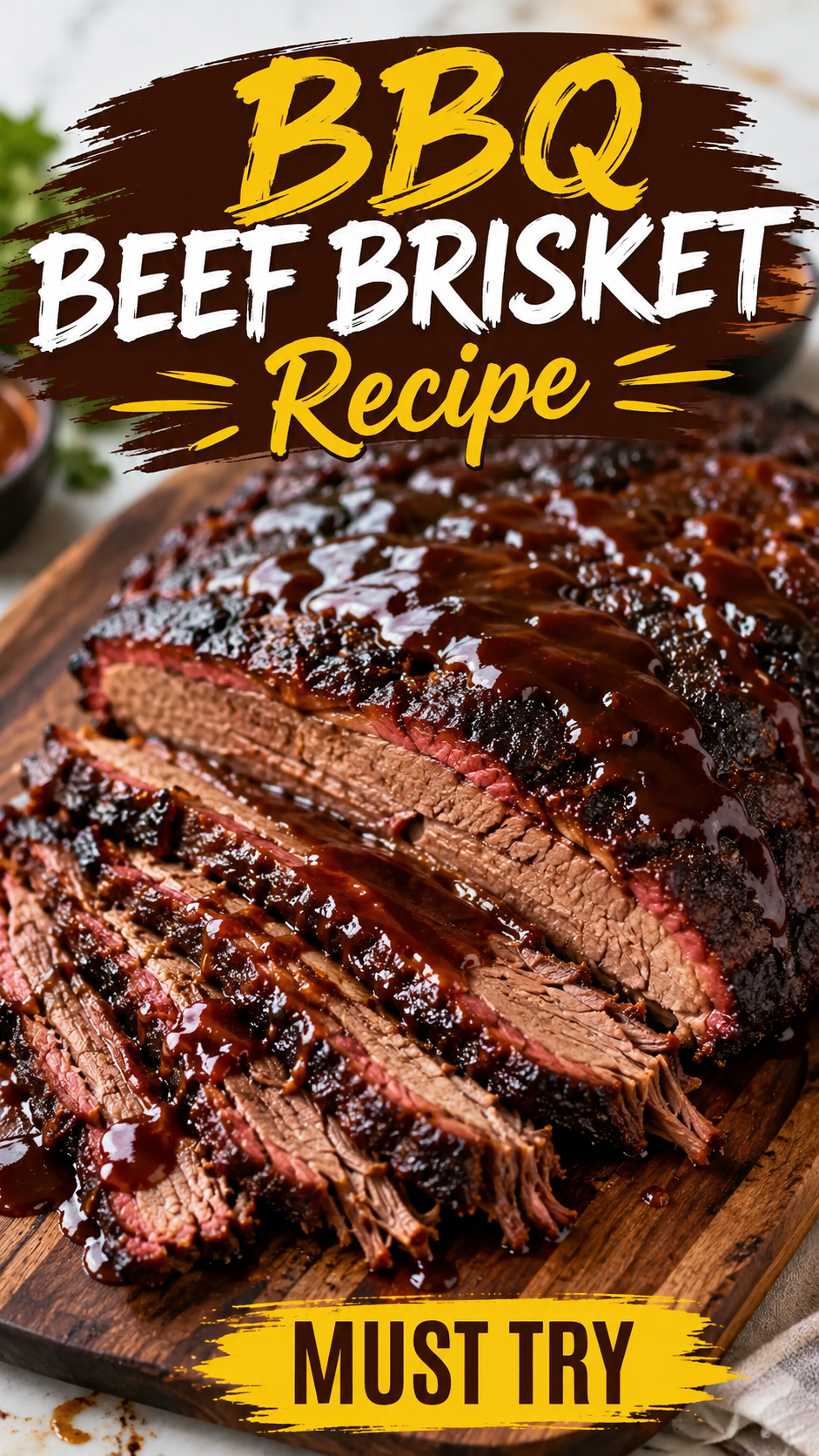
Twelve hours. That’s how long this brisket sits in the smoker before it’s ready.
And I promise you, every single one of those hours is worth it.
I made this for the first time last summer and completely underestimated it. I thought brisket was just “throw meat on smoker, wait.” I was wrong in the best way possible.
There’s a science to this cut of meat that most people never learn. And once you know it, you’ll never order brisket at a restaurant again without silently judging it.
Let’s get into it. 👇
Why This Cut of Meat Is So Tricky (And So Good)
Brisket comes from the cow’s chest area, which means it works hard every single day.
That makes it tough.
Really tough, if you don’t cook it right.
But it also means it’s packed with connective tissue called collagen. And when you cook that collagen low and slow, it melts into gelatin.
That’s the secret. That gelatin is what makes brisket fall-apart tender instead of chewy.
Most people rush it. They pull it too early because they’re hungry or impatient.
Don’t be that person. Your patience is about to pay off in the best possible way.
What You’ll Need
Here’s everything you’ll need to make this brisket happen.
For the brisket:
- 1 whole beef brisket (10 to 12 lbs, packer cut with fat cap intact)
- 3 tbsp coarse kosher salt
- 3 tbsp coarse black pepper
- 1 tbsp garlic powder
- 1 tbsp onion powder
- 1 tsp smoked paprika
- 2 tbsp yellow mustard (for binding the rub)
For the spritz:
- 1 cup apple cider vinegar
- 1 cup water
For serving:
- Your favorite BBQ sauce
- Sliced white bread or soft rolls
- Pickles and sliced onion
That’s it. No 20-ingredient marinade. Great brisket is about technique, not a long shopping list.
Tools You’ll Need
- A smoker (offset, pellet, or kamado all work)
- A meat thermometer (instant read AND a leave-in probe if you have one)
- A spray bottle
- Butcher paper or heavy-duty aluminum foil
- A sharp knife for trimming
- A cutting board with a groove (brisket releases a LOT of juice)
- Insulated cooler (yes, really, you’ll see why below)
How to Make BBQ Beef Brisket
Step 1: Trim the fat
Trim the fat cap down to about 1/4 inch thick.
Too much fat and the smoke can’t penetrate. Too little and the meat dries out.
Also trim away any hard, silvery fat pockets between the point and the flat. They won’t render no matter how long you cook them.
Step 2: Season generously
Rub the mustard all over the brisket. This helps the seasoning stick, and no, you won’t taste mustard in the final product.
Combine the salt, pepper, garlic powder, onion powder, and paprika. Coat the entire brisket, all sides, pressing it in.
Let it sit uncovered in the fridge overnight if you can. This dries the surface out slightly, which helps you get that dark, crackly bark everyone fights over.
Step 3: Fire up the smoker
Get your smoker to a steady 225°F to 250°F.
Use a mild wood like oak or hickory. Mesquite can turn bitter if you use too much for this long of a cook.
Step 4: Smoke it low and slow
Place the brisket fat side up (or down, depending on your smoker’s heat source, more on this below).
Smoke until the internal temperature hits 165°F, which usually takes 6 to 8 hours depending on the size of your brisket.
Step 5: Wrap it (the stall is coming)
Around 165°F, your brisket will hit “the stall.” The internal temperature will stop climbing for hours, sometimes it even drops slightly.
This is normal. It’s just evaporative cooling, like sweat cooling your skin.
Wrap the brisket tightly in butcher paper or foil. This pushes through the stall much faster.
Step 6: Keep cooking until tender
Put the wrapped brisket back on the smoker until it hits 203°F internally.
But temperature alone isn’t the whole story. Check for tenderness too. A probe thermometer should slide in like it’s going into softened butter.
Step 7: Rest it (don’t skip this)
Wrap the brisket in a towel and place it in a cooler for at least 1 hour, up to 4.
I know it smells incredible and you want to cut it right now. Resist.
This step redistributes the juices back through the meat. Skip it and you’ll watch all that moisture pour onto your cutting board instead of staying in your brisket.
Step 8: Slice against the grain
This is where people mess up the most. Brisket has two different grain directions, one in the flat, one in the point.
Slice against the grain in both sections, about pencil thickness.
Slice with the grain and you’ll end up with something closer to beef jerky.
Pro Tips From Someone Who’s Ruined a Few Briskets
- Buy a bigger brisket than you think you need. It shrinks by 30-40% during the cook. A 12 lb brisket easily feeds 10-12 people once trimmed and cooked down.
- Fat side down if your heat source is below the meat, fat side up if it’s above (like most pellet smokers). This protects the meat from direct heat and lets the fat baste it as it renders.
- Don’t obsess over the clock. Every brisket cooks differently based on size, fat content, and your smoker’s quirks. Cook to temperature and tenderness, never to a set time.
- Buy prime grade if your budget allows it. The extra marbling makes a genuinely noticeable difference in the final texture.
- Invest in a leave-in probe thermometer. Opening the smoker constantly to check temps lets heat escape and adds time to your cook.
Substitutions and Variations
| Original | Substitution | Notes |
|---|---|---|
| Offset smoker | Pellet grill | Easier temp control, slightly less smoke flavor |
| Butcher paper | Heavy foil | Foil creates a softer bark (“Texas crutch”) |
| Apple cider vinegar spritz | Beef broth spritz | Adds a deeper savory flavor |
| Oak wood | Pecan or cherry wood | Milder, slightly sweeter smoke |
| Yellow mustard binder | Worcestershire sauce | Adds umami, still helps rub stick |
Want a spicier version? Add 1 tablespoon of cayenne and 2 teaspoons of chili powder to your rub.
Make Ahead Tips
Brisket is actually better made a day ahead.
Smoke it fully, let it rest, then slice or leave whole and refrigerate.
To reheat, wrap it in foil with a splash of beef broth and warm it at 250°F in the oven until heated through. The extra rest time in the fridge lets the flavors settle even further.
Nutritional Breakdown (Per 4 oz Serving)
| Nutrient | Amount |
|---|---|
| Calories | ~330 |
| Protein | 28g |
| Fat | 24g |
| Carbs | 0g |
| Sodium | 480mg (varies by rub) |
Diet swaps:
- Lower sodium: Cut the salt in the rub by half and rely on the smoke for flavor instead.
- Keto/low carb: This recipe is already naturally carb-free as long as your BBQ sauce is sugar-free.
What to Serve With Brisket
- Classic coleslaw (the acidity cuts through the richness)
- Mac and cheese
- Cornbread
- Baked beans
- Pickled red onions
Leftovers and Storage
Store leftover brisket in an airtight container in the fridge for up to 4 days.
For longer storage, slice it, portion it, and freeze for up to 3 months.
When reheating, always add a little liquid (broth or the reserved juices) so it doesn’t dry out. Microwaving without liquid is the fastest way to ruin good brisket.
Bonus idea: leftover brisket makes incredible tacos, grilled cheese, or fried rice.
FAQ
Why is my brisket tough even after 12 hours?
It likely needs more time. Tough brisket almost always means it was pulled before the collagen fully broke down. Temperature is a guide, tenderness is the real test.
Can I make brisket in the oven?
Yes, though you’ll miss the smoke flavor. Cook at 225°F wrapped in foil with a bit of liquid smoke added to your rub for a similar effect.
Do I need to flip the brisket while smoking?
No. Let it sit undisturbed except for spritzing every hour or so after the first few hours.
What’s the point vs the flat?
The flat is leaner and slices cleanly. The point is fattier, more marbled, and often turned into burnt ends.
Can I use a smaller brisket?
Yes, just adjust your cook time down. A 5-6 lb flat cut will take roughly 6-8 hours total.
Wrapping Up
Brisket rewards patience more than almost anything else you’ll ever cook.
Give it the time it needs, trust the process through the stall, and slice against the grain when it’s done.
Try this recipe this weekend and let me know how it turned out in the comments below. I’d love to hear what wood you used, how long your cook took, and if your neighbors came knocking too. 🔥
Got questions about your smoker setup or trimming technique? Drop them below and I’ll help you troubleshoot.


