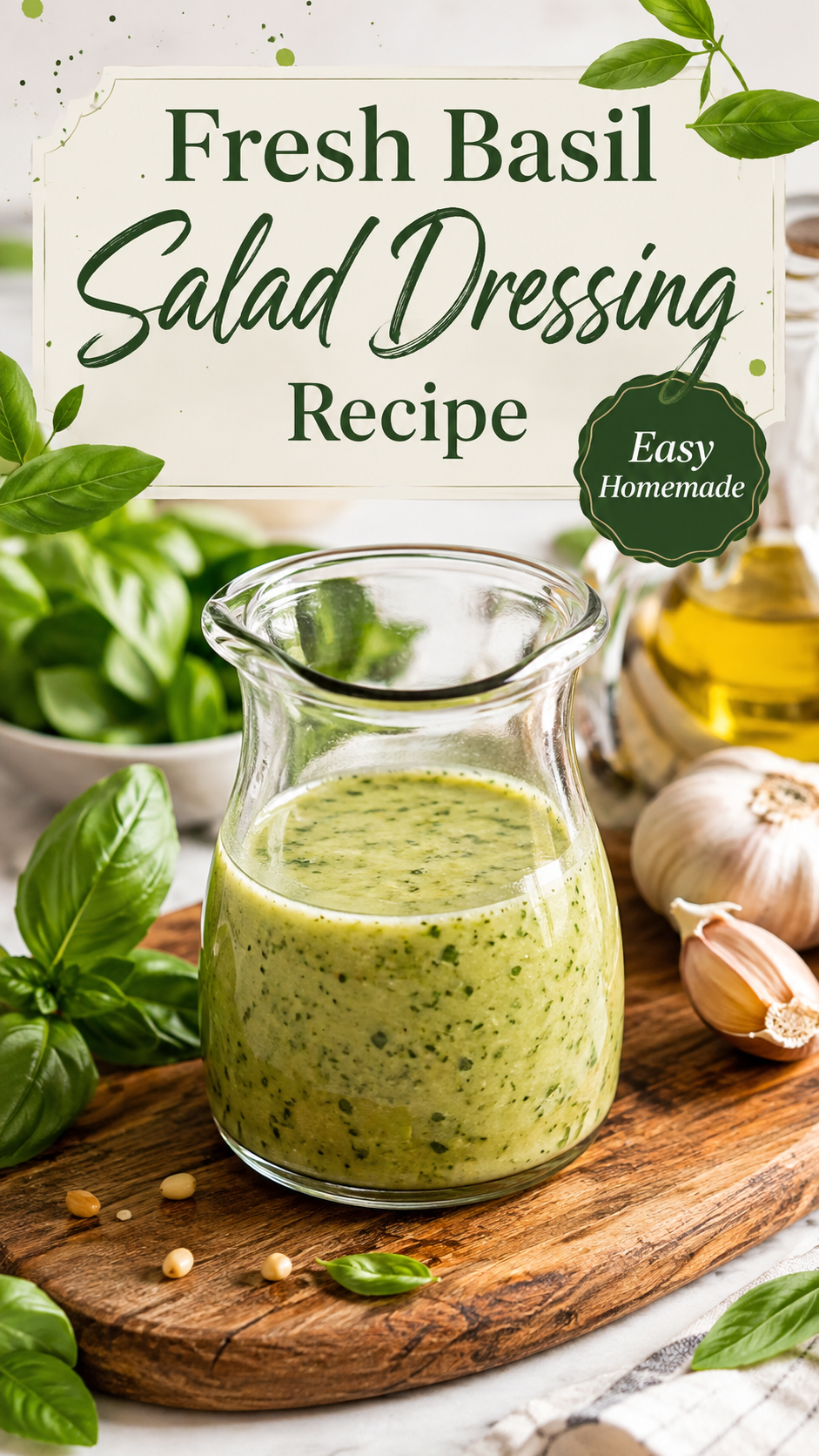
I did not expect a salad dressing to change my life. But here we are.
It started with a basil plant that Silas bought on a whim from the farmers market. He set it on the windowsill, watered it exactly once, and then acted shocked when it kept growing.
“What do we even do with all this?” he asked me, staring at a plant that had basically become a small tree.
So I threw a handful of it in the blender with some olive oil, garlic, and lemon. Ten minutes later, we were standing over the sink taking turns dipping spoons into the blender like it was cookie dough.
That’s how you know a recipe is good. When you’re eating it straight out of the appliance that made it. 🌿
This fresh basil salad dressing is grassy, garlicky, a little tangy, and genuinely addictive. It works on salads, obviously. But it also works on grilled chicken, roasted vegetables, pasta, and honestly just bread if you’re desperate.
The thing I love most is how it makes plain ingredients feel like an actual meal. A basic bowl of lettuce and tomato suddenly tastes like something you’d order at a restaurant patio in the summer.
And once you make it fresh, going back to bottled dressing feels kind of impossible. There’s just no comparison once you know what real basil tastes like blended up with good olive oil.
Let’s get into it.
Why This Dressing Works So Well
Fresh herbs make a dressing taste alive in a way dried herbs just can’t.
Basil especially has this peppery sweetness that gets lost the second it’s dried out. Blending it fresh keeps all of that flavor locked in.
The other trick is balance. You’ve got:
- Fat from good olive oil
- Acid from lemon juice
- Salt to make everything pop
- A little sweetness to round out the sharp edges
Get those four things right and pretty much any dressing turns out great. This one nails it.
There’s also the parmesan, which sneaks in a savory depth most basil dressings skip entirely. It’s the difference between a dressing that tastes fine and one you crave.
And because everything blends into one smooth sauce, there’s no separating or shaking required before every use. It just stays consistent, jar after jar.
What You’ll Need
| Ingredient | Amount |
|---|---|
| Fresh basil leaves, packed | 2 cups |
| Extra virgin olive oil | ¾ cup |
| Garlic cloves | 2, peeled |
| Lemon juice, freshly squeezed | 3 tablespoons |
| White wine vinegar | 1 tablespoon |
| Honey | 1 teaspoon |
| Dijon mustard | 1 teaspoon |
| Parmesan cheese, grated | ¼ cup |
| Salt | ½ teaspoon, or to taste |
| Black pepper | ¼ teaspoon |
| Water | 1 to 3 tablespoons, as needed |
That’s it. Eleven ingredients and most of them are already in your kitchen.
Tools You’ll Need
- Blender or food processor
- Measuring cups and spoons
- Small jar or airtight container for storage
- Garlic press (optional, but it speeds things up)
Pro Tips From My Kitchen to Yours
1. Dry your basil completely before blending. Wet basil waters down the flavor and can make your dressing separate faster. Pat it dry with a towel after washing.
2. Toast the garlic if you’re sensitive to raw garlic bite. Two minutes in a dry pan mellows it out completely. Silas needs this step. I don’t.
3. Add the water slowly. You want a pourable dressing, not a soup. Start with one tablespoon and add more only if it’s too thick.
4. Taste before you salt. Parmesan is already salty, so don’t season until everything is blended together.
5. Let it sit for 10 minutes before serving. This isn’t required, but it lets the flavors settle and actually blend instead of tasting sharp and separate.
How to Make Fresh Basil Salad Dressing
Step 1: Prep your ingredients
Wash and dry the basil leaves. Peel your garlic cloves. Grate your parmesan if it’s not pre-grated.
Step 2: Add everything to the blender
Basil, olive oil, garlic, lemon juice, vinegar, honey, mustard, parmesan, salt, and pepper all go in together.
Step 3: Blend until smooth
Blend on high for about 45 seconds. Scrape down the sides once halfway through so nothing gets left behind.
Step 4: Adjust the consistency
If it’s too thick, add water one tablespoon at a time and blend again until it’s the texture you like.
Step 5: Taste and adjust
Need more salt? Add it. Want it tangier? A splash more lemon juice does the trick. This is your dressing now, make it exactly how you want it.
Step 6: Store or serve
Pour it into a jar for storage, or drizzle it straight onto a salad. Either way, you’re about to have a very good five minutes.
Substitutions and Variations
| Original | Swap | Why It Works |
|---|---|---|
| Parmesan | Nutritional yeast | Keeps it dairy-free with a similar savory note |
| Honey | Maple syrup | Great vegan option, similar sweetness |
| White wine vinegar | Apple cider vinegar | Slightly fruitier, still bright |
| Olive oil | Avocado oil | Milder flavor if olive oil is too strong for you |
| Basil | Half basil, half spinach | Stretches the herb flavor if you’re short on basil |
Want it spicier? Add a small pinch of red pepper flakes.
Want it creamier? Blend in two tablespoons of Greek yogurt or mayo.
Make Ahead Tips
This dressing actually gets better after sitting in the fridge overnight. The flavors have time to meld and it tastes even more balanced the next day.
Make a double batch on Sunday and you’ve basically guaranteed yourself better salads all week. Future you will be thrilled.
Meal Pairing Suggestions
This dressing is not a one trick pony. Here’s where else it shines:
- Drizzled over grilled chicken or salmon
- Tossed with warm roasted potatoes
- Mixed into pasta salad instead of mayo based dressing
- Spread on a sandwich in place of regular mayo
- Used as a dip for crusty bread
- Swirled into a bowl of tomato soup for a fresh, herby finish
- Spooned over sliced fresh mozzarella and tomatoes for an easy caprese-style plate
Storage and Leftovers
Store it in an airtight jar in the fridge for up to 5 days.
The olive oil will solidify slightly when cold, that’s totally normal. Just let it sit at room temperature for about 10 minutes before using, or give it a quick stir.
I don’t recommend freezing this one. Fresh basil doesn’t hold up well after thawing and the texture gets weird.
Estimated Nutrition (Per 2 Tablespoon Serving)
| Nutrient | Amount |
|---|---|
| Calories | 110 |
| Fat | 12g |
| Carbohydrates | 1g |
| Protein | 1g |
| Sodium | 105mg |
These are estimates only. Nutrition will vary based on specific brands and exact measurements used. For accurate values, plug your exact ingredients into a tool like Cronometer.
Frequently Asked Questions
Can I use dried basil instead of fresh? Not for this recipe. Dried basil doesn’t have enough moisture or flavor to carry the whole dressing. Fresh is essential here.
Why did my dressing turn brown? Basil oxidizes when it’s exposed to air for too long. A squeeze of extra lemon juice helps slow this down, and storing it in an airtight container helps too.
Can I make this without a blender? You can finely chop the basil and garlic by hand and whisk everything together, but it won’t be as smooth. A blender or food processor gives you the best texture.
Is this dressing keto friendly? Yes. It’s naturally low carb thanks to the olive oil base and small amount of honey.
Can I make it vegan? Absolutely. Just swap the parmesan for nutritional yeast and the honey for maple syrup.
How long does fresh basil dressing last? About 5 days in the fridge when stored in an airtight container.
Can I double or triple the recipe? Yes, and honestly I’d recommend it. This dressing disappears fast once people realize how good it is. Just make sure your blender is big enough to handle the extra volume in one batch.
What kind of olive oil should I use? A good quality extra virgin olive oil makes a noticeable difference here since it’s such a big part of the flavor. You don’t need the most expensive bottle on the shelf, just something you’d be happy to taste on its own.
Wrapping Up
This is one of those recipes that seems almost too simple to be this good.
But that’s kind of the point. Five minutes, one blender, and suddenly your boring side salad has a reason to exist.
Silas still doesn’t understand how a plant he barely watered turned into his new favorite dressing, and honestly, neither do I. Sometimes the best recipes come from the ingredients you’re just trying to use up.
We’ve since bought a second basil plant, just so we never run out again.
Give this one a try and let me know in the comments how it turned out. Did you make any swaps? Pour it on anything unexpected? I want to hear about it.


