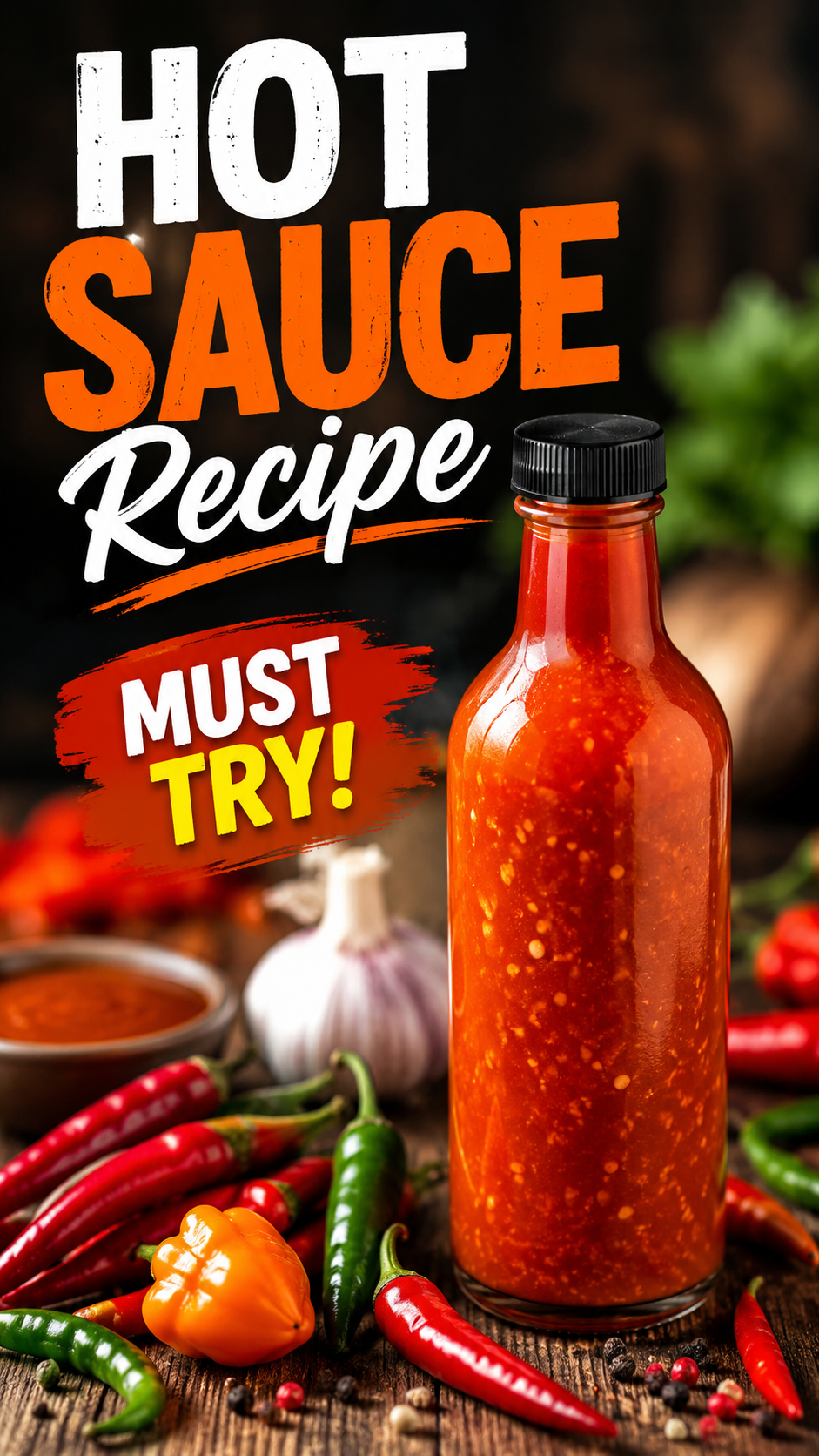
I used to have four different hot sauces in my fridge door at all times.
Cholula for eggs. Sriracha for noodles. A fancy habanero one for when I wanted to feel spicy and adventurous. And a backup bottle for when I inevitably ran out of one of the other three.
Then I made hot sauce from scratch one lazy Sunday afternoon, mostly because I had a bag of peppers about to go bad. And now? I haven’t bought a bottle in months.
It’s spicier, fresher, and somehow takes less effort than driving to the store.
If you’ve never made your own hot sauce, I get the hesitation. It sounds like one of those “fun weekend project” recipes that ends up taking your entire Saturday and half your kitchen counter.
It’s not. This one comes together in under 30 minutes of actual work, and most of that is just waiting for peppers to soften.
Let’s get into it.
Why This Recipe Works
Store bought hot sauce is made to sit on a shelf for two years. That means preservatives, stabilizers, and a flavor that’s been dialed back so it doesn’t offend anyone.
Homemade hot sauce doesn’t have to play it safe.
You control the heat. You control the tang. You control whether it tastes like a smoky Mexican salsa or a bright, vinegary Louisiana style sauce.
And here’s the part that actually surprised me: fermenting isn’t required. You can get incredible depth of flavor with a quick cook method, which is exactly what we’re doing here. No waiting weeks for peppers to bubble away on your counter.
What You’ll Need
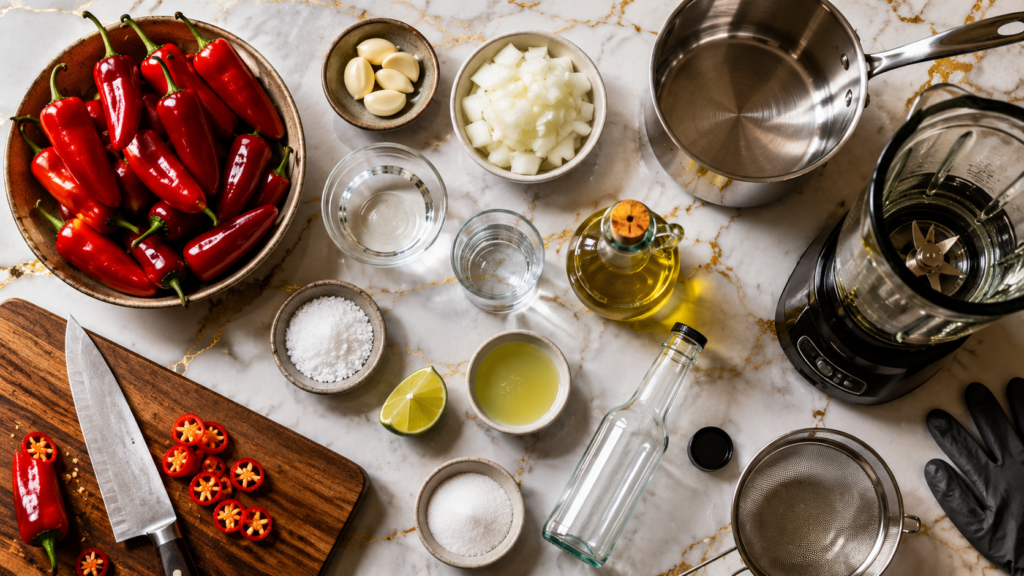
For the hot sauce:
| Ingredient | Amount |
|---|---|
| Fresh red jalapeños or fresno peppers | 1 lb (about 10-12) |
| Garlic cloves | 4, peeled |
| White onion | 1/2, roughly chopped |
| White vinegar | 3/4 cup |
| Water | 1/2 cup |
| Fresh lime juice | 2 tbsp |
| Kosher salt | 1 1/2 tsp |
| Granulated sugar | 1 tsp |
| Olive oil | 1 tbsp |
That’s it. Nine ingredients, and you probably already have half of them.
A quick note on peppers: the type you choose is basically the entire recipe. Jalapeños and fresnos give you a solid medium heat that most people can handle. Swap in serranos if you want more kick, or habaneros if you’re feeling brave (or slightly unhinged).
Tools You’ll Need
- Medium saucepan
- Blender or food processor
- Fine mesh strainer (optional, but recommended)
- Glass bottle or jar with a tight lid
- Rubber gloves (trust me on this one)
Pro Tips
- Wear gloves when handling the peppers. I learned this the hard way after touching my eye about an hour after chopping habaneros. It was not a good afternoon.
- Toast the garlic and onion first. A quick sauté in olive oil before everything hits the blender adds a layer of flavor that raw versions just don’t have.
- Don’t skip the strain. If you want that classic, pourable hot sauce texture (think Cholula or Tabasco), running it through a fine mesh strainer makes a huge difference. Skip it if you like a chunkier, salsa-style sauce.
- Taste as you go. Heat levels in peppers can vary wildly, even within the same bag. Add the vinegar gradually and taste before committing to the full amount.
- Let it sit overnight before judging it. Fresh hot sauce tastes a little sharp right after blending. The flavors mellow and round out after resting in the fridge for a day.
How to Make It
Step 1: Prep the peppers
Remove the stems from your peppers. Leave the seeds in if you want more heat, or scrape them out if you’d rather keep things milder.
Roughly chop the peppers, garlic, and onion.
Step 2: Soften everything
Heat the olive oil in a saucepan over medium heat. Add the onion and garlic, and cook for 2-3 minutes until fragrant and slightly softened.
Add the chopped peppers and cook for another 5 minutes, stirring occasionally, until everything has softened up.
Step 3: Simmer with liquid
Pour in the vinegar and water. Bring to a gentle simmer and let it cook for 10 minutes. This step mellows out the raw vinegar bite and helps everything blend into a smoother sauce.
Step 4: Blend
Transfer everything to a blender. Add the lime juice, salt, and sugar.
Blend on high for 1-2 minutes, until completely smooth.
Step 5: Strain (optional but worth it)
Pour the blended sauce through a fine mesh strainer into a bowl, pressing with a spoon to get every last drop through. This removes the seeds and skins for that classic bottled texture.
Step 6: Bottle it up
Pour into a clean glass bottle or jar. Let it cool completely before sealing and popping it in the fridge.
Substitutions and Variations
| Want to… | Try this |
|---|---|
| Make it milder | Swap in poblano or Anaheim peppers |
| Make it hotter | Add 1-2 habaneros or a ghost pepper |
| Go smoky | Use chipotles in adobo instead of fresh peppers |
| Skip the sugar | Leave it out entirely, or use honey instead |
| Add fruitiness | Blend in half a mango or a few pineapple chunks |
| Go green | Use jalapeños with seeds removed and skip the red peppers entirely |
Make Ahead Tips
This hot sauce actually gets better with a little time.
Make it up to a week ahead, and let it hang out in the fridge so the flavors have a chance to meld together. It’ll taste sharper on day one and rounder by day three.
Nutritional Info & Pairings
Roughly speaking, one tablespoon of this hot sauce comes in around 5-8 calories, mostly from the tiny bit of natural sugar in the peppers and onion. It’s essentially fat free and low in carbs.
Please verify exact values with a nutrition calculator before relying on them for any dietary needs. Every batch of peppers has slightly different sugar and water content, so this is an estimate, not gospel.
As for pairings, this sauce is ridiculously versatile:
- Drizzled over scrambled eggs or breakfast tacos
- Mixed into mayo for a spicy sandwich spread
- Stirred into soups and stews for a kick
- Tossed with fried chicken or wings
- Added to a Bloody Mary (don’t knock it till you try it)
Storage & Leftovers
Store your hot sauce in an airtight glass bottle in the fridge, where it’ll keep well for up to 3 months.
The vinegar and salt content act as natural preservatives, so you don’t need to worry about it going bad quickly. That said, if you ever notice mold or an off smell, toss it.
No reheating necessary here. Just shake before each use since natural separation is completely normal.
FAQ
Do I need to ferment the peppers first?
Nope. Fermented hot sauce has its own distinct tangy flavor, but this quick cook method gets you a delicious, well balanced sauce without the multi week wait.
Why is my hot sauce too thin or too thick?
Add a splash more water if it’s too thick, or simmer it for a few extra minutes uncovered if it’s too thin. The consistency is easy to adjust after blending.
Can I use dried peppers instead of fresh?
Yes. Rehydrate them in hot water for 15-20 minutes first, then use the soaking liquid in place of the water in the recipe for extra depth.
Is this sauce shelf stable at room temperature?
I’d still recommend refrigerating it. The acidity helps preserve it, but without commercial canning methods, the fridge is the safer bet.
How spicy is this, really?
With jalapeños or fresnos and the seeds left in, you’re looking at a solid medium heat. Comparable to a mid range store bought sauce, not a “why did I do this to myself” level of spicy.
Wrapping Up
Homemade hot sauce is one of those recipes that feels fancier than it actually is.
You end up with something that looks like it came from a specialty shop, tastes better than anything from the grocery store, and took you less time than a trip to buy the ingredients would have.
Once you make your own batch, it’s genuinely hard to go back to the bottled stuff.
If you try this recipe, come back and leave a comment letting me know which peppers you used and how spicy you went. And if you have any questions about swaps or heat levels, drop them below. I read every single one.