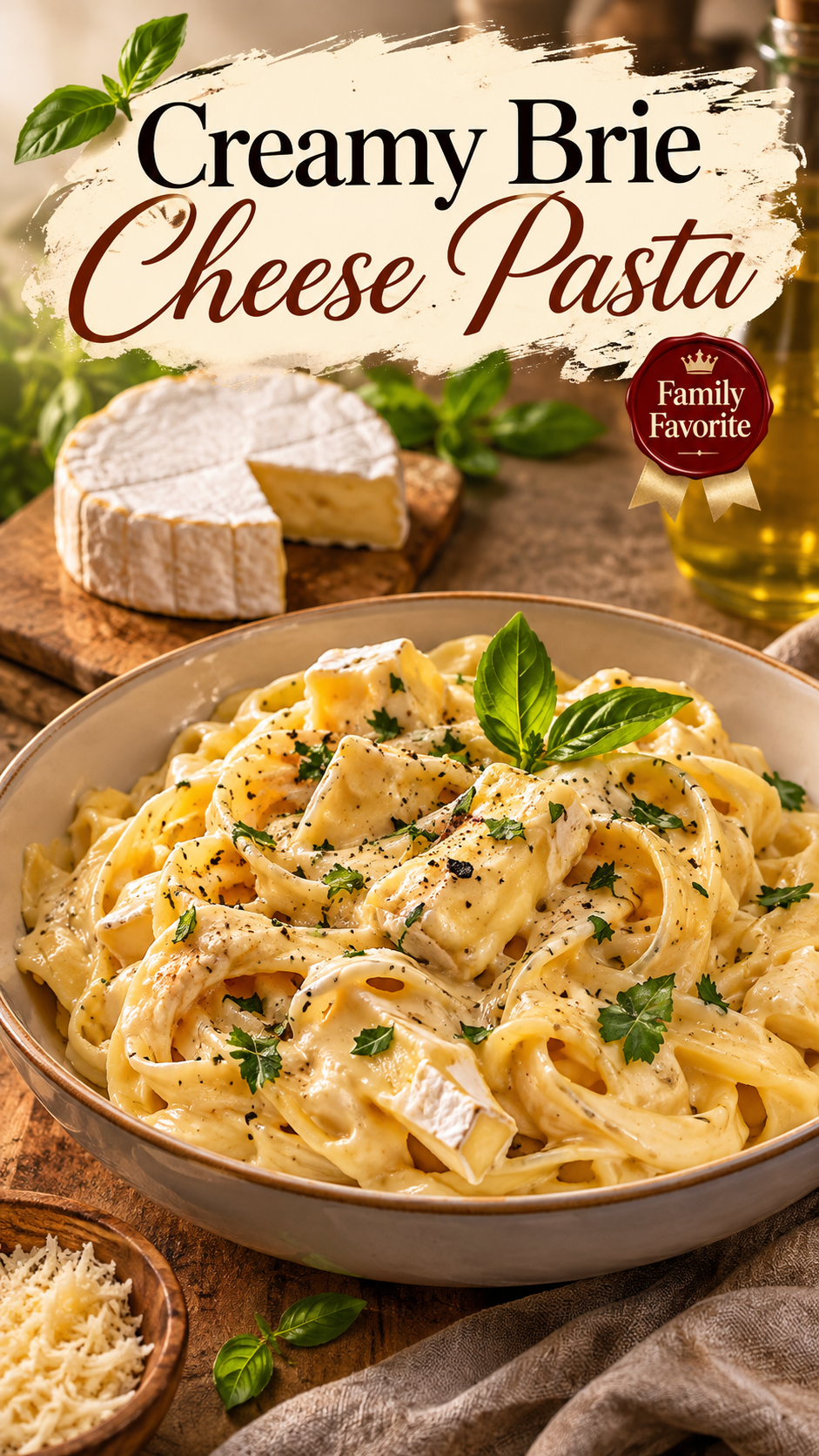
This creamy brie cheese pasta turns one wheel of cheese into the silkiest sauce you’ve ever tasted. Ready in 20 minutes, tastes like it took all day.
I bought a wheel of brie for a cheese board and then, at 6pm on a random Tuesday, decided it was going in a pot of pasta instead.
No regrets. Genuinely none.
Silas walked into the kitchen, saw me stirring melted cheese into noodles, and just said “wait, that’s brie?” And then ate two bowls.
That’s the whole review, honestly. Two bowls from a man who claims he’s “not that into pasta.”
Here’s the thing about brie that most people don’t realize: once it melts, it loses that funky rind smell and turns into this rich, almost buttery sauce. It’s mild. It’s creamy in a way that regular cream sauces can’t touch. And it clings to pasta like it was made for this exact job.
This isn’t a fussy recipe. It’s one pot, a handful of ingredients, and about 20 minutes of your evening. But it tastes like something you’d order at a small Italian place with candles on the table.
What You’ll Need
| Ingredient | Amount |
|---|---|
| Brie cheese (rind removed) | 8 oz |
| Pasta (fettuccine or penne) | 12 oz |
| Butter | 2 tbsp |
| Garlic, minced | 3 cloves |
| Heavy cream | 3/4 cup |
| Reserved pasta water | 1/2 to 1 cup |
| Parmesan, grated | 1/2 cup |
| Fresh thyme (or 1/2 tsp dried) | 1 tsp |
| Salt | to taste |
| Black pepper | to taste |
| Red pepper flakes (optional) | pinch |
| Fresh parsley, chopped | for garnish |
A quick note on the brie: the rind is edible, but I’d skip it here. It melts a little chalky and can make your sauce grainy instead of silky. Trim it off before you start.
Tools You’ll Need
- Large pot for boiling pasta
- Large skillet or sauté pan
- Wooden spoon or silicone spatula
- Sharp knife for the brie and garlic
- Measuring cups
Pro Tips
1. Room temp brie melts faster and smoother. Pull it out of the fridge 20 minutes before you start cooking. Cold brie thrown into a hot pan can seize up a bit before it fully melts down.
2. Save more pasta water than you think you need. Brie sauce thickens fast as it cools, and that starchy water is what saves you from a gluey, clumpy mess later.
3. Low heat is non-negotiable. Cheese sauces break when they get too hot too fast. Keep your burner on medium-low once the brie goes in, and you’ll get that glossy, stretchy texture every time.
4. Add parmesan off the heat. It melts smoother when the pan isn’t blazing, and you avoid that stringy, clumped-up texture parmesan gets when it overheats.
5. Undersalt the pasta water slightly. Brie and parmesan both bring a good amount of salt on their own. You can always add more at the end, but you can’t take it away.
Step-by-Step Instructions
- Boil your pasta. Bring a large pot of salted water to a boil and cook your pasta until just shy of al dente, about a minute less than the package says. It’ll finish cooking in the sauce.
- Reserve your pasta water. Right before draining, scoop out at least 1 cup of the starchy water and set it aside. Drain the pasta and set it aside too.
- Build your base. In the same pot or a large skillet, melt the butter over medium heat. Add the minced garlic and cook for about 30 seconds, just until fragrant. Don’t let it brown.
- Lower the heat. Turn the burner down to medium-low before adding any dairy. This is the step people skip and then wonder why their sauce is grainy.
- Melt in the brie. Add the brie in chunks, stirring constantly. It’ll look weird and clumpy for a minute. Keep stirring. It comes together, I promise.
- Pour in the cream. Once the brie is mostly melted, add the heavy cream and stir until smooth. Let it simmer gently for 2 minutes.
- Add the pasta back in. Toss the cooked pasta into the sauce, along with a splash of the reserved pasta water. Toss until every noodle is coated.
- Finish with parmesan. Take the pan off the heat and stir in the grated parmesan, thyme, salt, and pepper. Add more pasta water a splash at a time if the sauce feels thick.
- Taste and adjust. This is the moment to add red pepper flakes if you want a little heat, or extra salt if it needs it.
- Serve immediately. Top with fresh parsley and a crack of black pepper. Brie sauce firms up as it sits, so this one’s best eaten fresh off the stove.
Substitutions and Variations
| Original | Swap | Notes |
|---|---|---|
| Fettuccine | Penne, rigatoni, or bowtie | Anything that holds sauce well works |
| Heavy cream | Half and half | Sauce will be slightly thinner |
| Brie | Camembert | Similar melt, slightly stronger flavor |
| Parmesan | Pecorino Romano | Sharper, saltier finish |
| Fresh thyme | Rosemary or sage | Rosemary is bolder, use less |
| Plain version | Add crispy bacon or pancetta | Stir in right before serving |
| Vegetarian boost | Add sautéed mushrooms | Cook separately, fold in at the end |
| Extra veggies | Add wilted spinach or arugula | Stir in during the last minute of cooking |
Make Ahead Tips
This one’s genuinely best made fresh, since the sauce is happiest right off the stove. But you can prep ahead to make weeknight cooking faster:
- Trim the rind off your brie and store it covered in the fridge up to 2 days ahead.
- Mince your garlic and grate your parmesan up to a day in advance.
- If you do need to reheat leftovers, see the storage section below for how to bring the sauce back to life.
Nutrition Breakdown (Per Serving, Serves 4)
These numbers are estimates and will vary depending on your exact ingredients and brands.
| Nutrient | Amount |
|---|---|
| Calories | ~610 |
| Protein | 19g |
| Carbohydrates | 52g |
| Fat | 36g |
| Saturated Fat | 21g |
| Fiber | 2g |
| Sodium | 480mg |
Diet-Friendly Swaps
- Gluten-free: Use your favorite gluten-free pasta. Chickpea or brown rice pasta both hold up well here.
- Lower calorie: Swap heavy cream for half and half and cut the butter to 1 tablespoon.
- Extra protein: Stir in shredded rotisserie chicken or grilled shrimp at the end.
Meal Pairing Suggestions
This pasta is rich, so I like to balance it with something bright on the side.
- A simple arugula salad with lemon vinaigrette
- Roasted asparagus or broccolini
- Garlic bread, because more carbs never hurt anyone
- A glass of chilled sauvignon blanc, if that’s your thing
Time-Saving Tips
- Start boiling your pasta water before you do anything else, it takes the longest.
- Pre-mince your garlic while the water heats up.
- Grate your parmesan ahead of time so it’s ready to go the second the pan comes off the heat.
Leftovers and Storage
Brie sauce firms up significantly in the fridge, but it’s completely salvageable.
- Fridge: Store in an airtight container for up to 3 days.
- Reheating: Warm gently on the stove over low heat with a splash of milk or reserved pasta water, stirring constantly until it loosens back up. Microwaving works too, just do it in short bursts and stir between each one.
- Freezing: I don’t recommend it. Cream sauces tend to separate when frozen and thawed, and you’ll end up with a grainy texture no amount of stirring can fix.
FAQ
Can I use a different type of cheese instead of brie? Camembert is your closest match in both flavor and melt. Other soft cheeses like triple creme brie work well too.
Why did my sauce turn grainy? This almost always comes down to heat. If the pan is too hot when you add the cheese or cream, the fats and proteins separate. Keep it on medium-low and be patient.
Do I need to remove the rind? It’s not required, since brie rind is edible, but removing it gives you a smoother sauce. If you leave it on, just chop it small so it melts more evenly.
Can I make this dairy-free? This particular recipe leans heavily on the brie itself, so a true dairy-free version would need a different base entirely. It’s not one I’d recommend adapting.
What pasta shape works best? Anything with some texture or ridges to grab the sauce. Fettuccine, penne, and rigatoni are all great choices.
Can I double the recipe? Yes, just use a larger pan so the sauce has room to come together evenly, and give it a little extra time to melt through.
Wrapping Up
This creamy brie cheese pasta has become one of those recipes I reach for when I want dinner to feel a little special without actually doing much work.
If you end up making it, I’d love to hear how it turned out. Drop a comment below and let me know what cheese you used, or if you added your own twist.