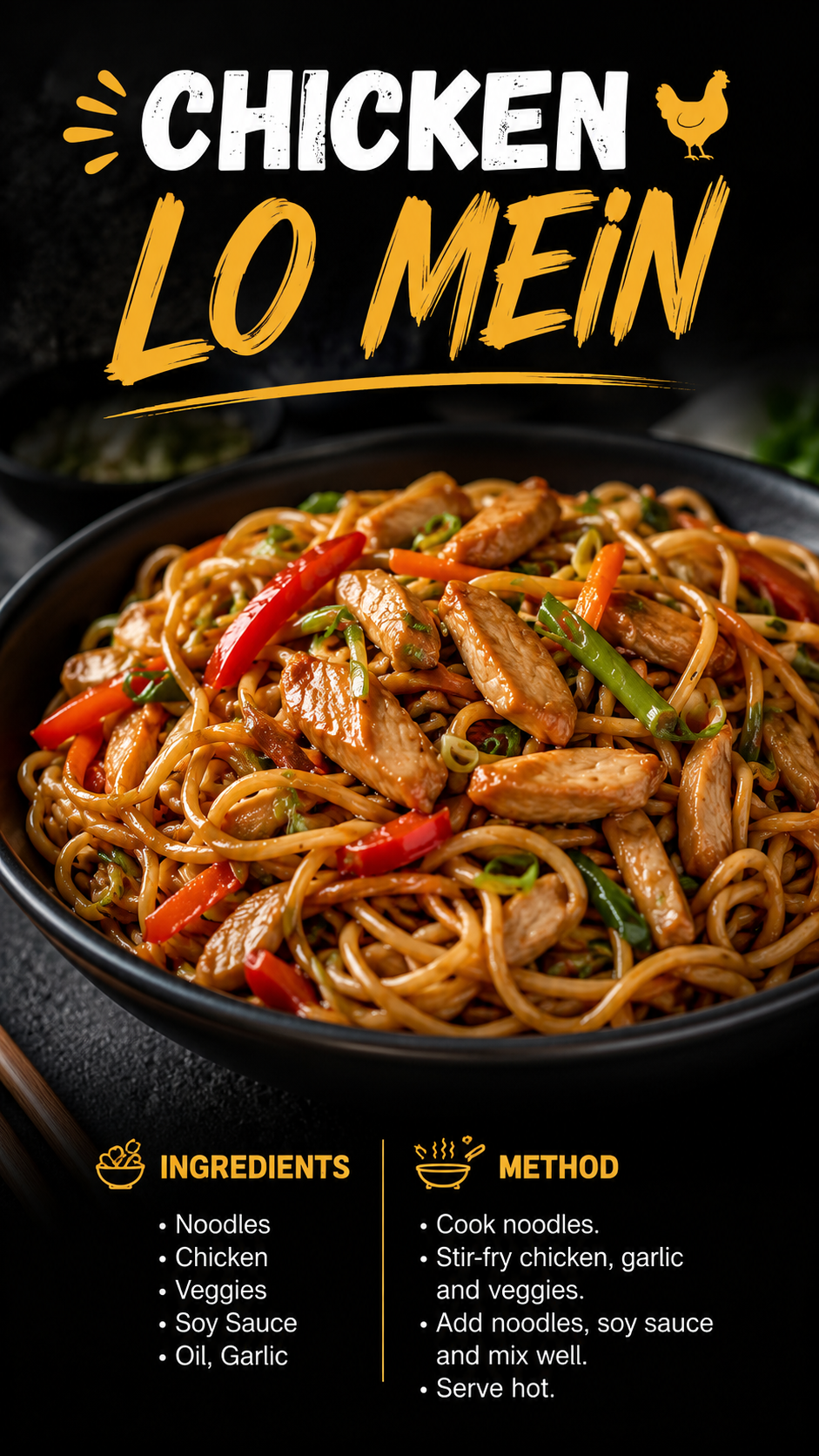
My husband used to order chicken lo mein from the same delivery app every single Friday.
We stopped a few months ago.
Not because we got tired of it. Because I finally figured out how to make a version at home that tastes better, costs less, and takes about the same amount of time as waiting for a delivery driver to find our building 😅
That last part still kind of surprises me.
Here’s a fact most recipes skip: lo mein noodles and chow mein noodles aren’t even cooked the same way, and that’s exactly why so many homemade versions turn out mushy.
Lo mein noodles get boiled, then tossed in sauce. Chow mein noodles get fried first. Mix up the method and you end up with sad, soft noodles instead of the chewy, springy ones you’re picturing right now.
This recipe uses the right method, the right ratios, and a sauce that actually tastes like the restaurant version. Stick around, because the sauce trick alone is worth it.
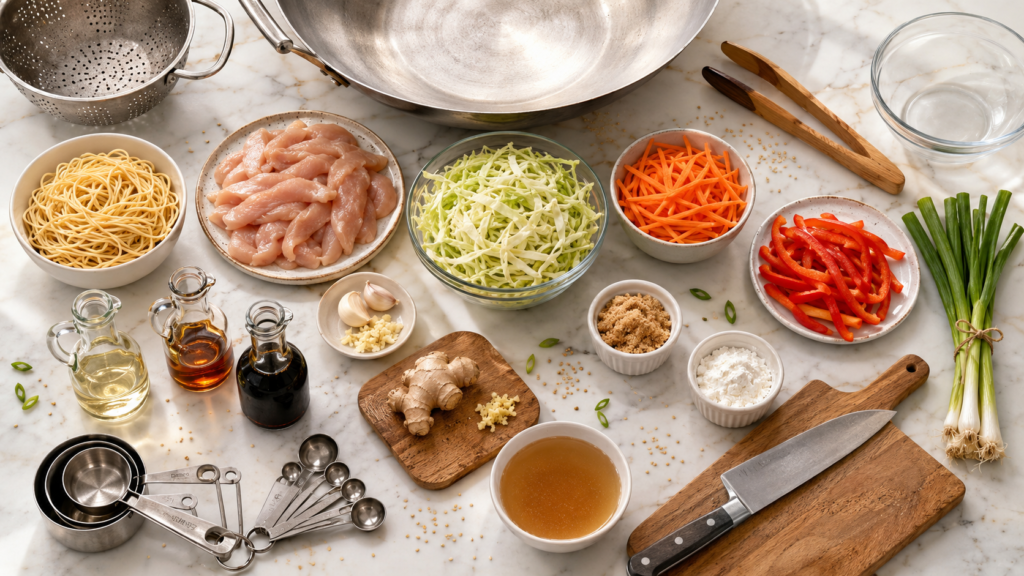
What You’ll Need
For The Chicken & Noodles
- 8 oz lo mein noodles (or fresh egg noodles, or thin spaghetti in a pinch)
- 1 lb boneless, skinless chicken breast or thighs, thinly sliced
- 2 cups shredded green cabbage
- 1 cup carrots, julienned or shredded
- 1 red bell pepper, thinly sliced
- 3 green onions, sliced (white and green parts kept separate)
- 3 garlic cloves, minced
- 1 tablespoon fresh ginger, minced
- 2 tablespoons vegetable or avocado oil
- 1 tablespoon sesame oil
For The Sauce
- 1/4 cup low sodium soy sauce
- 2 tablespoons oyster sauce
- 1 tablespoon dark soy sauce (optional, mostly for color)
- 1 tablespoon brown sugar
- 1 teaspoon cornstarch
- 1/4 cup chicken broth or water
Tools You’ll Need
- Large wok or wide skillet
- Tongs
- Mixing bowls
- Sharp knife and cutting board
- Colander
- Measuring spoons and cups
How To Make Chicken Lo Mein
- Whisk all the sauce ingredients together in a small bowl and set it aside. Two minutes, tops.
- Boil the noodles according to the package, usually 3 to 5 minutes. Drain and rinse with cold water so they stop cooking and don’t clump.
- Heat 1 tablespoon of oil in your wok over high heat. Add the chicken in a single layer and let it sit for a minute before stirring. Cook until golden, about 4 to 5 minutes, then move it to a plate.
- Add the remaining oil to the wok. Toss in the garlic, ginger, and the white parts of the green onion. Stir for 30 seconds, just until it smells incredible.
- Add the cabbage, carrots, and bell pepper. Stir fry for 3 to 4 minutes until they soften slightly but still have crunch.
- Return the chicken to the wok. Add the noodles and pour the sauce over everything.
- Toss continuously for 2 to 3 minutes until the noodles are glossy and coated. The cornstarch thickens the sauce as it heats.
- Top with the green parts of the scallions and serve right away.
That’s it, really. Fifteen ingredients sound like a lot until you realize half of them go straight into one bowl together.
Pro Tips
One of these is the actual reason restaurant lo mein tastes different from most homemade attempts, and it’s not the wok.
- Slice the chicken against the grain. This one change makes the texture noticeably more tender. Cutting with the grain gives you chewy, stringy bites instead.
- Don’t overcook the noodles. Pull them about 30 seconds before the package says, since they keep cooking once they hit the hot wok.
- Prep every ingredient before turning on the stove. Lo mein moves fast once it starts. Chopping carrots while the chicken burns is a rough night.
- Use the highest heat your stove allows. A wok needs serious heat to get that slightly smoky flavor cooks call wok hei. Low heat just steams everything instead of searing it.
- Taste your sauce before adding it. Soy sauce brands vary a ton in saltiness, so a quick taste test saves you from an overly salty dinner.
Substitutions And Variations
No lo mein noodles on hand? Spaghetti, linguine, or even ramen noodles (skip the seasoning packet) all work fine here.
| Original | Substitute | Notes |
|---|---|---|
| Chicken breast | Chicken thighs | Juicier, slightly richer flavor |
| Chicken | Shrimp or tofu | Cook shrimp 2 minutes per side; pan fry tofu first |
| Oyster sauce | Hoisin sauce | Sweeter, less savory depth |
| Cabbage | Bok choy | Different crunch, still works great |
| Vegetable oil | Avocado oil | Higher smoke point, neutral taste |
Want it spicier? Add a tablespoon of chili garlic sauce into the sauce mix. Want it vegetarian? Skip the chicken and oyster sauce, swap in mushrooms, and use a vegetarian stir fry sauce instead.
Make Ahead Tips
Most of this can be prepped the night before.
- Slice the chicken and store it in the fridge for up to 24 hours.
- Chop all your vegetables and keep them in an airtight container.
- Mix the sauce and store it in the fridge for up to 3 days.
The one thing I wouldn’t do ahead of time is boil the noodles too early. They clump up and lose that chewy bite if they sit around too long before hitting the wok.
Nutrition And Smart Swaps
Here’s a rough breakdown per serving, based on 4 servings total.
| Nutrient | Amount |
|---|---|
| Calories | ~410 |
| Protein | 28g |
| Carbs | 45g |
| Fat | 12g |
| Sodium | 780mg |
Cutting carbs? Swap the noodles for spiralized zucchini or shirataki noodles. Watching sodium? Use low sodium soy sauce, cut the oyster sauce in half, and add a splash more broth to balance the flavor back out.
For a faster weeknight version, boil the noodles first and let them sit in the colander while you prep vegetables. That way nothing is idle and dinner moves about ten minutes quicker.
This dish pairs really well with steamed edamame or a simple cucumber salad if you want to round out the meal without much extra effort.
Leftovers And Storage
Lo mein keeps in the fridge for up to 4 days in an airtight container.
To reheat, add a splash of water or broth to a skillet over medium heat and stir until warmed through. The microwave works too, just cover the bowl loosely so the noodles don’t dry out.
Freezing isn’t great here. The noodles turn soft and a little strange once thawed, so I’d skip the freezer on this one.
FAQ
Can I use a different protein?
Yes. Beef sirloin, shrimp, and tofu all work great with this same sauce and method.
Why are my noodles sticking together?
They probably weren’t rinsed with cold water after boiling, or they sat too long before getting tossed in the wok.
Is lo mein the same as chow mein?
Not quite. Lo mein noodles are boiled then tossed in sauce. Chow mein noodles are fried first, which gives them a crispier texture.
Can I make this gluten free?
Use gluten free noodles and tamari instead of regular soy sauce, and double check your oyster sauce label since some brands sneak in wheat.
What if I don’t have a wok?
A large, wide skillet works fine. Just make sure it’s hot before adding anything, since that heat does a lot of the flavor work.
Wrapping Up
Homemade chicken lo mein turned into one of those recipes I make on repeat, mostly because it genuinely takes less time than waiting on delivery.
Once the sauce ratio clicks for you, you can swap in whatever protein or vegetables are sitting in your fridge and it still works.
Give it a try this week and let me know in the comments how it turned out. And if you ran into any questions while making it, drop those below too. I read every single one.


