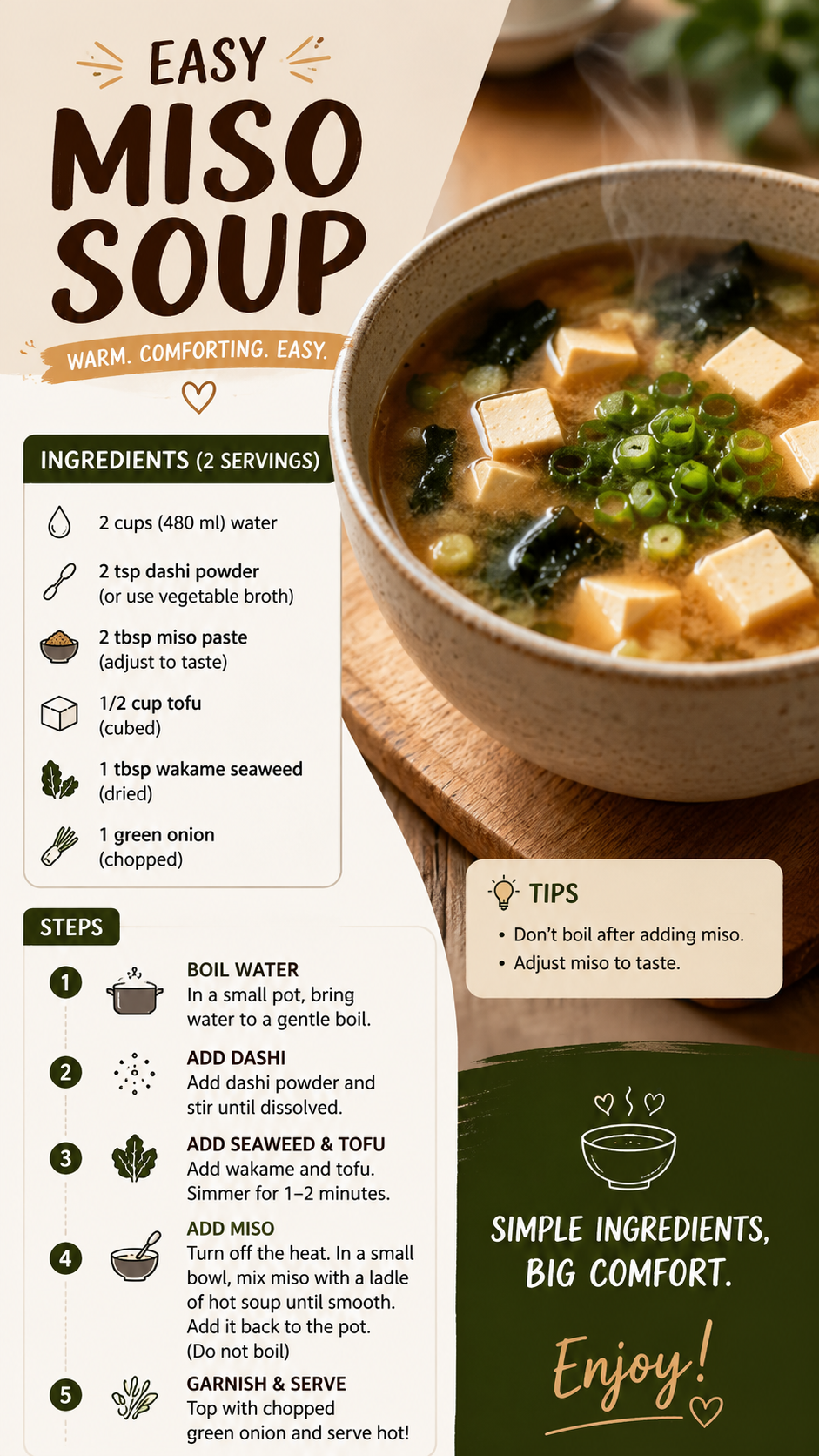
You know that warm, savory soup they bring you at Japanese restaurants before your sushi arrives? The one you secretly wish was a full meal?
You can make it at home. And it’s embarrassingly easy.
I’m talking 4 core ingredients, one pot, and about 12 minutes start to finish. This miso soup recipe is the kind of thing you’ll add into your weekly dinner rotation and never look back.
And honestly? Once you know what goes into it, you’ll wonder why you ever thought it was complicated.
What Makes Miso Soup So Special
Here’s something most people don’t know: miso soup is over 1,300 years old. 🍜
It was originally a luxury food served to Japanese nobility. Now it’s a daily staple eaten by millions of people in Japan — often at breakfast, lunch, and dinner.
The secret is the dashi, a light Japanese broth made from just two ingredients. That’s the foundation everything else is built on. Get that right, and you’ve got a restaurant-quality bowl every single time.
What You’ll Need
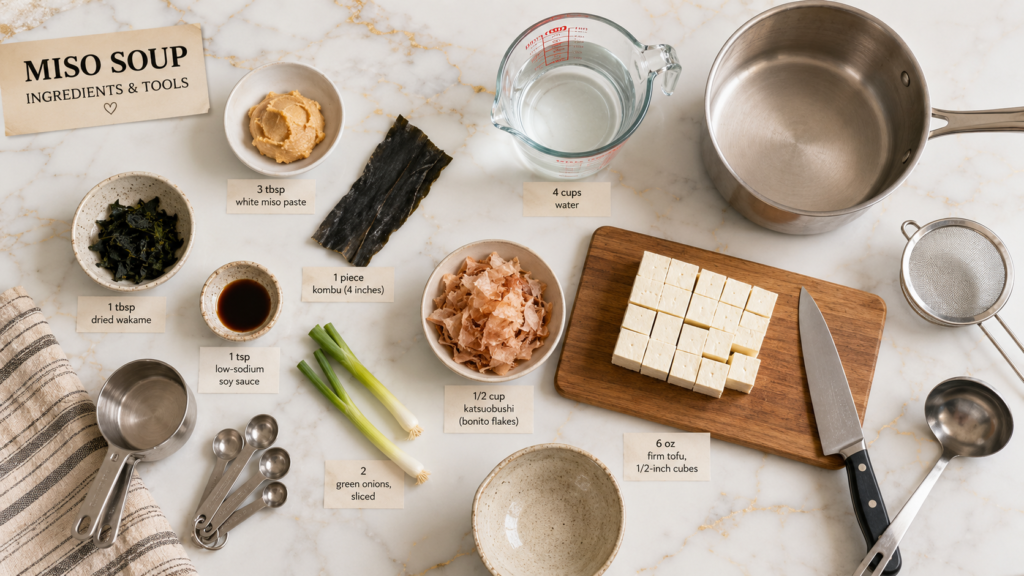
For the Dashi (Japanese Broth)
| Ingredient | Amount |
|---|---|
| Water | 4 cups |
| Kombu (dried kelp) | 1 piece (about 4 inches) |
| Katsuobushi (bonito flakes) | 1/2 cup loosely packed |
For the Soup
| Ingredient | Amount |
|---|---|
| White miso paste | 3 tablespoons |
| Firm tofu | 6 oz, cubed into 1/2-inch pieces |
| Dried wakame seaweed | 1 tablespoon |
| Green onions (scallions) | 2 stalks, thinly sliced |
| Low-sodium soy sauce | 1 teaspoon (optional) |
Tools You’ll Need
- Medium saucepan (2-3 quart)
- Fine mesh strainer
- Ladle
- Small bowl (for dissolving miso)
- Knife and cutting board
- Measuring cups and spoons
Pro Tips
A few things I’ve learned from making this more times than I can count:
- Never boil miso. This is the biggest mistake people make. Boiling kills the beneficial probiotics and dulls the flavor. Add miso at the very end, with the heat turned off or barely at a simmer.
- Taste your miso before adding more. Miso varies a lot in saltiness depending on the brand. Start with 2.5 tablespoons, taste, then adjust.
- Soak your wakame first. Dried wakame expands a lot (like 5x its size). Soak it in warm water for 5 minutes, drain it, then add it to the soup. Otherwise your bowl will be more seaweed than soup.
- The kombu should never boil either. Remove it from the water right before it starts boiling. If it boils, the broth gets bitter and slimy. You want clean and light.
- Fresh dashi beats store-bought every time. The instant dashi powder works in a pinch, but making it from scratch takes only 10 minutes and the difference in depth of flavor is wild.
How to Make Miso Soup
Step 1: Make the Dashi
Add 4 cups of cold water and the kombu piece to your saucepan.
Let it sit for 10 minutes to start infusing (this step is optional but makes the broth noticeably better).
Heat on medium. Watch it carefully. The moment you see small bubbles start forming at the bottom and the water is just about to boil, remove the kombu and discard it.
Bring the water to a full boil, then add the bonito flakes. Turn the heat down to low immediately.
Let it simmer for 3 minutes. Don’t stir.
Remove from heat and let it sit for 2 minutes. Then pour through your fine mesh strainer into a bowl or measuring cup. Press gently on the flakes to squeeze out every drop.
Your dashi is ready.
Step 2: Prep Your Toppings
While the dashi rests:
- Cube your tofu into small 1/2-inch pieces
- Soak your wakame in warm water for 5 minutes, then drain and roughly chop if the pieces are large
- Slice your green onions thinly
Step 3: Build the Soup
Pour your strained dashi back into the saucepan and heat on medium-low until it’s gently steaming but not bubbling.
Add the tofu and wakame. Let them warm through for about 2 minutes.
In your small bowl, scoop out 3 tablespoons of miso paste. Add a ladleful of the hot dashi to the bowl and whisk until the miso is fully dissolved with no lumps. This step matters — adding miso paste directly to the pot often leaves clumps.
Turn off the heat. Pour the dissolved miso back into the pot and stir gently.
Taste it. Add a splash of soy sauce if it needs more depth, or a tiny bit more miso if you want it saltier.
Step 4: Serve
Ladle into bowls immediately. Top with fresh green onions.
Eat while it’s hot. This soup does not wait.
Substitutions and Variations
No bonito flakes? You can make a vegan dashi using just kombu. Let it soak in cold water overnight in the fridge instead of heating it, then strain. It won’t be quite as rich, but it’s still really good.
No kombu? Use 4 cups of good quality vegetable broth as your base and skip the dashi-making step entirely. Not traditional, but it still works.
Miso swap:
- White miso (shiro): Mild, slightly sweet. Great for beginners.
- Red miso (aka): Stronger, saltier, more intense. Aged longer.
- Mixed miso (awase): A blend of both. This is what most Japanese households use.
Tofu alternatives: Silken tofu gives a softer, more delicate texture. Firm tofu holds its shape better. Both work — just depends on your preference.
Add-ins that are totally fair game:
- Sliced mushrooms (shiitake or enoki)
- Thinly sliced daikon radish
- Corn kernels
- A soft-boiled egg
- Baby spinach stirred in at the end
Make Ahead Tips
The dashi can be made ahead and stored in the fridge for up to 5 days, or frozen for 3 months. Make a big batch and you’ll have miso soup on the table in under 5 minutes on weeknights.
The soup itself doesn’t keep as well once the miso is added. Make the dashi ahead, then finish the soup fresh each time.
Nutritional Information (Per Serving)
| Nutrient | Amount |
|---|---|
| Calories | ~70 kcal |
| Protein | 5g |
| Carbohydrates | 5g |
| Fat | 2.5g |
| Sodium | ~700mg |
| Fiber | 1g |
Based on 4 servings using firm tofu and white miso. Sodium varies by miso brand.
Diet-friendly notes:
- ✅ Vegan/Vegetarian (use kombu-only dashi)
- ✅ Gluten-free (verify your miso brand is GF-certified)
- ✅ Low-calorie
- ✅ High in probiotics and gut-friendly bacteria
- ❌ Not low-sodium by default (use low-sodium miso to reduce)
Meal Pairing Suggestions
Miso soup is incredibly versatile. Pair it with:
- Steamed white rice — the classic Japanese combo
- Sushi or onigiri — for a light, satisfying meal
- Salmon teriyaki — the flavors are made for each other
- Pan-seared tofu rice bowls — keeps everything in the same flavor family
- A simple Japanese salad with sesame dressing
Or honestly? A bowl of miso soup on its own at 6am before the world wakes up. That’s a completely valid meal.
Leftovers and Storage
Miso soup is really best eaten fresh. The tofu soaks up liquid and gets spongy, and the wakame keeps expanding.
That said, if you have leftovers:
- Store in an airtight container in the fridge for up to 2 days
- Reheat gently on the stove over low heat — do not microwave at high power
- Add a splash of fresh water if it’s gotten too concentrated
- Taste and adjust with a tiny pinch more miso if needed
The dashi base (without miso) keeps for 5 days in the fridge or up to 3 months in the freezer.
FAQ
Do I have to use dashi? Can I just use water? Technically yes, but the soup will taste flat and one-dimensional. Dashi is the backbone. Even a quick 10-minute version makes a huge difference.
Where do I buy kombu and bonito flakes? Most Asian grocery stores carry both. You can also find them online easily. They’re shelf-stable and last a long time, so they’re worth having in your pantry.
My miso soup tastes too salty. What do I do? Add more hot water or dashi to dilute it. This is why you start with less miso and taste before adding more.
Can I add noodles to miso soup? Yes! Thin rice noodles or soba work great. Cook them separately and add to your bowl before ladling in the soup.
Is miso soup actually healthy? Pretty much, yes. It’s low in calories, contains gut-friendly probiotics from the fermented miso, and seaweed is surprisingly nutrient-dense (iodine, vitamins, minerals). The main thing to watch is the sodium.
Can kids eat miso soup? Absolutely. It’s mild, warm, and not spicy at all. White miso is the gentlest option for picky eaters.
My miso has clumps in the soup. What went wrong? Skip dissolving the miso in a separate bowl first next time. Never add miso paste straight to the pot — it won’t dissolve evenly.
Wrapping Up
If there’s one recipe I’d tell someone to learn before anything else in Japanese cooking, it’s this one.
It’s fast. It’s cheap. It’s deeply comforting in a way that’s hard to explain until you’ve had a bowl on a quiet morning or a long evening.
And once you nail the dashi, you’ll realize you’ve actually unlocked the foundation of a whole cuisine. That’s not a small thing.
Give it a try this week, and then come back and let me know how it went in the comments below! Did you add any fun toppings? Use red miso instead of white? I genuinely want to know. Drop your questions there too — I’m happy to help troubleshoot.


