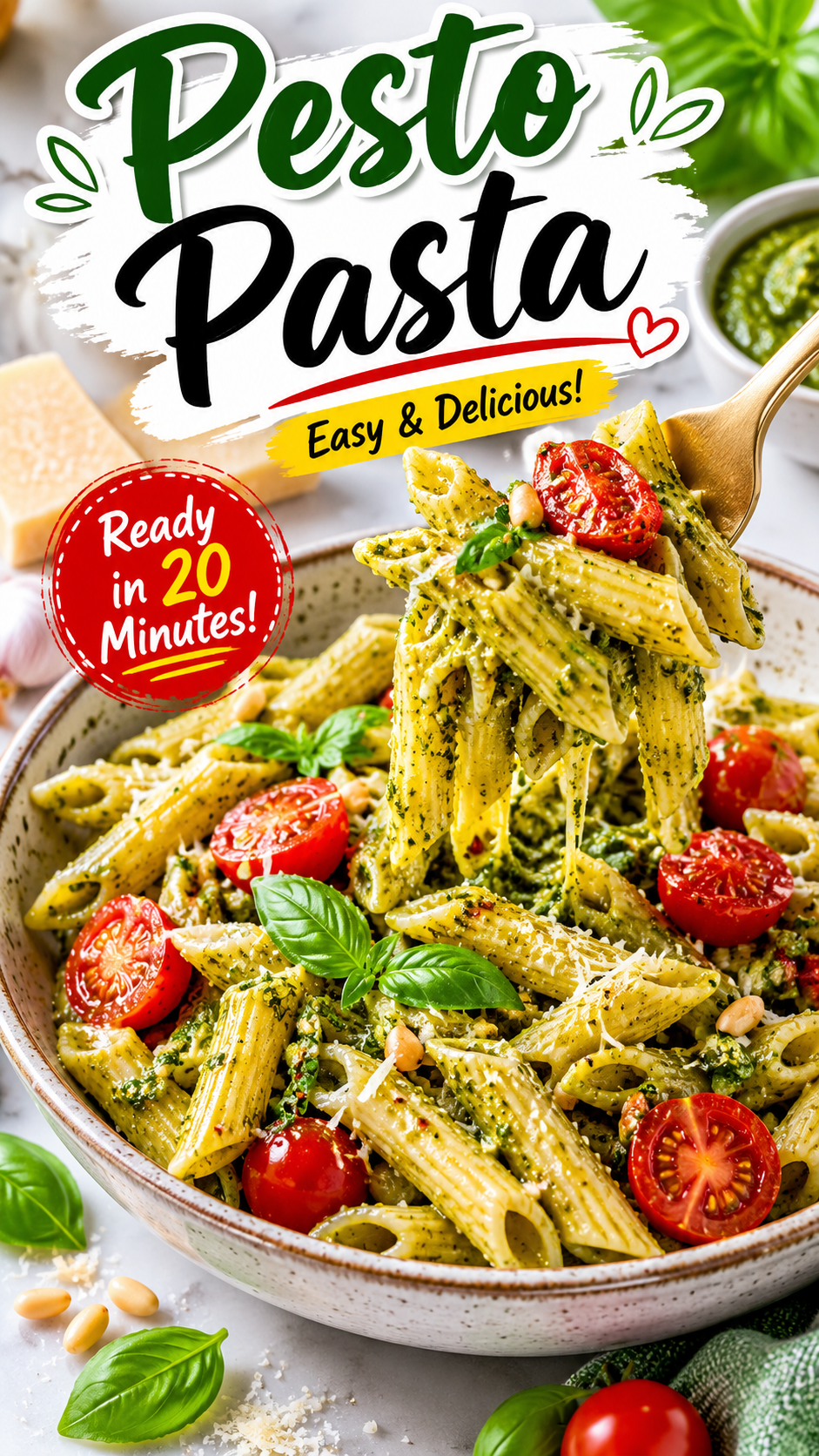
I used to grab pesto off the shelf without thinking twice.
Then I made it from scratch one rainy Tuesday, just to use up basil that was about to go bad.
I haven’t bought a jar since. 🌿
Here’s the thing nobody tells you: pesto pasta takes about 15 minutes start to finish. Less time than it takes to decide what to order for delivery.
And once you taste the difference between fresh and jarred, there’s no going back. The color alone is shocking. Bright, almost neon green, instead of that dull olive sludge from the store.
Let’s get into it.
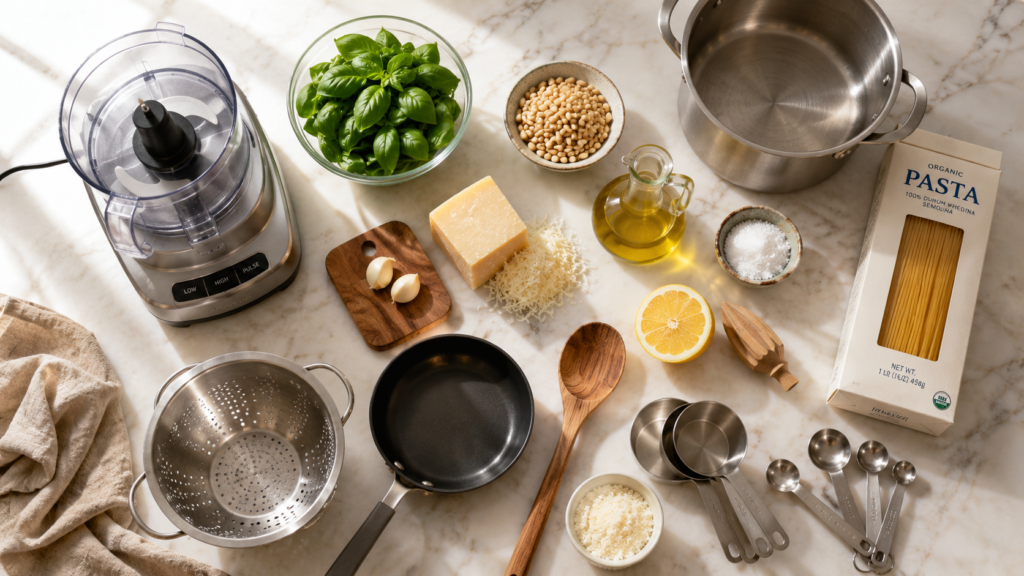
What You’ll Need
For the pesto:
- 2 cups fresh basil leaves, packed (stems removed)
- 1/2 cup pine nuts
- 1/2 cup grated Parmesan cheese
- 2 garlic cloves
- 1/2 cup extra virgin olive oil
- 1/2 teaspoon salt
- Juice of half a lemon
For the pasta:
- 1 lb spaghetti, linguine, or fusilli
- Salt for the pasta water
- 1/2 cup reserved pasta water
- Extra Parmesan for serving
Tools You’ll Need
- Food processor or blender
- Large pot
- Colander
- Measuring cups and spoons
- Tongs or a wooden spoon
- A small skillet (for toasting the pine nuts)
How to Make Pesto Pasta
Step 1: Toast the pine nuts
Toss the pine nuts in a dry skillet over medium heat for 2 to 3 minutes.
Shake the pan often. They go from golden to burnt in seconds, so don’t walk away.
This step feels optional. It isn’t. Toasted pine nuts have a completely different flavor than raw ones, deeper and almost buttery.
Step 2: Boil the pasta
Bring a large pot of salted water to a boil.
Cook your pasta according to the package directions, usually 9 to 11 minutes.
Right before draining, scoop out half a cup of the pasta water and set it aside. You’ll need it.
Step 3: Make the pesto
While the pasta cooks, add the basil, toasted pine nuts, garlic, Parmesan, salt, and lemon juice to your food processor.
Pulse a few times to break everything down.
With the processor running, slowly stream in the olive oil until it turns into a smooth, thick sauce.
Taste it. Add more salt if it needs it.
Step 4: Combine
Drain the pasta and add it back to the pot, off the heat.
Pour in the pesto and toss until every strand is coated.
Add the reserved pasta water a little at a time until the sauce loosens up and clings to the pasta instead of sitting on top of it.
Step 5: Serve
Top with extra Parmesan and a crack of black pepper.
That’s it. That’s the whole recipe.
Pro Tips
These are the small things that separate good pesto from the kind that turns brown and bitter by dinner time.
- Dry your basil completely before blending. Wet leaves water down the flavor and the color.
- Add the lemon juice right away. It slows down oxidation, which is the actual reason store-bought pesto looks so dull. Fresh basil starts browning the second it’s blended.
- Never cook the pesto directly on the stove. It’s a raw sauce. Heat from the hot pasta is enough to warm it through without killing the bright flavor.
- Save more pasta water than you think you need. You can always add more, but you can’t take it back out once it’s in there.
- Taste before you season. Parmesan is salty on its own, so go easy on the salt until the very end.
Substitutions and Variations
Pesto is forgiving. Here’s how to make it your own:
| Original | Swap | Why it works |
|---|---|---|
| Pine nuts | Walnuts or cashews | Cheaper, still creamy |
| Parmesan | Pecorino Romano | Sharper, saltier flavor |
| Basil | Half basil, half arugula | Peppery kick |
| Olive oil | Avocado oil | Milder taste |
| Pasta | Zucchini noodles | Lower carb option |
Want to switch it up further? Try stirring in sun-dried tomatoes, roasted red peppers, or a handful of baby spinach right into the pesto base.
Grilled chicken, shrimp, or crispy chickpeas all make solid additions if you want more protein on the plate.
Make Ahead Tips
Pesto holds up beautifully on its own, which makes it a great thing to prep early.
- Make the pesto up to 5 days ahead and store it in an airtight container with a thin layer of olive oil on top. That layer keeps air out and slows browning.
- Freeze leftover pesto in an ice cube tray, then pop the cubes into a freezer bag. Pull out exactly what you need later.
- Don’t combine the pesto with the pasta until you’re ready to eat. Pasta tossed in pesto and left to sit gets dry fast.
A Few Extra Details
Estimated Nutrition (per serving)
This recipe makes about 4 servings.
| Nutrient | Amount |
|---|---|
| Calories | ~520 |
| Protein | 14g |
| Carbs | 58g |
| Fat | 26g |
| Fiber | 3g |
These numbers shift depending on the pasta brand and how generous you are with the olive oil.
Diet Swaps
- Gluten-free: use a gluten-free pasta brand, rice or corn-based work best
- Dairy-free: swap Parmesan for nutritional yeast or a dairy-free hard cheese
- Nut-free: replace pine nuts with sunflower seeds or pumpkin seeds
- Low-carb: serve over zucchini noodles or spaghetti squash
Pairing Suggestions
A simple caprese salad on the side keeps things light and fresh.
Garlic bread is the obvious move if you want something heartier.
A crisp white wine, like a Sauvignon Blanc, cuts through the richness of the olive oil nicely.
Time-Saving Tip
Toast a big batch of pine nuts ahead of time and store them in the freezer. Toasted nuts keep well, so you’ll always have them ready whenever pesto cravings hit.
Leftovers and Storage
Pesto pasta keeps in the fridge for 3 to 4 days in an airtight container.
To reheat, add a splash of water or olive oil and warm it gently on the stove or in short bursts in the microwave. High heat for too long dulls the basil flavor fast.
If you made extra pesto without pasta, that freezes well on its own for up to 3 months.
FAQ
Why did my pesto turn brown?
Basil oxidizes quickly once it’s cut or blended. Lemon juice and a layer of olive oil on top both slow this down.
Can I make pesto without a food processor?
Yes. A blender works, or go traditional with a mortar and pestle for a chunkier texture and a slightly different flavor.
Can I freeze pesto pasta after it’s already mixed together?
It’s better to freeze the pesto and pasta separately. Frozen and reheated pasta tends to get mushy.
What’s the best pasta shape for pesto?
Long noodles like linguine or spaghetti let the sauce coat every strand. Short shapes like fusilli work too if you want it to catch in the curls.
Is pesto supposed to be cooked?
No. Pesto is a raw sauce by tradition. The warmth from the pasta is all it needs.
Wrapping Up
Fifteen minutes, a handful of ingredients, and suddenly weeknight dinner looks like something from a restaurant menu.
Once you taste fresh pesto next to the jarred stuff, you’ll understand exactly why I stopped buying it.
Make this one and tell me how it turned out in the comments. I want to know what swaps you tried, what you paired it with, and any questions you’ve got before your first batch. 🍝


