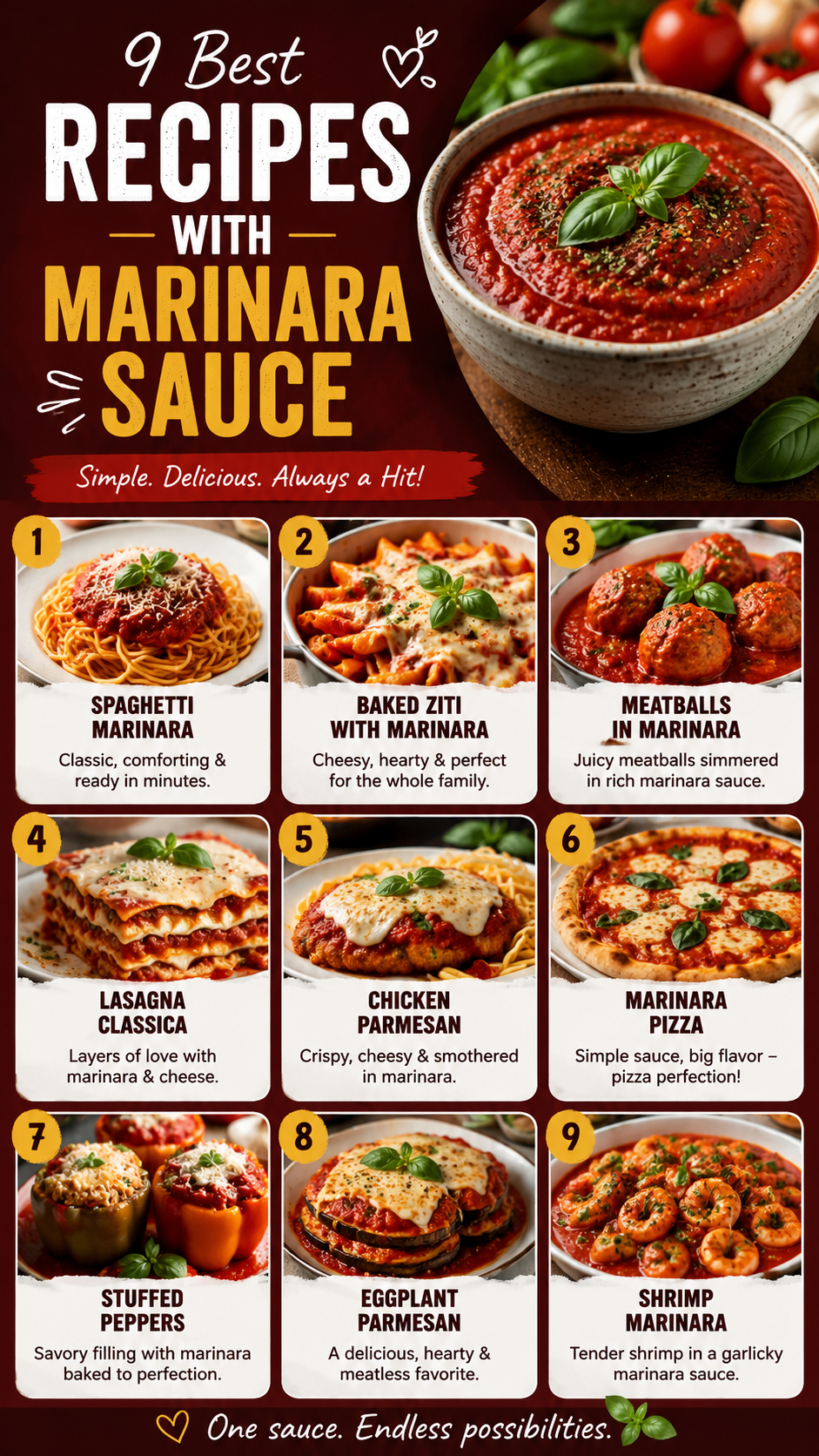
I haven’t bought a jar of marinara sauce in three years.
Not because I’m fancy. Because once you make it from scratch one time, the jarred stuff just tastes like ketchup with delusions of grandeur.
I used to think marinara needed hours on the stove and a grandma’s secret notebook handed down through generations.
Turns out, none of that is true.
This recipe takes about 35 minutes, most of which is just the sauce simmering while you do literally anything else. No fancy skills required.
And the ingredient that makes the biggest difference? It’s not garlic. It’s not even the tomatoes. I’ll get to it in a second. 👀
By the end of this, you’ll have a sauce that works on pasta, pizza, meatballs, or straight off a spoon when nobody’s watching.
What You’ll Need
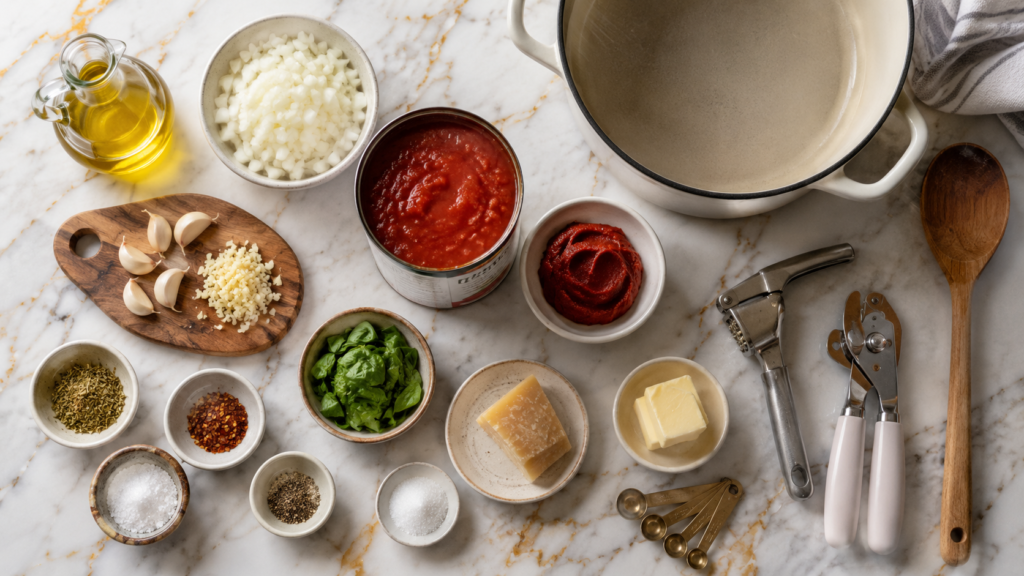
For the Sauce
- 3 tablespoons olive oil
- 1 small yellow onion, finely diced
- 5 garlic cloves, minced
- 1 (28 oz) can crushed tomatoes (San Marzano if you can find them)
- 2 tablespoons tomato paste
- 1 teaspoon dried oregano
- 1/2 teaspoon red pepper flakes
- 1 teaspoon salt, plus more to taste
- 1/2 teaspoon black pepper
- 1/2 teaspoon sugar
- 1 parmesan rind (this is the secret weapon)
- 1/2 cup fresh basil leaves, torn
- 2 tablespoons unsalted butter
Tools You’ll Need
- Large saucepan or Dutch oven
- Wooden spoon
- Garlic press or sharp knife
- Can opener
- Measuring spoons and cups
- Immersion blender (optional, for a smoother sauce)
- Glass jars for storage
How to Make Homemade Marinara Sauce
1. Sweat the onion. Heat the olive oil in your saucepan over medium heat. Add the onion and cook for 4 to 5 minutes, stirring occasionally, until it turns soft and a little see-through.
2. Add the garlic. Toss in the garlic and cook for another minute. You want it fragrant, not browned. Burnt garlic will make the whole pot taste bitter, so keep an eye on it.
3. Stir in the tomato paste. Add the tomato paste directly to the pan and cook it for 1 to 2 minutes. This step deepens the flavor more than people realize.
4. Pour in the crushed tomatoes. Add the crushed tomatoes, oregano, red pepper flakes, salt, pepper, and sugar. Stir everything together.
5. Drop in the parmesan rind. This is the move that separates homemade sauce from anything in a jar. The rind slowly melts into the sauce as it simmers, adding a salty, savory depth you can’t get any other way.
6. Simmer. Lower the heat and let the sauce simmer uncovered for 20 to 25 minutes, stirring every so often. It should thicken slightly and turn a deeper red.
7. Finish with butter and basil. Remove the parmesan rind. Stir in the butter until it melts, then fold in the fresh basil right at the end so it stays bright and doesn’t turn bitter.
8. Taste and adjust. Add more salt if needed. If it tastes a little sharp, that extra pinch of sugar is your friend.
Pro Tips
- Don’t skip the parmesan rind. Save rinds in your freezer every time you finish a block of parmesan. It’s the cheapest flavor upgrade in your whole kitchen.
- Use the back of your spoon to crush any big tomato chunks. It gives the sauce a smoother texture without needing a blender.
- Add the basil at the very end, not the beginning. Cooking it too long turns it dull and a bit grassy tasting.
- Taste your sauce three times during cooking, not once at the end. Flavor builds gradually, and you’ll catch a salt or acid problem way before it’s too late to fix.
- Let the sauce rest for 10 minutes off the heat before serving. The flavors settle and round out in a way that’s hard to notice if you serve it straight off the stove.
- Use a heavy-bottomed pot if you have one. Thin pots heat unevenly, which means a higher chance of scorched spots on the bottom while the rest barely simmers.
Substitutions and Variations
- No parmesan rind? Stir in 2 tablespoons of grated parmesan at the end instead.
- Want it spicier? Double the red pepper flakes or add a pinch of cayenne.
- No fresh basil? Use 1 teaspoon of dried basil, added earlier in the simmer instead of at the end.
- Vegan version: Swap the butter for olive oil and skip the parmesan rind, or use a vegan parmesan alternative.
- Want it meaty? Brown half a pound of ground beef or Italian sausage in the pan before adding the onion.
- Short on time? Skip the onion and garlic sauté and just simmer everything together for 30 minutes. It won’t be quite as deep in flavor, but it still beats anything from a jar.
- Want a smoother, restaurant-style texture? Run the finished sauce through an immersion blender for 10 seconds. It turns chunky sauce into something silky enough for a fancy dinner.
Make Ahead Tips
This sauce actually gets better with time, which makes it perfect for making ahead.
Make it up to 3 days before you need it and store it in the fridge. The flavors continue to meld the longer it sits.
You can also make a double batch on a Sunday and freeze half for a busy weeknight later. Future you will be thrilled.
If you’re prepping for a party, portion the sauce into the exact amounts you’ll need ahead of time. It saves you from scooping cold sauce out of a giant container while guests are already at the door.
Nutrition, Pairings, and Time-Saving Tips
Here’s roughly what you’re looking at per 1/2 cup serving of sauce:
| Nutrient | Approximate Amount |
|---|---|
| Calories | 90 |
| Fat | 6g |
| Carbs | 8g |
| Protein | 2g |
| Fiber | 2g |
| Sodium | 320mg |
These numbers will shift slightly depending on the exact tomatoes you use, so treat them as a solid ballpark.
If you’re watching sodium, the parmesan rind and added salt are where most of it comes from. Cutting the added salt in half and skipping the rind brings the sodium down by close to half.
What to serve it with:
- Spaghetti or any pasta shape you have on hand
- Meatballs, obviously
- Spread under cheese on a homemade pizza
- As a dipping sauce for mozzarella sticks or garlic bread
- Spooned over baked eggplant or chicken parmesan
Time-saving tip: Dice your onion and mince your garlic the night before and store them in the fridge. It cuts your active prep time down to about 5 minutes.
Leftovers and Storage
This sauce stores beautifully, which is half the reason I always make a big batch.
- Fridge: Store in an airtight container for up to 5 days.
- Freezer: Freeze in jars or freezer bags for up to 3 months. Leave a little room at the top of jars since the sauce expands as it freezes.
- Reheating: Warm it on the stove over low heat, stirring occasionally. Add a splash of water if it’s thickened up too much.
FAQ
Can I use whole tomatoes instead of crushed? Yes. Just blend or crush them by hand first so the sauce isn’t chunky and watery.
Why does my sauce taste too acidic? That’s usually the tomatoes talking. A pinch of sugar or a small piece of butter at the end balances it right out.
Can I make this in a slow cooker? Definitely. Sauté the onion and garlic first on the stove, then transfer everything to the slow cooker on low for 4 hours.
Is marinara the same thing as spaghetti sauce? Not exactly. Marinara is simpler and brighter, while a lot of jarred “spaghetti sauces” are heavier and sometimes include meat or cream already mixed in.
Can I make this without onion? You can, though you’ll lose some sweetness and depth. A small pinch of extra sugar can help fill that gap.
Why does my sauce taste flat even after adding salt? It’s probably missing acid or fat, not salt. A splash of red wine vinegar or that final pat of butter usually fixes it instantly.
Wrapping Up
Once you make marinara sauce from scratch, it’s hard to go back to the jarred version sitting on the grocery store shelf.
It’s cheaper, it tastes better, and it freezes like a dream for those nights when cooking feels like too much.
The parmesan rind trick alone is worth printing this recipe out and sticking it on your fridge.
Give this one a try this week and let me know in the comments how it turned out. And if you tried any of the swaps, like the slow cooker version or the meaty variation, I’d love to hear how that went too.


