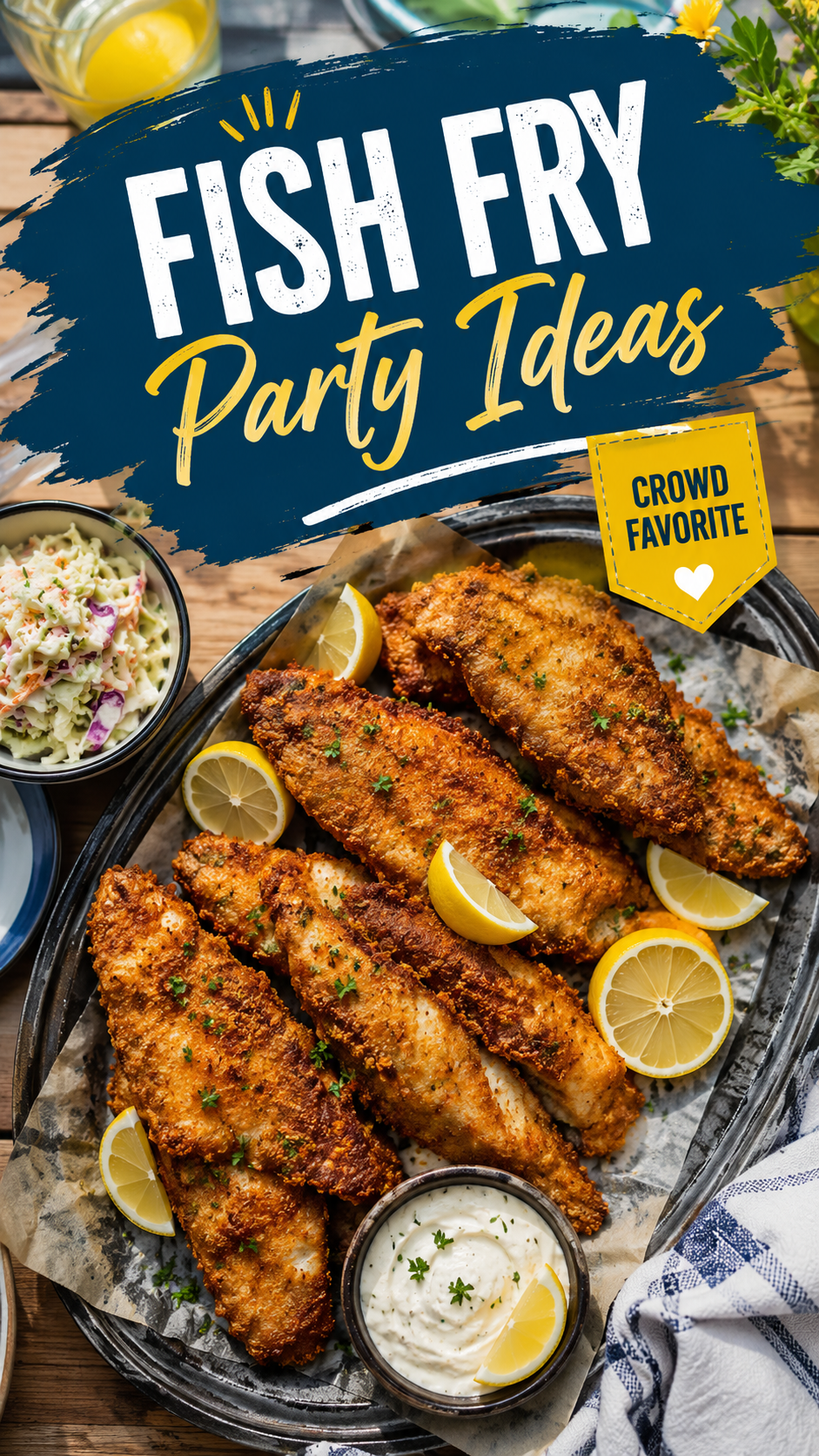
You know a fish fry is doing its job when people start showing up before the invite even says to.
That happened to me last summer. I set a time. People came an hour early. Nobody apologized.
That’s the kind of pull crispy, golden, fresh-out-of-the-oil fish has on people. And once you get the method down, it’s honestly one of the easiest party foods you can make.
So here’s my full fish fry setup. Ingredients, tools, the exact steps, and a bunch of tips I only learned after messing it up a few times first.
What You’ll Need
For the fish:
- 2 lbs catfish or cod fillets, cut into strips
- 1 cup buttermilk
- 1 tablespoon hot sauce
- 2 large eggs
For the coating:
- 1 cup cornmeal
- 1 cup all-purpose flour
- 1 tablespoon paprika
- 1 tablespoon garlic powder
- 1 teaspoon onion powder
- 1 teaspoon cayenne pepper
- 2 teaspoons salt
- 1 teaspoon black pepper
For frying:
- 6 cups peanut or vegetable oil
To serve:
- Lemon wedges
- Tartar sauce or remoulade
That’s it. Nothing exotic, nothing you’ll need to hunt down at three different stores.
Tools You’ll Need
- A large Dutch oven or deep fryer
- A candy or oil thermometer (this one is not optional, more on that below)
- A wire rack set over a baking sheet
- Tongs
- Two shallow bowls or pie dishes for dredging
- Paper towels
Pro Tips
1. Buy a thermometer. Actually use it. Most fish fry disasters come down to oil temperature, not the fish itself. Too cool and you get greasy, soggy fish. Too hot and the outside burns before the inside cooks. 350°F is your target the whole time.
2. Pat the fish dry before it touches the buttermilk. Wet fish plus buttermilk plus flour equals a coating that slides right off in the oil. A quick pat with paper towels first makes the breading actually stick.
3. Don’t crowd the pot. Fry in small batches. Dropping too much fish in at once drops the oil temperature fast, and that’s when things go soggy. Give the fish room to float.
4. Season the flour, not just the fish. A lot of people season the fish and forget the coating. The coating is what touches your tongue first, so that’s where the flavor needs to be loaded.
5. Let it rest on a wire rack, not paper towels. Paper towels trap steam underneath the fish, and steam ruins crispy. A wire rack lets air move underneath so the crunch actually survives the wait between frying and serving.
Full Instructions
Step 1: Marinate the fish. Combine the buttermilk, hot sauce, and eggs in a bowl. Add the fish strips and let them sit for at least 20 minutes. This tenderizes the fish and gives the coating something to grip.
Step 2: Mix the dry coating. In a shallow dish, whisk together the cornmeal, flour, paprika, garlic powder, onion powder, cayenne, salt, and pepper.
Step 3: Heat the oil. Pour the oil into your Dutch oven and heat it to 350°F. This will take longer than you expect, so start it early.
Step 4: Dredge the fish. Pull each piece from the buttermilk mixture, let the extra drip off, then press it into the dry coating on both sides. Really press it in. That’s what gives you the thick, craggy crust.
Step 5: Fry in batches. Carefully lower 4 to 5 pieces into the hot oil. Fry for 3 to 4 minutes, flipping once, until deep golden brown.
Step 6: Rest and repeat. Move the fried fish to your wire rack. Let the oil come back up to 350°F between batches, then repeat until all the fish is fried.
Step 7: Serve immediately. Fish fry waits for no one. Serve it hot with lemon wedges and tartar sauce on the side.
Substitutions and Variations
- No buttermilk? Mix 1 cup regular milk with 1 tablespoon vinegar or lemon juice, then let it sit for 5 minutes.
- Gluten-free? Swap the all-purpose flour for a 1-to-1 gluten-free flour blend. The cornmeal already works fine as is.
- Want it spicier? Double the cayenne, or add a few dashes of hot sauce right into the dry coating.
- Different fish? Tilapia, cod, haddock, and even shrimp all work beautifully with this same coating.
- Air fryer version? Spray the coated fish with oil and air fry at 400°F for about 10 minutes, flipping halfway.
Make Ahead Tips
You can mix your dry coating up to 3 days ahead and store it in an airtight container on the counter.
You can also marinate the fish in the buttermilk mixture up to 24 hours in advance in the fridge. Just don’t coat it until right before frying, or the breading gets soggy waiting around.
A Few Extra Details
Nutrition (per serving, based on 6 servings):
| Nutrient | Amount |
|---|---|
| Calories | ~380 |
| Protein | 28g |
| Carbs | 24g |
| Fat | 18g |
Diet swaps:
- Lower carb: skip the flour, use only seasoned almond flour or crushed pork rinds
- Dairy-free: swap buttermilk for canned coconut milk with a splash of lemon juice
Meal pairing suggestions:
Fish fry loves a side of coleslaw, hush puppies, cornbread, or a simple potato salad. A cold, crisp drink on the side rounds it out perfectly.
Time efficiency tip:
Set up your frying station like an assembly line before you start. Buttermilk bowl, dry coating bowl, then the pot. It cuts your total cooking time nearly in half.
Leftovers and Storage
Fried fish is best the day it’s made, but leftovers still have a solid second life.
Store cooled fish in an airtight container in the fridge for up to 3 days.
To reheat, skip the microwave completely. It turns crispy fish rubbery in seconds. Instead, reheat in a 375°F oven or air fryer for about 8 minutes until it’s crisp again.
FAQ
Can I bake this instead of frying it? Yes. Bake at 425°F on a wired rack for about 20 minutes, flipping halfway through.
What’s the best oil for frying fish? Peanut oil has a high smoke point and a mild flavor, which makes it the top pick. Vegetable or canola oil work fine too.
Why did my breading fall off in the oil? This usually happens when the fish wasn’t patted dry first, or the coating wasn’t pressed on firmly enough before frying.
Can I fry the fish ahead of time for a party? You can fry it an hour or two ahead and keep it warm in a 200°F oven on a wire rack. Any longer than that and the texture starts to suffer.
How do I know the oil is hot enough without a thermometer? Drop a small pinch of the coating into the oil. If it sizzles and rises to the top within a few seconds, you’re close to 350°F.
Wrapping Up
A good fish fry has a way of turning a regular weekend into an event people remember.
Try this one out, then drop a comment below and let me know how it went. If you swapped in a different fish or tried the air fryer version, I’d genuinely love to hear how it turned out.


