You know that feeling when dinner is already decided in your head, and then 6pm hits and you have zero motivation to cook anything complicated?
That’s exactly why this recipe exists.
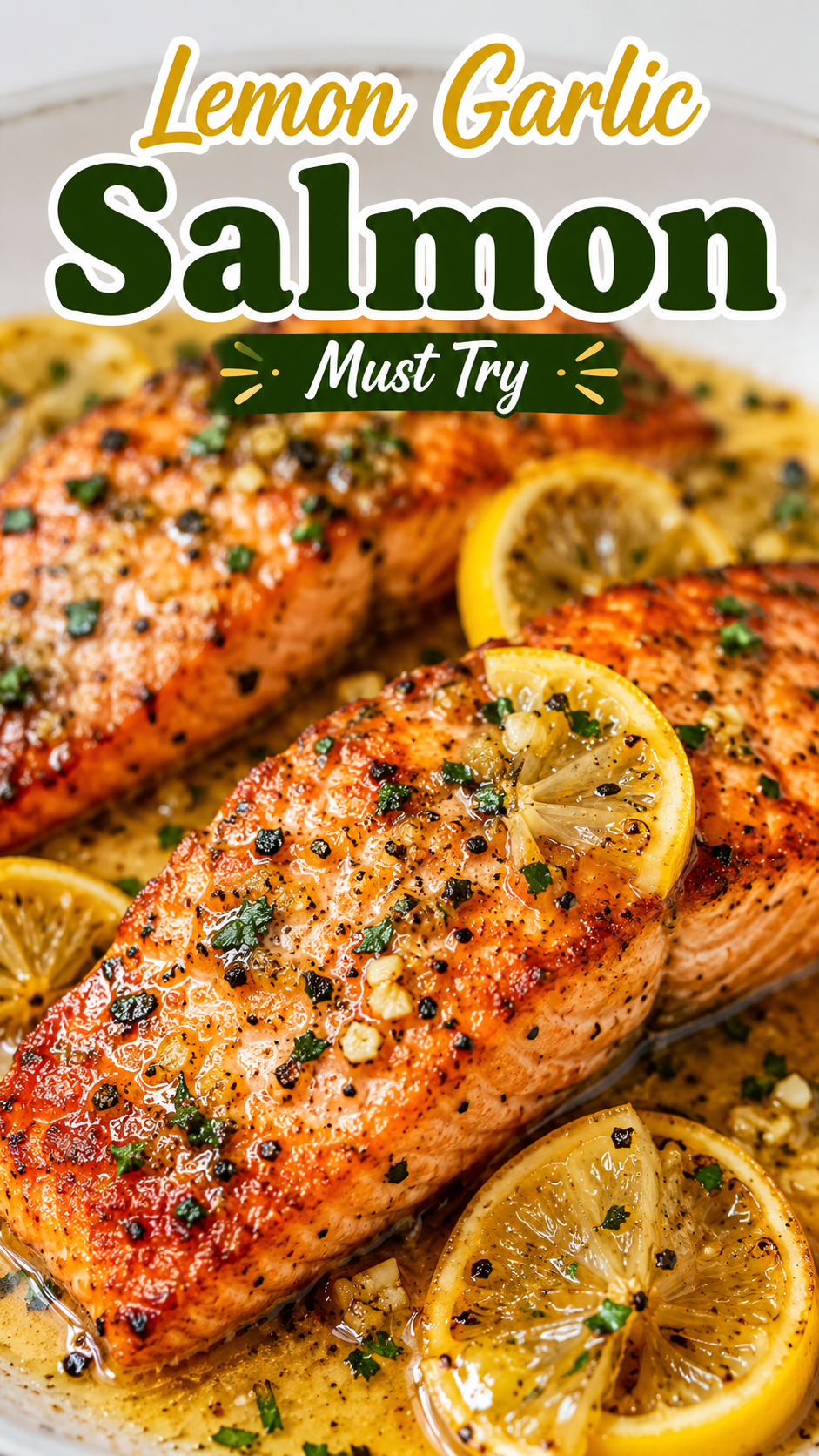
I make this salmon on repeat, and I mean on repeat, because it takes less time than ordering delivery and tastes like something you’d get at a nice little seafood spot. Crispy edges, buttery garlic sauce, a splash of lemon at the end. It’s simple, but it’s the kind of simple that makes people ask for the recipe.
And the best part isn’t even the flavor. It’s that you genuinely cannot mess this up.
Let’s get into it. 🐟
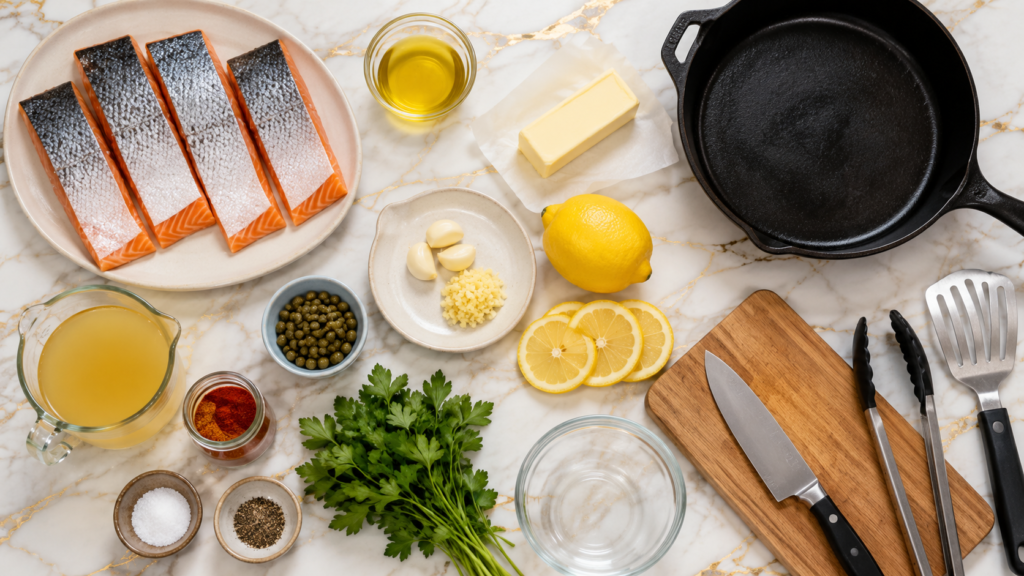
What You’ll Need
- 4 salmon fillets (skin-on, about 6 oz each)
- 2 tbsp olive oil
- 3 tbsp unsalted butter
- 4 garlic cloves, minced
- 1 lemon (half juiced, half sliced)
- 2 tbsp capers, drained
- 1/4 cup chicken or vegetable broth
- 1 tsp paprika
- Salt and black pepper, to taste
- Fresh parsley, chopped, for garnish
That’s it. Nothing fancy, nothing you have to hunt down at a specialty store.
Tools You’ll Need
- A large skillet (cast iron or stainless steel works best for that crispy skin)
- Fish spatula or a regular thin spatula
- Tongs
- A small bowl for mixing the seasoning
- Sharp knife and cutting board
Pro Tips
Here’s what I’ve learned after making this more times than I can count.
- Dry your salmon before it touches the pan. Pat it down with paper towels. Wet fish equals steamed fish, and steamed fish never gets that crispy skin you’re after.
- Don’t move the fillets once they hit the oil. I know it’s tempting. Leave them alone for a solid 4 to 5 minutes so the skin can actually crisp up instead of tearing apart.
- Room temperature salmon cooks more evenly. Pull it out of the fridge about 15 minutes before you start. Cold fish straight from the fridge tends to cook unevenly in the middle.
- Use a splatter screen if you have one. Butter and hot oil love to pop, and your stovetop will thank you.
- Taste your sauce before you pour it. Capers can be salty depending on the brand, so adjust your added salt accordingly.
Substitutions and Variations
This recipe is pretty forgiving, which is half the reason I love it.
- No salmon? Try trout, halibut, or even chicken breast (adjust cook time up for chicken).
- No capers? Swap in chopped green olives for a similar briny punch.
- Dairy-free? Use a good olive oil-based butter substitute instead of regular butter.
- Want it spicier? Add a pinch of red pepper flakes to the garlic butter.
- Low sodium? Skip the capers and use a low sodium broth instead.
Make Ahead Tips
You can mix your seasoning blend (paprika, salt, pepper) up to 3 days ahead and store it in a small jar. Mince your garlic the night before and keep it covered in the fridge.
I wouldn’t recommend cooking the salmon itself ahead of time though. It’s genuinely one of those dishes that’s best fresh off the stove.
How to Make It
- Pat the salmon fillets completely dry with paper towels.
- Season both sides with salt, pepper, and paprika.
- Heat olive oil in a large skillet over medium-high heat until it shimmers.
- Place salmon skin-side down in the pan. Press gently with a spatula for the first 10 seconds so the skin doesn’t curl.
- Cook undisturbed for 4 to 5 minutes, until the skin is golden and crisp.
- Flip carefully and cook for another 3 minutes, then remove the salmon to a plate.
- Lower the heat to medium and add butter to the same pan.
- Once melted, add minced garlic and cook for 30 seconds, just until fragrant.
- Pour in the broth and lemon juice, scraping up any browned bits from the pan.
- Stir in the capers and let the sauce simmer for 2 minutes.
- Return the salmon to the pan, spoon the sauce over the top, and cook for 1 more minute.
- Garnish with parsley and lemon slices before serving.
Nutrition, Pairings, and Time-Saving Notes
Roughly per serving: 380 calories, 34g protein, 26g fat, 3g carbs. This will shift a bit depending on your exact fillet size and how heavy handed you are with the butter (no judgment).
Pairing ideas:
- Garlic mashed potatoes or roasted baby potatoes
- A simple arugula salad with lemon vinaigrette
- Crusty bread for soaking up that garlic butter sauce (highly recommend this one)
Time-saving tip: Prep your garlic, lemon, and parsley while the pan is heating up. That way there’s zero downtime between steps.
Leftovers and Storage
Store leftover salmon in an airtight container in the fridge for up to 2 days.
To reheat, use a skillet over low heat with a splash of broth or water so it doesn’t dry out. Microwaving works in a pinch, but you’ll lose some of that crispy skin texture.
I don’t recommend freezing this one once it’s cooked. The sauce doesn’t hold up well after thawing.
FAQ
Can I use frozen salmon? Yes, just thaw it completely in the fridge overnight first and pat it very dry before cooking.
Why is my salmon skin sticking to the pan? Your pan probably wasn’t hot enough before you added the fish, or the skin wasn’t dry enough. Both things matter more than people expect.
Can I bake this instead of pan-searing? You can, though you’ll miss out on that crispy skin. Bake at 400°F for about 12 to 15 minutes if you go that route.
Is this recipe kid-friendly? Mine loved it once I left out the capers for their plates. Easy adjustment.
What’s the best way to tell when salmon is done? It should flake easily with a fork and reach an internal temperature of 125°F to 130°F for medium, or 145°F if you prefer it fully cooked through.
Wrapping Up
This is the kind of recipe that quietly becomes a regular in your dinner rotation without you even planning for it to.
It’s fast, it feels a little fancy, and it somehow works whether it’s a random Tuesday or you’re actually trying to impress someone.
Give it a try this week and let me know how it turns out in the comments. I’d love to hear if you added your own twist, or if you have questions before diving in. 🍋