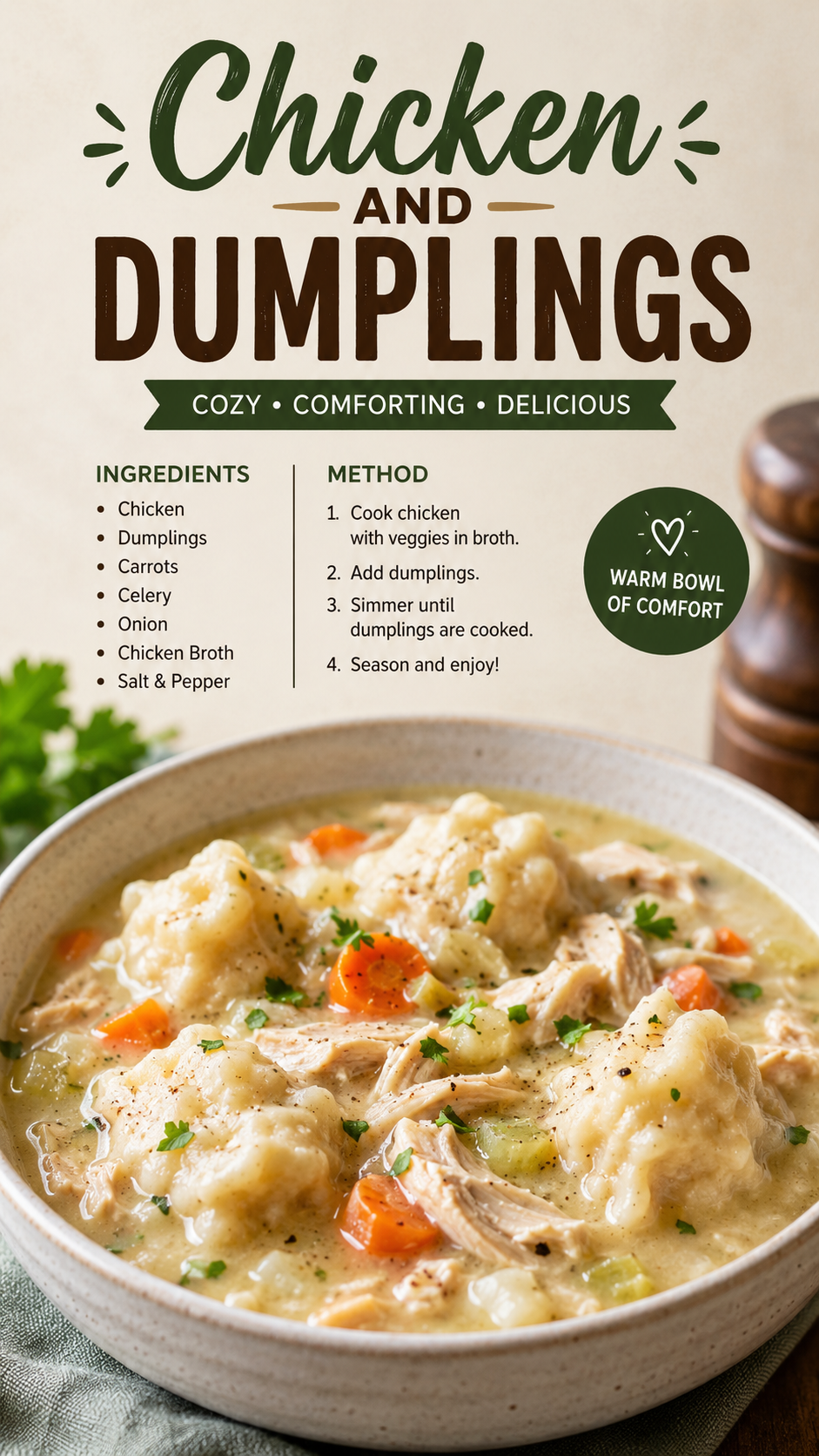
There’s a specific kind of cold that makes you want to crawl into a bowl of something.
That’s chicken and dumplings for me.
It’s not fancy. It’s not photogenic in the way salads are. But it’s the dinner that makes my husband walk into the kitchen and just go quiet for a second, like his whole body relaxed.
I make this at least once a month from October through March. Sometimes more.
And once you taste how easy it actually is, you’ll probably do the same.
So let’s get into it.
What You’ll Need
For the chicken and broth:
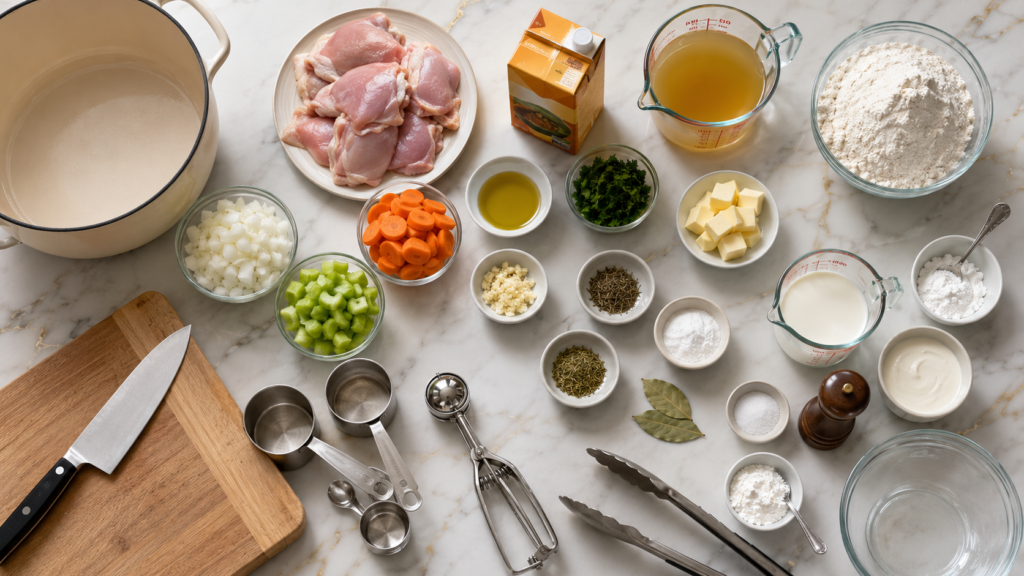
- 2 lbs boneless, skinless chicken thighs (or breasts, more on that below)
- 8 cups chicken broth
- 1 tbsp olive oil
- 1 yellow onion, diced
- 3 carrots, sliced
- 3 celery stalks, sliced
- 3 cloves garlic, minced
- 2 bay leaves
- 1 tsp dried thyme
- 1/2 tsp dried sage
- Salt and pepper, to taste
For the dumplings:
- 2 cups all-purpose flour
- 1 tbsp baking powder
- 1 tsp salt
- 2 tbsp cold butter, cubed
- 3/4 cup milk
- 2 tbsp fresh parsley, chopped (optional, but it makes them look fancier than they are)
To finish:
- 1/2 cup heavy cream
- 2 tbsp cornstarch (mixed with a splash of cold water)
Tools You’ll Need
- Large Dutch oven or heavy-bottomed pot
- Cutting board and sharp knife
- Mixing bowl
- Measuring cups and spoons
- A spoon or small cookie scoop for the dumplings
- Tongs for shredding the chicken
How to Make Chicken and Dumplings
Step 1: Build your flavor base.
Heat the olive oil in your Dutch oven over medium heat.
Add the onion, carrots, and celery. Cook for about 5 minutes, until the onion turns soft and a little see-through.
Add the garlic and cook for 30 more seconds. Just until it smells incredible.
Step 2: Add the chicken and broth.
Pour in the chicken broth and drop in the chicken thighs, bay leaves, thyme, and sage.
Bring it to a boil, then drop the heat down to a simmer.
Cover and let it cook for 20-25 minutes, until the chicken is cooked through and starting to fall apart a little on its own.
Step 3: Shred the chicken.
Pull the chicken out with tongs and set it on a cutting board.
Shred it with two forks (or your hands once it cools slightly). Toss the bay leaves while you’re at it.
Add the shredded chicken back into the pot.
Step 4: Make the dumpling dough.
While the chicken simmers, whisk together the flour, baking powder, and salt in a mixing bowl.
Cut in the cold butter with your fingers or a fork until it looks like coarse crumbs.
Pour in the milk and parsley, and stir just until combined. Don’t overmix this part. Overmixed dough makes dense, chewy dumplings instead of soft, fluffy ones.
Step 5: Drop the dumplings in.
Use a spoon to scoop golf ball-sized portions of dough directly onto the surface of the simmering broth.
Don’t stir them in. Just let them sit on top.
Cover the pot and let them steam for 15 minutes. No peeking. I know it’s tempting, but lifting the lid lets out the steam they need to actually cook through.
Step 6: Thicken the broth.
In a small bowl, mix the cornstarch with a splash of cold water until smooth.
Stir this into the pot along with the heavy cream.
Let everything simmer for 3-5 more minutes, until the broth thickens into something you want to drink straight from a mug.
Step 7: Taste and serve.
Season with salt and pepper to your liking.
Ladle into bowls, making sure everyone gets a few dumplings on top.
Pro Tips
These are the things that took me a few tries to figure out, so you don’t have to.
- Cold butter is non-negotiable. Warm butter melts into the dough instead of creating those little pockets that make dumplings fluffy. Keep it in the fridge until the second you need it.
- Don’t stir the dumplings while they cook. I made this mistake once. They fell apart into the broth and I ended up with chicken and dumpling soup instead of chicken and dumplings. There’s a difference, and your guests will notice.
- Use thighs over breasts if you can. Thighs stay juicy through the simmer. Breasts can turn stringy and dry if you cook them a minute too long.
- Let the broth get really hot before you drop the dough. A gentle simmer (not a rolling boil) cooks the dumplings evenly without breaking them apart.
- Taste your broth before you add salt. Different broths have wildly different sodium levels. Add salt at the end, not the beginning, so you don’t accidentally make soup you can’t drink.
Substitutions and Variations
- Gluten-free: Swap the all-purpose flour for a 1:1 gluten-free flour blend. The dumplings will be slightly denser, but still good.
- Dairy-free: Use a plant-based butter and unsweetened oat milk instead of dairy milk and cream. Coconut milk works too, though it adds a slight sweetness.
- Leftover rotisserie chicken: Skip step 2 entirely. Use 6 cups of broth, simmer your veggies until soft, then add 3 cups of shredded rotisserie chicken at the end.
- Biscuit-style dumplings: If you prefer a denser, biscuit-like dumpling, roll the dough out and cut it into squares instead of dropping spoonfuls.
- Extra veggies: Peas, corn, or mushrooms all work beautifully stirred in during the last 10 minutes.
Make Ahead Tips
You can make the broth and chicken portion (steps 1-3) up to 2 days ahead. Store it in the fridge in an airtight container.
When you’re ready to eat, bring it back to a simmer on the stove, then make your dumpling dough fresh and continue with step 4.
Don’t make the dumpling dough ahead of time. The baking powder starts losing its lift the moment it’s mixed with liquid, so fresh dough gives you the fluffiest results.
Leftovers and Storage
Chicken and dumplings keeps in the fridge for up to 3 days in an airtight container.
The dumplings will soak up some broth overnight and get a little softer, almost like a thick stew. It’s still delicious, just a different texture than night one.
To reheat: Warm it gently on the stove over low heat, stirring occasionally. Add a splash of broth or water if it’s gotten too thick.
Freezing: This one’s tricky. Dumplings don’t freeze and thaw well, they get mushy. If you want to freeze a batch, freeze just the chicken and broth portion, then make a fresh batch of dumplings when you’re ready to eat.
Additional Details
Nutritional Snapshot (per serving, makes 6 servings)
| Nutrient | Approximate Amount |
|---|---|
| Calories | 420 |
| Protein | 28g |
| Carbohydrates | 32g |
| Fat | 18g |
| Sodium | 780mg |
These numbers will shift depending on your broth brand and how much cream you use.
Meal Pairing Ideas
This dish is hearty enough to stand completely on its own, but if you want to round it out:
- A simple green salad with vinaigrette cuts through the richness nicely.
- Crusty bread on the side, for anyone who wants to mop up extra broth (you know who you are).
- A glass of unsweetened iced tea or a light white wine if you’re serving this for a cozy dinner with guests.
Cooking Time Efficiency Tip
Dice all your vegetables and mince your garlic before you turn on the stove. This dish moves fast once it starts, and having everything prepped means you’re not scrambling while the onions burn.
FAQ
Why did my dumplings turn out gummy?
This usually means the dough was overmixed, or the broth wasn’t hot enough when you dropped them in. Stir just until combined, and make sure your broth is simmering steadily first.
Can I use canned biscuit dough instead of making dumplings from scratch?
You can, in a pinch. Cut refrigerated biscuit dough into quarters and drop them into the simmering broth the same way. It won’t taste quite as light, but it works on a busy night.
Why is my broth thin even after adding the cornstarch?
Give it time. The broth needs a few minutes of simmering after you add the cornstarch slurry for it to actually thicken. It’ll look thin at first, then thicken up fast.
Can I make this in a slow cooker?
Yes, for the chicken and broth portion. Cook the chicken, broth, and vegetables on low for 6-7 hours. Then transfer everything to a pot on the stove to add the dumplings, since they need direct heat and steam to cook properly.
How do I know when the dumplings are fully cooked?
Cut one open. It should look fluffy and cooked through all the way, not doughy or wet in the center.
Wrapping Up
This is the kind of meal that turns a regular Tuesday into something that feels like a hug.
It’s not complicated. It just takes a little patience while those dumplings steam under the lid.
Make it once, and I promise you’ll understand why this recipe has been passed down in kitchens for generations.
Try it this week and let me know how it goes in the comments below. Did your dumplings turn out fluffy? Did you sneak a taste straight from the pot before it was ready (no judgment, I do it every time)?
I’d love to hear how yours turned out.


