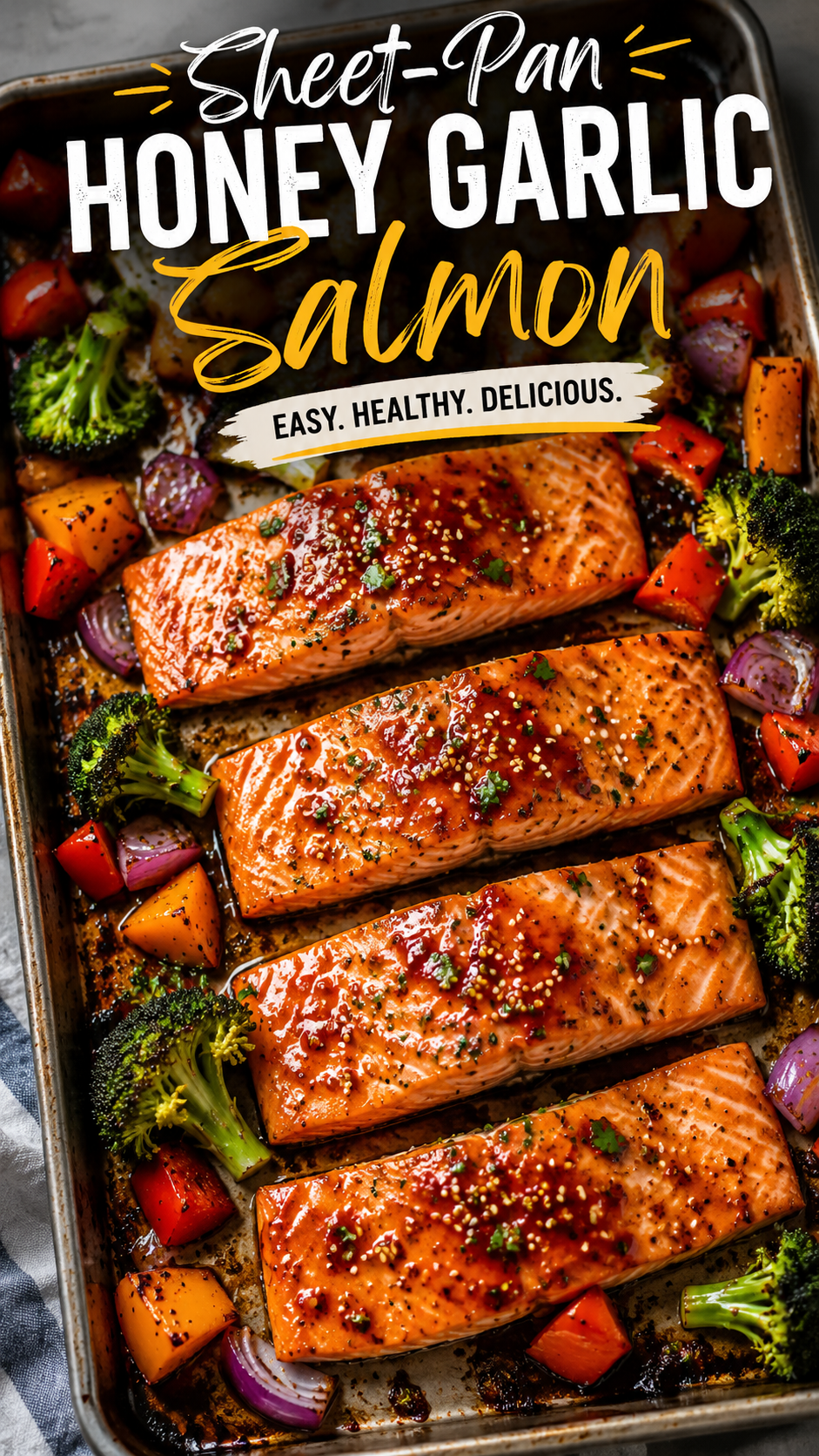
I almost didn’t make this recipe again after the first time.
Not because it was bad. Because it was so good that I ate the entire pan by myself and had nothing left for lunch the next day. 🙃
This is my go-to when I want something that feels fancy but takes less effort than ordering takeout. One pan, one oven, and about 25 minutes of your life. That’s it.
If you’ve never made salmon at home because you’re scared of overcooking it, dry fish, or the smell lingering in your kitchen for a week, this recipe fixes all three problems. I promise you it’s nearly impossible to mess up.
Let’s get into it.
What You’ll Need
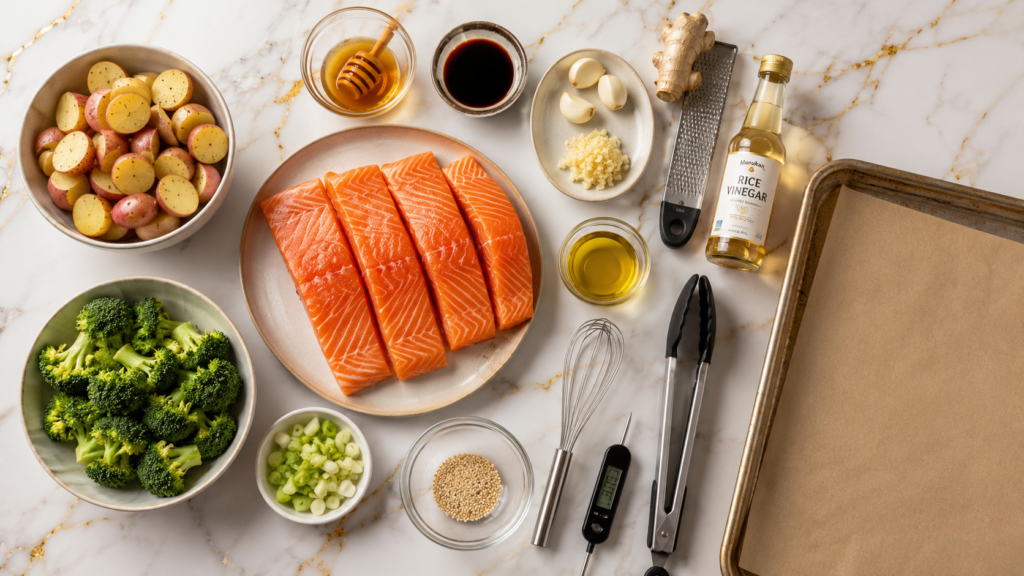
Here’s everything you need for 4 servings.
For the salmon:
- 4 salmon fillets (about 6 oz each, skin on or off, your call)
- 3 tablespoons honey
- 3 tablespoons soy sauce (low sodium works great)
- 4 garlic cloves, minced
- 1 tablespoon rice vinegar
- 1 teaspoon fresh ginger, grated
- 1 tablespoon olive oil
- Salt and pepper to taste
For the veggies:
- 1 lb baby potatoes, halved
- 2 cups broccoli florets
- 1 tablespoon olive oil (for the veggies)
- Pinch of salt
For garnish (optional but worth it):
- 1 tablespoon sesame seeds
- 2 green onions, sliced
Tools You’ll Need
- 1 large sheet pan
- Parchment paper or foil (unless you enjoy scrubbing burnt honey off metal, which, no)
- A small mixing bowl for the sauce
- A whisk or fork
- Tongs
- Meat thermometer (optional, but genuinely helpful here)
How to Make Sheet-Pan Honey Garlic Salmon
Step 1: Prep the oven and pan
Preheat your oven to 400°F. Line your sheet pan with parchment paper.
This isn’t optional laziness advice. Honey burns fast, and parchment saves you from a smoky kitchen and a ruined pan.
Step 2: Start the potatoes first
Toss your halved baby potatoes with 1 tablespoon olive oil and a pinch of salt.
Spread them out on one half of the sheet pan and roast for 10 minutes before anything else touches the pan. Potatoes take the longest, so they get a head start.
Step 3: Make the honey garlic sauce
While the potatoes are roasting, whisk together the honey, soy sauce, minced garlic, rice vinegar, ginger, and 1 tablespoon olive oil in a small bowl.
Give it a taste. It should be sweet, salty, and a little sharp from the garlic all at once.
Step 4: Add the salmon and broccoli
Once the potatoes have had their 10 minutes, pull the pan out.
Push the potatoes to one side, add the broccoli florets to the other, and nestle the salmon fillets in the middle.
Season the salmon lightly with salt and pepper, then spoon most of the honey garlic sauce over the fillets. Save a little sauce for later.
Step 5: Roast everything together
Pop the pan back in the oven and roast for 12 to 15 minutes, depending on the thickness of your fillets.
You’re looking for the salmon to hit 125 to 130°F internally if you like it medium, or 145°F if you prefer it fully cooked through. It should flake easily with a fork.
Step 6: Broil for the glaze (optional but highly recommended)
Switch your oven to broil for the last 1 to 2 minutes. Watch it closely.
This step is what turns the honey sauce into that sticky, slightly caramelized glaze you see in restaurant photos. It happens fast, so don’t walk away.
Step 7: Finish and serve
Pull the pan out, drizzle the reserved sauce over everything, and sprinkle with sesame seeds and green onions.
Serve straight from the pan if you’re feeling casual, or plate it up if company’s watching.
Pro Tips
1. Pat your salmon dry before seasoning. Moisture on the surface stops it from caramelizing properly. A paper towel and 10 seconds fixes this.
2. Cut your potatoes small and even. Anything bigger than a golf ball halved won’t cook through in time. Consistency matters more than looks here.
3. Don’t skip the parchment. Honey sauce turns into cement on a bare sheet pan. Trust me on this one.
4. Use a thermometer if you have one. Salmon goes from perfect to overcooked in about 90 seconds. A $10 thermometer will save your dinner every single time.
5. Buy salmon fillets that are similar in thickness. Uneven fillets cook unevenly. If one piece is noticeably thinner, pull it off the pan a few minutes early.
Substitutions and Variations
This recipe is flexible, so make it your own.
- No honey? Maple syrup works almost identically.
- No soy sauce? Coconut aminos is a great 1:1 swap, and it’s lower sodium too.
- Want it spicy? Add a teaspoon of sriracha or a pinch of red pepper flakes to the sauce.
- Swap the veggies. Asparagus, green beans, or brussels sprouts all roast beautifully alongside salmon.
- Different protein. This sauce works just as well on chicken thighs, just extend the cook time to about 25 minutes.
- Gluten-free? Use tamari instead of soy sauce and you’re set.
Make Ahead Tips
You can whisk the honey garlic sauce up to 3 days ahead and store it in the fridge in a sealed container.
You can also chop your potatoes and broccoli a day ahead. Just keep them in separate containers so the broccoli doesn’t turn your potatoes green (yes, that actually happens).
Nutrition, Pairings, and Efficiency Tips
Nutrition (per serving, approximate):
| Nutrient | Amount |
|---|---|
| Calories | 420 |
| Protein | 34g |
| Carbs | 32g |
| Fat | 16g |
| Fiber | 4g |
What to pair it with:
- A simple cucumber salad with rice vinegar
- Steamed jasmine rice to soak up the extra sauce
- A cold glass of sauvignon blanc if you’re winding down for the night
Efficiency tip:
Prep your sauce and chop your veggies the night before. On the day, you’re looking at 5 minutes of hands-on work and 25 minutes of the oven doing everything else.
Leftovers and Storage
Store leftovers in an airtight container in the fridge for up to 3 days.
Reheat gently in the oven at 300°F for about 10 minutes, or in the microwave in 30 second bursts. Avoid high heat, it dries the fish out fast.
I don’t recommend freezing this one. The texture of the salmon changes once thawed, and honestly, it’s rarely enough leftovers to bother freezing anyway.
FAQ
Can I use frozen salmon? Yes, just thaw it fully first and pat it very dry. Wet salmon won’t caramelize properly.
Do I need to remove the skin? Nope. Skin-on salmon actually holds together better on a sheet pan and crisps up nicely.
Why is my sauce burning? Your oven is probably running hot, or you broiled for too long. Keep a close eye during the broil step, it only takes a minute or two.
Can I double this recipe? Yes, but use two sheet pans instead of overcrowding one. Crowded pans steam instead of roast, and you’ll lose that caramelized edge.
Is this recipe kid friendly? Very. Just go lighter on the ginger and skip the pepper flakes if you’re adding heat for the adults.
Wrapping Up
This is one of those recipes that ends up in your permanent rotation without you even planning for it.
It’s fast, it’s flexible, and it makes your kitchen smell incredible. Give it a try this week and let me know how it turns out in the comments below.
Did you make any swaps? Add more garlic? Burn the first batch a little (we’ve all been there)? I want to hear about it.


