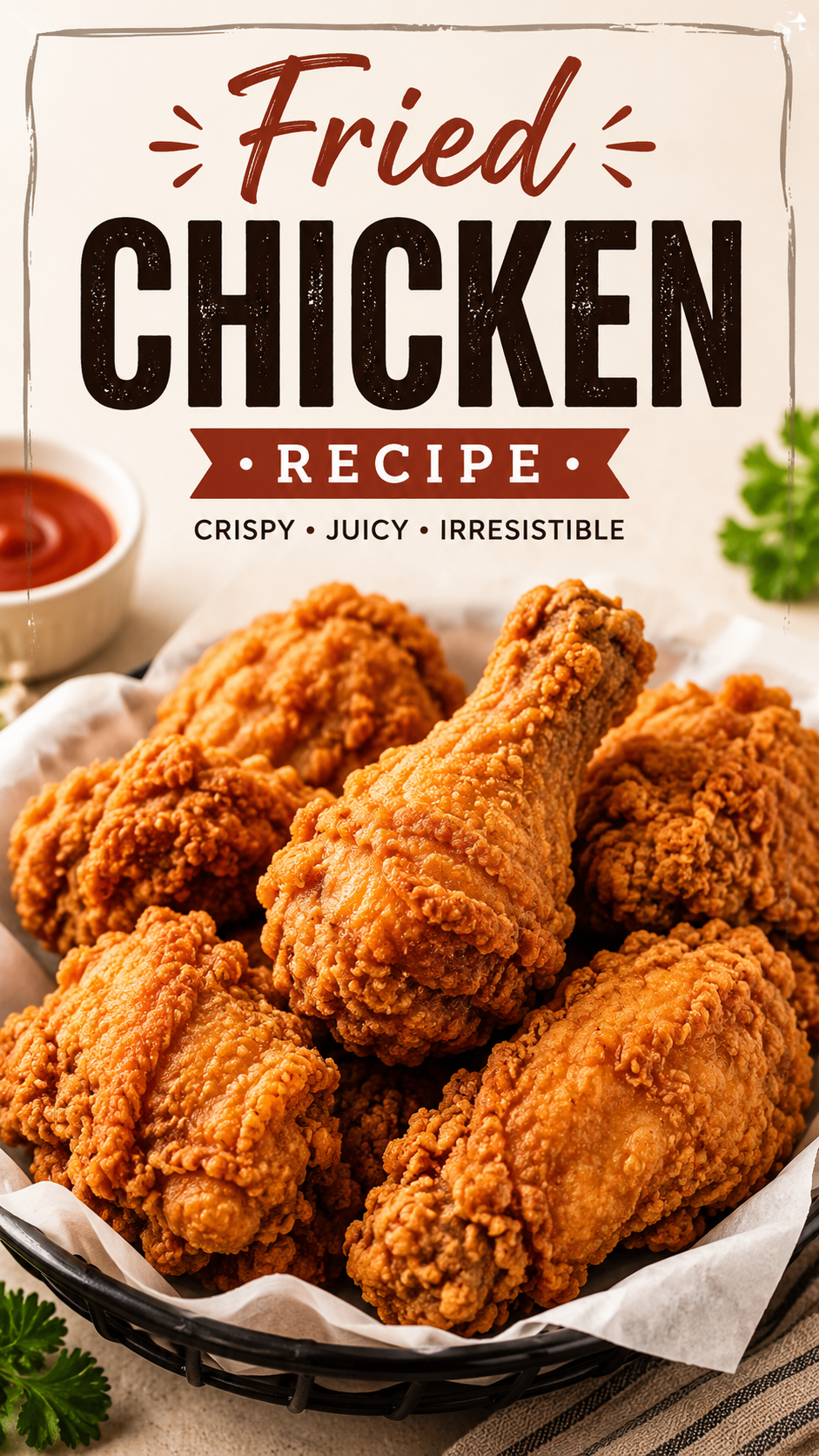
You’ve had fried chicken before. But have you had this fried chicken?
There’s a reason people grow up remembering a specific fried chicken from their childhood. One bite and it all comes back. The crunch. The juicy pull of the meat. The seasoning that hits somewhere between savory and “I need four more pieces immediately.”
This recipe does that. And once you make it, you’ll understand why fast food fried chicken just doesn’t cut it anymore.
Fair warning: your family will request this constantly. 🍗
What Makes This Fried Chicken Actually Different
Most fried chicken recipes skip the one step that changes everything: the buttermilk soak.
Letting the chicken sit in seasoned buttermilk for at least a few hours (ideally overnight) breaks down the proteins and tenderizes the meat from the inside out. You end up with chicken that’s impossibly juicy on the inside and shattering-crispy on the outside.
And here’s a fact that might surprise you: the double-dredge technique (dipping the chicken in flour, back into the buttermilk, then flour again) is what creates those legendary craggy bits and extra-thick crunch. Most home cooks skip this. Don’t.
What You’ll Need
For the Buttermilk Marinade:
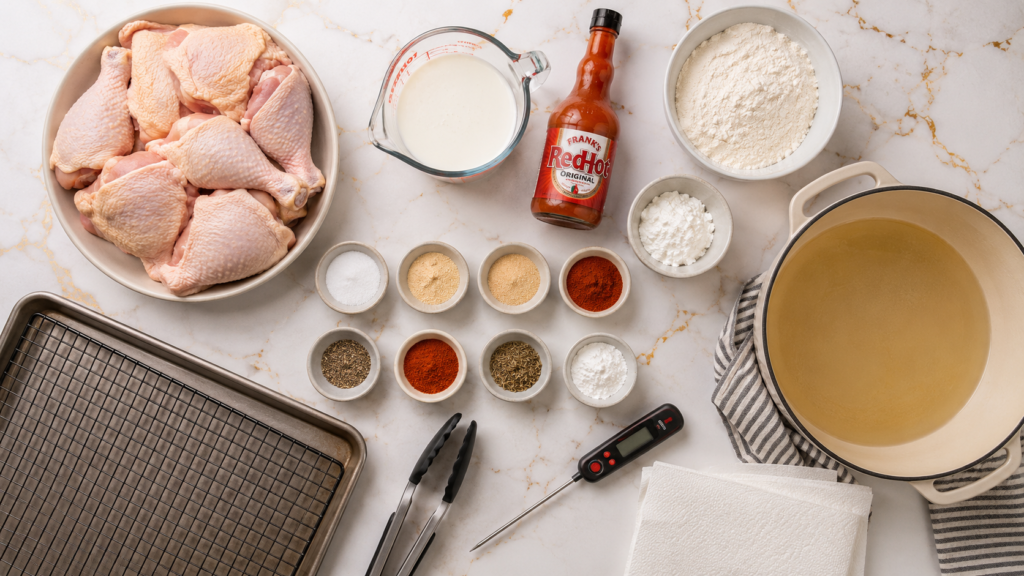
- 2 lbs (900g) bone-in, skin-on chicken pieces (drumsticks, thighs, or a mix)
- 2 cups buttermilk
- 1 tablespoon hot sauce (Frank’s RedHot or similar)
- 1 teaspoon salt
- 1 teaspoon garlic powder
- 1 teaspoon onion powder
- 1/2 teaspoon black pepper
- 1/2 teaspoon smoked paprika
For the Seasoned Flour Coating:
- 2 cups all-purpose flour
- 1 tablespoon cornstarch
- 1 1/2 teaspoons salt
- 1 teaspoon garlic powder
- 1 teaspoon onion powder
- 1 teaspoon smoked paprika
- 1 teaspoon black pepper
- 1/2 teaspoon cayenne pepper
- 1/2 teaspoon dried thyme
- 1/2 teaspoon baking powder
For Frying:
- 4–6 cups neutral oil (vegetable, canola, or peanut oil)
Tools You’ll Need
- Large mixing bowl (for the marinade)
- Large zip-lock bags or a covered container (for soaking)
- Shallow dish or large plate (for dredging)
- Heavy-bottomed pot, Dutch oven, or deep cast iron skillet
- Cooking thermometer (non-negotiable for safe frying)
- Wire rack + baking sheet (to rest the chicken)
- Tongs
- Paper towels
Pro Tips
These are the things nobody tells you until after you’ve made a batch that isn’t quite right:
- Cold chicken = worse frying. Pull the chicken from the fridge 20–30 minutes before frying. Room-temperature meat cooks more evenly.
- Oil temperature is everything. Keep it between 325°F and 350°F (163–177°C). Too hot and the coating burns before the inside cooks. Too cool and you get greasy chicken. A thermometer is not optional here.
- Don’t crowd the pan. Fry in batches. Crowding drops the oil temperature fast and you lose the crunch. Two to three pieces at a time, max.
- Let the dredged chicken rest for 10 minutes before frying. This helps the coating stick and hydrate slightly so it fries up thicker and crunchier.
- Always rest on a wire rack, not paper towels. Paper towels trap steam and soften the crust. A wire rack keeps air circulating so the crunch stays.
Possible Substitutions & Variations
No buttermilk? Mix 2 cups whole milk with 2 tablespoons white vinegar or lemon juice. Let it sit for 5 minutes. It works beautifully.
Boneless chicken thighs work just as well and fry faster (about 6–8 minutes total). Great for sandwiches.
Gluten-free version: Swap the all-purpose flour for a 1:1 gluten-free flour blend and add an extra tablespoon of cornstarch.
Spicy version: Double the cayenne and add 1 teaspoon of chili powder to the flour mix.
Air fryer option: After dredging, spray with oil and cook at 400°F (200°C) for 20–25 minutes, flipping once halfway. You lose a little crunch but it’s still really good.
Make-Ahead Tips
You can marinate the chicken for up to 48 hours in the buttermilk mixture. The longer it sits (within reason), the more tender the meat becomes.
Dredge the chicken and let it sit on a wire rack in the fridge, uncovered, for up to 2 hours before frying. This helps the coating set up and dry out slightly, which gives you an even crunchier crust.
How to Make It
Step 1: Make the marinade.
Whisk together the buttermilk, hot sauce, salt, garlic powder, onion powder, black pepper, and smoked paprika in a large bowl.
Add the chicken pieces and make sure they’re fully submerged. Cover and refrigerate for at least 4 hours, but overnight is ideal.
Step 2: Make the seasoned flour.
In a shallow dish or wide bowl, whisk together the flour, cornstarch, salt, garlic powder, onion powder, smoked paprika, black pepper, cayenne, thyme, and baking powder.
The baking powder is a small addition that makes a noticeable difference in lightness and crunch.
Step 3: Dredge the chicken (twice).
Pull a piece of chicken from the buttermilk, letting the excess drip off. Press it firmly into the flour mixture on all sides. Shake off the excess.
Dip it back into the buttermilk for a second, then back into the flour again. Press firmly. You want those craggy edges.
Place on a wire rack and repeat with remaining pieces. Let them rest for 10 minutes.
Step 4: Heat your oil.
In a Dutch oven or heavy-bottomed pot, heat 3–4 inches of oil to 340°F (171°C). You want enough depth so the chicken can fry without touching the bottom.
Step 5: Fry in batches.
Gently lower 2–3 pieces of chicken into the oil using tongs. Do not drop them in.
Fry for 12–15 minutes for bone-in pieces, turning once or twice, until the coating is deep golden brown and the internal temperature reads 165°F (74°C).
For boneless thighs, fry for 6–8 minutes total.
Step 6: Drain and rest.
Transfer to a wire rack over a baking sheet. Season with a small pinch of salt immediately while still hot.
Let rest for 5 minutes before serving. This lets the juices redistribute and keeps the meat from being dry when you bite in.
Nutritional Breakdown
(Per serving, based on 2 bone-in pieces)
| Nutrient | Amount |
|---|---|
| Calories | ~480–520 kcal |
| Protein | 38g |
| Total Fat | 26g |
| Carbohydrates | 28g |
| Sodium | 820mg |
Note: Numbers vary based on oil absorption and exact pieces used. Thighs are higher in fat; breast pieces lean out the numbers.
Meal Pairing Ideas
This fried chicken goes with a lot. Here are a few directions depending on what you’re feeling:
- Classic Southern: Mashed potatoes, coleslaw, and corn on the cob
- Light and fresh: A simple green salad with pickled red onion
- Comfort food mode: Mac and cheese + biscuits
- Sandwich night: Pile it on a toasted brioche bun with pickles and hot honey
Leftovers & Storage
Store leftover fried chicken in an airtight container in the fridge for up to 3 days.
To reheat and keep it crispy: Pop it in an air fryer at 375°F (190°C) for 5–7 minutes, or in the oven at 400°F (200°C) on a wire rack for 10–12 minutes. Avoid the microwave if you care about the crust at all.
It also reheats really well straight from the fridge, cold. Some people actually prefer it that way.
FAQ
Can I use chicken breast instead of thighs or drumsticks?
You can, but bone-in thighs and drumsticks give you the most flavor and stay juicier during frying. Breast meat can dry out quickly. If you use breasts, slice them thicker or pound them to an even thickness for more consistent cooking.
How do I know the oil is hot enough without a thermometer?
Drop a small pinch of flour into the oil. If it immediately sizzles and floats, you’re close. But honestly, a thermometer takes all the guesswork out and is worth the $10. No thermometer = constant guessing.
Can I reuse the frying oil?
Yes. Once cooled completely, strain it through a fine mesh sieve into an airtight container and store in a cool dark place for up to a month. Discard if it smells off or turns very dark.
What’s the best oil for frying chicken?
Peanut oil has the highest smoke point and adds a subtle richness. Vegetable oil and canola oil work great too and are more neutral. Avoid olive oil.
My coating keeps falling off. What am I doing wrong?
Two common culprits: not pressing the flour on firmly enough during dredging, or not letting the dredged chicken rest before it hits the oil. Both steps matter. Don’t skip the rest period.
Can I make this in an air fryer from the start?
Yes, and it’s a solid option. Spray generously with cooking oil after dredging and cook at 400°F (200°C) for 20–25 minutes, flipping once halfway. The crust won’t be quite as shattering as deep-fried, but it’s still really good.
Wrapping Up
If you’ve been on the fence about making fried chicken at home, let this be the sign you needed.
It takes a little patience (that overnight marinade is worth it, I promise), but the result is the kind of fried chicken that makes people go quiet for a second when they take the first bite. That silence is the compliment.
Make it once and you’ll have the recipe memorized. It’s one of those dishes that becomes a staple.
Give it a try and then come back and drop a comment below. I want to know how it went, what you paired it with, and honestly, how many pieces you ate. Questions are welcome too. 👇


