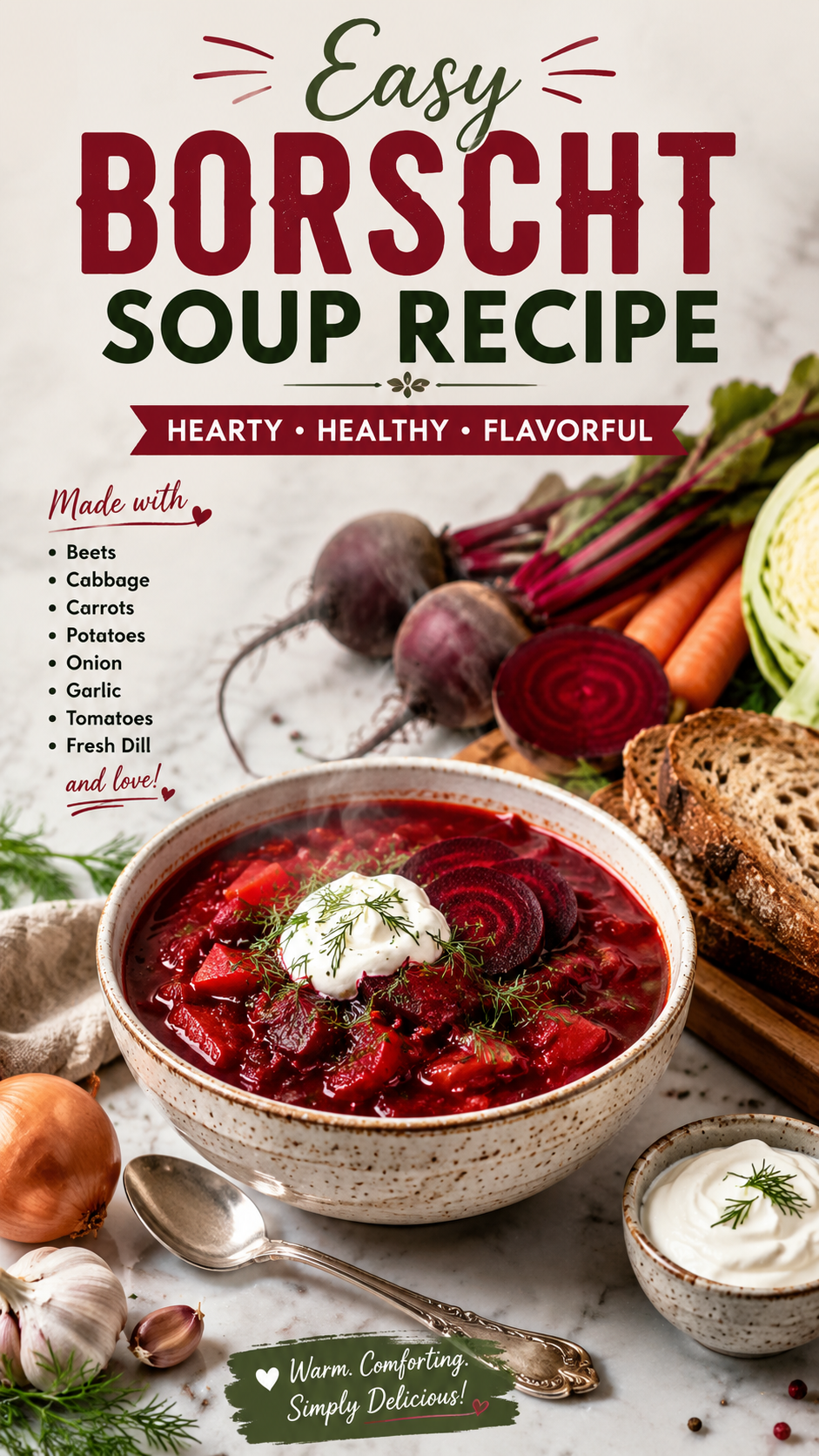
Most soups don’t make people stop and stare. Borscht does.
The second this hits the table, somebody asks, “Wait, is that actually pink?”
Yes. Yes it is.
I’ve made this soup more times than I can count, and it gets the same reaction every single time. A bowl this bright shouldn’t taste this good. But it does.
If you’ve only had borscht from a can, you’re in for a surprise. The real thing is earthy, a little tangy, deeply savory, and finished with cold sour cream melting into a hot magenta broth.
It’s the kind of soup that makes a plain Tuesday feel like an event. Let’s make it.
Wait, Why Is It So Pink?
Quick detour before we start cooking, because people always ask.
Beets get their color from a pigment called betalain. It’s the same compound that turns your hands purple when you’re chopping them without gloves.
Cook beets gently with a little acid, and that pigment stays bright. Boil them too hard or too long without it, and the color breaks down into a duller brown.
That’s the whole secret behind a good-looking bowl of borscht. Now let’s get into it.
What You’ll Need
For the soup:
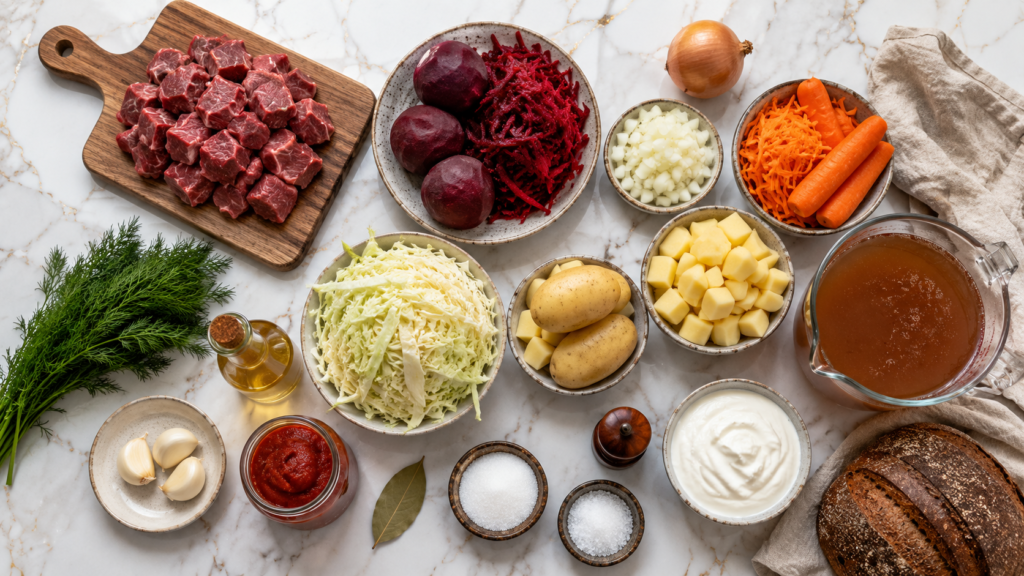
- 1 lb beef chuck or short ribs, cubed
- 6 cups beef broth (sub vegetable broth for a vegetarian version)
- 3 medium beets, peeled and grated
- 1 medium yellow onion, diced
- 2 medium carrots, grated
- 2 medium potatoes, cubed
- 2 cups cabbage, shredded
- 3 cloves garlic, minced
- 2 tbsp tomato paste
- 2 tbsp vegetable oil
- 1 tbsp apple cider vinegar (or lemon juice)
- 1 bay leaf
- 1 tsp sugar
- Salt and black pepper, to taste
For serving:
- Fresh dill, chopped
- Sour cream
- Crusty bread (rye is the classic pairing)
Tools You’ll Need
- Large soup pot or Dutch oven
- Box grater (or a food processor with a grating disc)
- Cutting board and a sharp knife
- Wooden spoon
- Ladle
Pro Tips
A few things I learned the hard way, so you don’t have to.
- Grate the beets instead of cubing them. They cook faster and release more color into the broth. Cubed beets just sit there looking sad.
- Sauté the beets separately before adding them to the pot. A few minutes in oil with the vinegar locks in that bright magenta color. Skip this and your soup turns a dull, muddy brown. Nobody wants brown borscht.
- Add the acid early. The vinegar (or lemon juice) isn’t just for flavor here. It keeps the beets from fading as they simmer.
- Salt at the end, not the beginning. The broth reduces as it cooks, so early salting almost always leads to an oversalted soup later.
- Make it the day before if you can. Borscht is one of those rare soups that tastes better on day two. The flavors need time to settle in.
How to Make Borscht
- Brown the beef. Heat 1 tbsp oil in your pot over medium-high heat. Add the cubed beef and brown on all sides, about 5 minutes. Remove and set aside.
- Cook the onion and carrot. In the same pot, add the diced onion and grated carrot. Cook until soft, about 5 minutes.
- Add garlic and tomato paste. Stir in the minced garlic and tomato paste, cook for 1 minute.
- Build the broth. Return the beef to the pot, pour in the broth, add the bay leaf, and bring to a boil. Reduce heat and simmer, covered, for 45 minutes (or until the beef is tender).
- Sauté the beets. While the broth simmers, heat the remaining oil in a separate pan. Add the grated beets and vinegar, and cook for 5 to 7 minutes until softened.
- Add the potatoes. Once the beef is tender, add the cubed potatoes to the pot and simmer for 10 minutes.
- Add the beets and cabbage. Stir in the sautéed beets and shredded cabbage. Simmer for another 10 to 15 minutes, until everything is tender.
- Season. Add the sugar, then salt and pepper to taste. Remove the bay leaf.
- Finish with dill. Stir in most of the fresh dill, saving a little for garnish.
- Serve. Ladle into bowls, top with a spoonful of sour cream and the remaining dill. Serve with bread on the side.
Substitutions and Variations
Borscht is forgiving. Once you’ve made it once, you can start playing around.
| Swap This | For This | Why |
|---|---|---|
| Beef chuck | Pork ribs or kielbasa | Polish-style borscht, smokier flavor |
| Beef broth | Vegetable broth + mushrooms | Fully vegetarian, still rich |
| Sour cream | Cashew cream | Dairy-free option |
| Red beets | Golden beets | Milder flavor, less staining |
| Cabbage | Kale | Slightly different texture, still works |
A surprising number of borscht recipes don’t even include beef. Some Ukrainian versions are entirely vegetable-based and still come out just as deep and savory.
Make Ahead Tips
This soup is basically built for meal prep.
- Make the full pot up to 3 days ahead. Store covered in the fridge.
- Reheat gently on the stove, adding a splash of broth or water if it’s thickened up.
- Hold off on the sour cream and dill until you’re ready to serve.
Leftovers and Storage
- Fridge: Keeps well for 4 to 5 days in an airtight container.
- Freezer: Freezes beautifully for up to 3 months. Leave out the sour cream before freezing, and add it fresh when you reheat.
- Reheating: Stovetop, low heat, stirring occasionally. Add a little broth if it needs loosening up.
Nutrition, Diet Swaps, and Pairings
A rough breakdown per serving (this makes about 6 servings):
| Nutrient | Approximate Amount |
|---|---|
| Calories | 280 |
| Protein | 18g |
| Carbohydrates | 27g |
| Fat | 11g |
| Fiber | 6g |
These numbers will shift depending on your exact cuts of meat and broth, so treat this as a general guide rather than gospel.
Diet swaps:
- Keto: Skip the potatoes and sugar, sub in cauliflower for the potatoes.
- Gluten-free: This recipe is naturally gluten-free as written. Just double check your broth.
- Lower sodium: Use a low-sodium broth and season at the table instead of in the pot.
What to serve with it:
- Dark rye bread with butter
- A simple cucumber and dill salad
- Pickled vegetables on the side, for extra tang
FAQ
Why did my borscht turn brown instead of staying pink? This usually happens when the beets cook too long without any acid. The vinegar or lemon juice is what protects that color, so add it early and don’t skip it.
Can I make this without beef? Yes. Swap the beef and beef broth for vegetable broth and mushrooms, or just leave the meat out entirely. The beets and cabbage still carry plenty of flavor on their own.
Is borscht served hot or cold? Both, depending on where it’s from. This beef-and-beet version is meant to be served hot. Some cold beet soups, especially in the Baltic states, are served chilled in summer, but that’s a different recipe entirely.
What’s the difference between Ukrainian and Russian borscht? They’re closely related, but Ukrainian borscht tends to include more vegetables and sometimes beans, while Russian versions often lean simpler. Both are loved fiercely by the people who grew up eating them, so tread carefully if you bring this up at dinner.
Can I use canned beets instead of fresh? You can, in a pinch. The flavor will be milder and slightly more vinegary since canned beets are usually pickled. Fresh beets give you more control and a deeper flavor.
Why does my soup taste flat even though I followed the recipe? Nine times out of ten, it just needs more salt or a splash more vinegar. Borscht relies on that push and pull between earthy, sweet, and tangy. Taste it right before serving and adjust then, not earlier.
Wrapping Up
This soup looks complicated. It isn’t.
It’s chopping, simmering, and a little patience while the flavors come together. That’s it.
Once you’ve made it the first time, you’ll understand why people have been making this same soup for generations. There’s a reason it’s stuck around this long, in kitchens that have nothing else in common with each other.
Make a pot this week. Let it sit overnight if you can manage the wait, because that’s when it really comes into its own.
Then come back and tell me how it turned out. Did the color hold up? Did you try any of the swaps, or stick with the classic version? Drop a comment below, I read every single one and I genuinely want to know.


