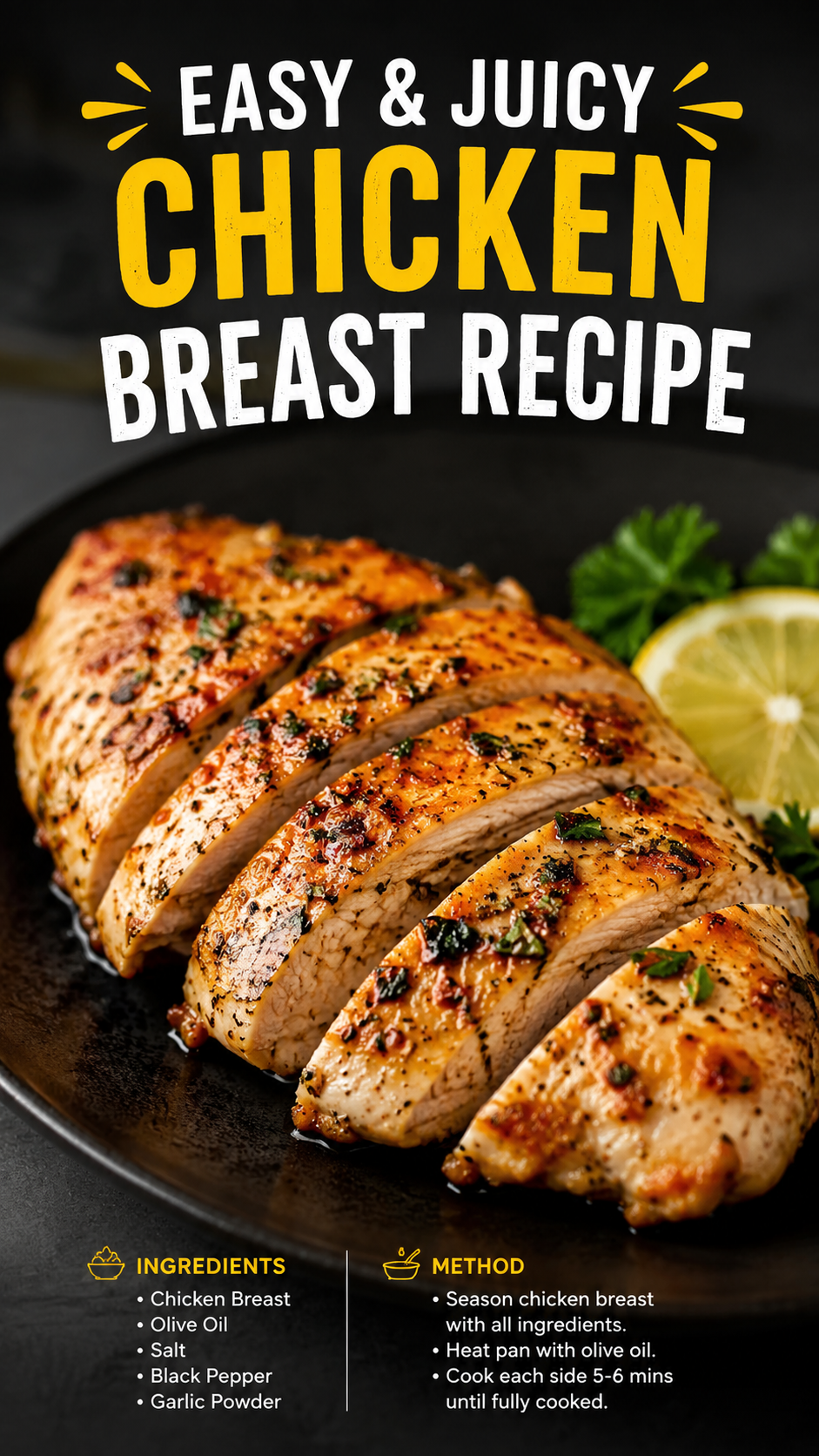
You’ve had dry, rubbery chicken breast before. We all have.
It’s one of those meals that should be easy and satisfying, but somehow ends up being the thing you choke down just because it’s “healthy.”
This recipe changes that completely.
This baked chicken breast comes out so juicy and flavorful, you’ll wonder why you ever bought rotisserie chicken.
And honestly? It’s one of the easiest things you’ll make all week. No complicated techniques. No fancy equipment. Just really, really good chicken.
What You’ll Need
For the Chicken:
- 2 large boneless, skinless chicken breasts (about 8 oz each)
- 2 tablespoons olive oil
- 1 teaspoon garlic powder
- 1 teaspoon onion powder
- 1 teaspoon smoked paprika
- 1/2 teaspoon dried oregano
- 1/2 teaspoon dried thyme
- 1 teaspoon kosher salt
- 1/2 teaspoon black pepper
- 1/2 teaspoon brown sugar (trust me on this one)
- 1 tablespoon fresh lemon juice
- 2 garlic cloves, minced
- Fresh parsley, for garnish
Optional Add-Ons:
- 1/4 teaspoon cayenne pepper (if you want a little heat)
- 1 tablespoon Dijon mustard (for an extra tangy kick)
- 1 tablespoon unsalted butter, cut into small pats (for finishing)
Tools You’ll Need
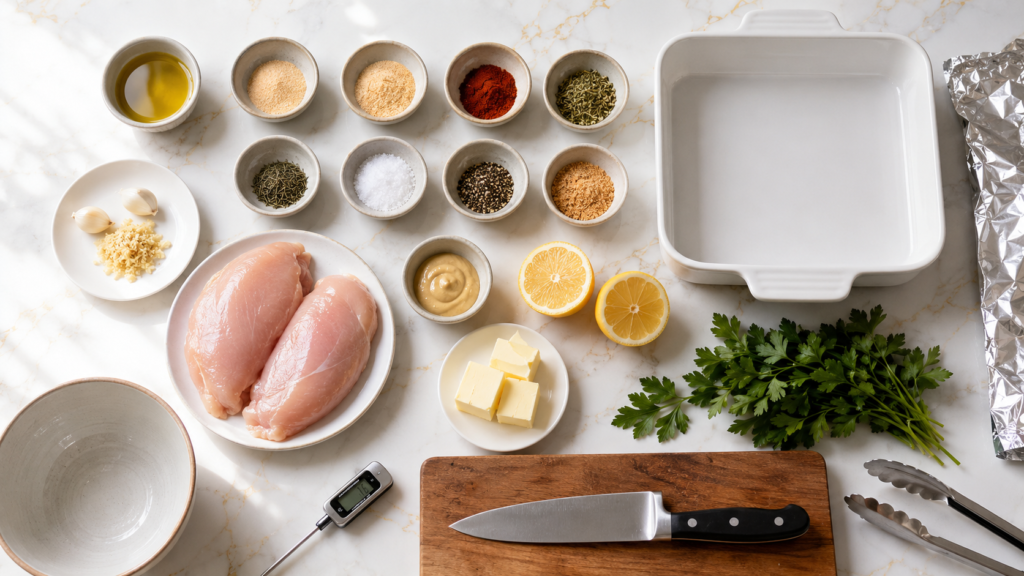
- Oven-safe baking dish or sheet pan (9×13 works great)
- Small mixing bowl
- Meat thermometer (non-negotiable — more on that below)
- Sharp knife and cutting board
- Plastic wrap or zip-lock bag (for optional marinating)
- Aluminum foil
- Tongs
Pro Tips
These are the things that actually make a difference. Not generic advice. Real tips from making this way too many times.
- Pound your chicken to an even thickness. Thick on one end, thin on the other = uneven cooking. Five minutes of effort saves you from eating dry chicken on one side and raw chicken on the other. A rolling pin works fine if you don’t have a meat mallet.
- Don’t skip the brown sugar. It sounds weird in a savory marinade, but it helps the outside caramelize just slightly in the oven, which gives you a way better crust. You won’t taste sweetness — just depth.
- Pull it out at 160°F, not 165°F. The USDA says 165°F for safe chicken, and your chicken will hit that as it rests. If you wait until the thermometer reads 165°F in the oven, you’re already past it. This is the single biggest reason people end up with dry chicken breast.
- Let it rest. A full 5 minutes, tented with foil. The juices redistribute during that time. Cut it too soon and all that moisture runs straight onto your cutting board. Tragic.
- Room temperature chicken cooks more evenly. Pull it from the fridge 15-20 minutes before it goes in the oven. Cold chicken straight from the fridge will overcook on the outside before the center is done.
Substitutions and Variations
Chicken thighs instead of breasts — Honestly, chicken thighs are even more forgiving. They have more fat, so they stay juicy even if you accidentally overcook them a little. Adjust cooking time to about 25-30 minutes.
No smoked paprika? Use regular paprika + a tiny pinch of cumin. It’s not exactly the same, but it still works.
Lemon allergy or no lemons? Swap for a splash of apple cider vinegar or even white wine vinegar.
Herb swaps — Fresh herbs work great here. Use 3x the amount (dried herbs are more concentrated). Fresh rosemary, fresh thyme, and fresh basil are all good options.
Low-sodium version — Cut the salt to 1/2 teaspoon and skip the Dijon mustard if you’re watching sodium.
Dairy-free — Leave out the optional butter. The chicken is still great without it.
Make-Ahead Tips
This recipe lends itself really well to meal prep.
Marinade ahead of time. You can coat the chicken in the spice mixture and refrigerate it (covered) for up to 24 hours before baking. The longer it sits, the more flavor it absorbs. Overnight is ideal.
Cook and refrigerate. Baked chicken breast keeps well in the fridge for up to 4 days. Let it cool fully before storing. It reheats better than you’d expect.
Freeze before baking. Coat the raw chicken in the marinade, place in a zip-lock bag, and freeze for up to 3 months. Thaw overnight in the fridge, then bake as directed.
How to Make It
Step 1: Prep Your Chicken
Preheat your oven to 425°F (220°C).
If your chicken breasts are uneven in thickness, place them between two sheets of plastic wrap and pound them gently to an even 3/4-inch thickness. This takes like 60 seconds and makes a huge difference.
Pat them completely dry with paper towels. This helps the seasoning stick and gives you a better crust.
Step 2: Make the Seasoning Mix
In a small bowl, combine the garlic powder, onion powder, smoked paprika, oregano, thyme, salt, pepper, and brown sugar. Stir it together.
Add the olive oil, minced garlic, and lemon juice. Mix it into a loose paste.
Step 3: Coat the Chicken
Rub the paste all over both sides of the chicken. Really get it in there.
Place the chicken in your baking dish. If you’re using butter, lay a small pat on top of each breast.
Step 4: Bake
Bake at 425°F for 20-25 minutes. Cooking time depends on the thickness of your chicken.
Start checking at 20 minutes. Insert a meat thermometer into the thickest part of the breast. Pull it from the oven when it reads 160°F.
Step 5: Rest and Serve
Remove from the oven, tent loosely with foil, and let it rest for 5 minutes.
Slice against the grain, garnish with fresh parsley, and serve immediately.
Nutritional Breakdown
Per serving (1 chicken breast, approximately 8 oz cooked), based on recipe as written:
| Nutrient | Amount |
|---|---|
| Calories | ~290 kcal |
| Protein | ~48g |
| Fat | ~9g |
| Saturated Fat | ~1.5g |
| Carbohydrates | ~3g |
| Fiber | ~0.5g |
| Sodium | ~620mg |
Note: Values are estimates and will vary based on the exact size of your chicken breasts and whether you use the optional butter.
For specific diets:
- Keto/Low-carb — Already perfect as written. Skip the brown sugar to keep it even lower-carb.
- Paleo — Compliant as written. Use coconut aminos instead of Dijon if you’re using it.
- Gluten-free — Naturally gluten-free. Just double-check your spice labels if you have celiac.
- High-protein — One serving gives you nearly 50g of protein. Pair with rice and veggies for a complete meal.
Meal Pairing Suggestions
This chicken is versatile enough to work with almost anything.
For a full dinner:
- Roasted garlic mashed potatoes + steamed green beans
- White rice + roasted broccoli with a drizzle of lemon
- Quinoa salad with cucumber, cherry tomatoes, and feta
For meal prep bowls: Slice it thin and add it to grain bowls with roasted sweet potato, avocado, and a tahini drizzle.
For sandwiches or wraps: Shred leftover chicken and toss with a little mayo, Dijon, and fresh dill. Pile it into a wrap with lettuce and tomato.
Cooking Time Efficiency Tips
If you’re short on time (or just like being efficient):
- Use a sheet pan. Toss your vegetables (potatoes, green beans, broccoli) onto the same pan, season them, and roast everything together. One pan, zero extra dishes.
- Prep the seasoning paste the night before. It takes 3 minutes, and morning-you will be grateful.
- Cook two batches at once. The oven is already on. Might as well fill it.
Leftovers and Storage
Refrigerator: Store in an airtight container for up to 4 days. Add a small splash of chicken broth or water before reheating to keep it from drying out.
Freezer: Wrap tightly in plastic wrap, then place in a zip-lock freezer bag. Keeps well for up to 3 months. Thaw in the fridge overnight before reheating.
Reheating: Cover with foil and reheat in a 300°F oven for 10-12 minutes. The microwave works in a pinch, but go low and slow (50% power, in 30-second bursts) to avoid turning it into rubber.
What to do with leftovers:
- Slice cold over a salad
- Shred and add to pasta with olive oil and parmesan
- Dice and toss into a fried rice
- Make a chicken quesadilla (yes, always yes)
FAQ
Why is my chicken breast always dry?
Overcooking is almost always the culprit. Chicken breast is very lean, which means it has very little fat to protect it when it gets too hot. A meat thermometer fixes this entirely. Pull it at 160°F internal temperature, let it rest, and you’re golden.
Do I need to cover the chicken while it bakes?
Nope. Baking uncovered at high heat (425°F) is what helps you get that slightly caramelized, golden exterior. Covering it traps steam, which makes it more steamed than baked.
Can I use frozen chicken?
Technically yes, but thaw it completely first. Cooking frozen chicken breast leads to uneven cooking — the outside will be overdone before the center is safe to eat.
What if I don’t have a meat thermometer?
Get one. Seriously, they cost about $10 and solve almost every chicken problem forever. In the meantime, the visual cue is: the juices should run clear (not pink) when you pierce the thickest part.
Can I make this in an air fryer?
Yes. Air fry at 375°F for 18-22 minutes, flipping halfway through. Check the internal temperature the same way. The outside gets even crispier in the air fryer, which is a win.
Can I marinate the chicken overnight?
Absolutely. 30 minutes is the minimum for good flavor. Overnight is even better.
How do I know when the chicken is done without a thermometer?
Cut into the thickest part. The meat should be completely white with no pink, and the juices that run out should be clear. That said — just get the thermometer.
Wrapping Up
Here’s the thing about this recipe: it’s so simple that it almost feels like cheating. You mix a few spices together, rub them on some chicken, and bake it. That’s it.
But the result is a chicken breast that’s actually juicy, actually flavorful, and actually something you want to eat (not something you just eat because you should).
It’s one of those recipes that becomes a weeknight staple without you even planning it. You just find yourself making it every week because it always works.
Now you make it and come back to leave a comment below. Tell me how it turned out, what you paired it with, or if you have any questions. I’d love to hear from you. 😊