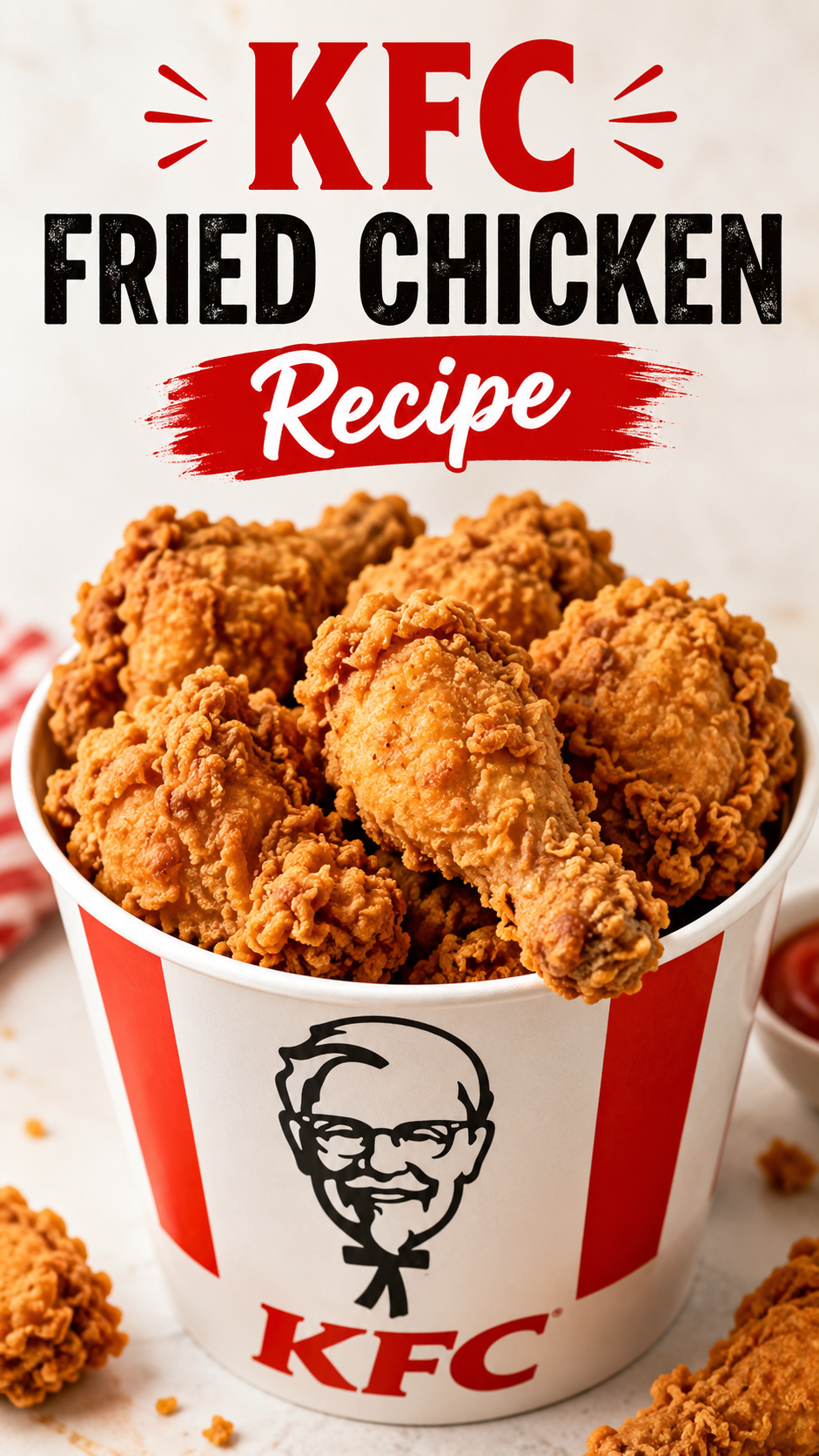
You’ve probably tried to recreate KFC at home at least once and thought, “close, but not quite.”
That gap between homemade fried chicken and KFC’s iconic crunch? It comes down to a few very specific techniques most people skip.
After a lot of testing (and honestly, a lot of eating), I cracked it. And I’m sharing everything here so you don’t have to go through the same trial and error.
Fair warning: once you make this, you might stop ordering the bucket altogether. 😏
What Makes KFC So Different From Regular Fried Chicken?
Here’s the thing most people don’t know.
KFC uses a pressure fryer in their restaurants. That’s why the chicken comes out juicy inside with that insanely crunchy shell outside. The pressure seals everything in.
You can get incredibly close at home without a pressure fryer, but the secret is a double-dredge technique and a very specific spice blend. That’s what this recipe is built around.
And yes, we’re talking 11 herbs and spices. The mix KFC has guarded for decades? A food journalist cracked it back in 2016 and it checks out. This recipe uses that blend.
What You’ll Need
For the Chicken Marinade
- 2 lbs (about 1 kg) chicken pieces, bone-in and skin-on (drumsticks, thighs, breasts, wings)
- 2 cups buttermilk
- 1 egg
- 1 tablespoon hot sauce (optional, doesn’t make it spicy, just adds depth)
- 1 teaspoon salt
For the 11-Spice Coating
- 2 cups all-purpose flour
- 2/3 tablespoon salt
- 1/2 tablespoon dried thyme
- 1/2 tablespoon dried basil
- 1/3 tablespoon dried oregano
- 1 tablespoon celery salt
- 1 tablespoon black pepper
- 1 tablespoon dried mustard
- 4 tablespoons paprika
- 2 tablespoons garlic salt
- 1 tablespoon ground ginger
- 3 tablespoons white pepper
For Frying
- Vegetable oil or shortening (enough to fill your pot at least 3 inches deep)
Tools You’ll Need
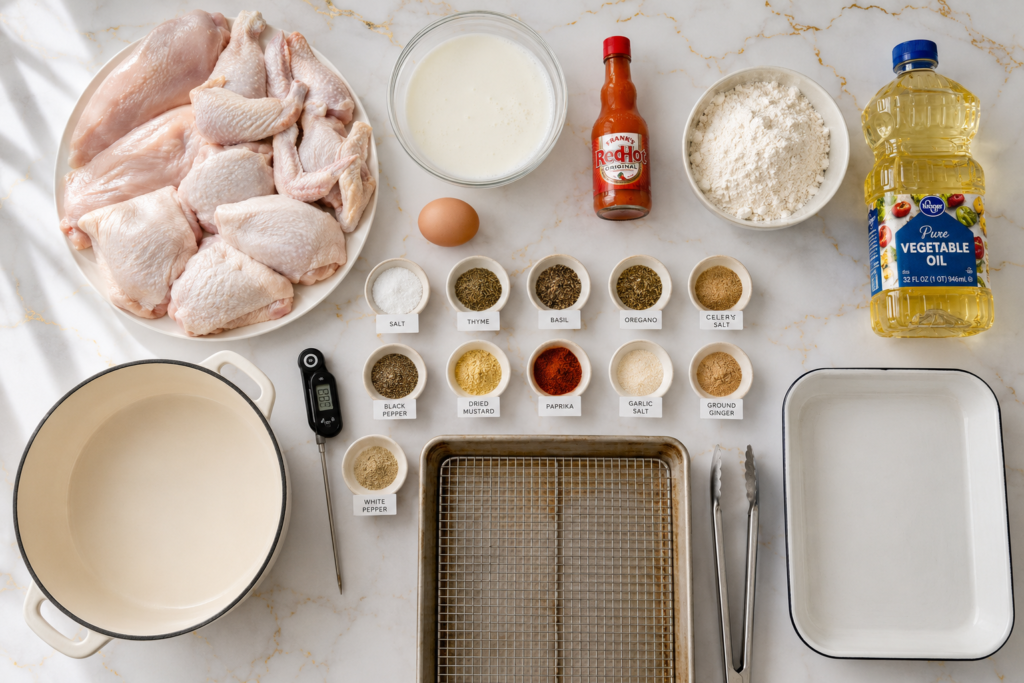
- Large mixing bowls (at least 2)
- Deep, heavy-bottomed pot or Dutch oven
- Cooking thermometer (this is non-negotiable)
- Wire rack set over a baking sheet
- Tongs
- Paper towels
- Shallow dish or tray for dredging
Pro Tips
1. The buttermilk soak is everything. Don’t skip it and don’t rush it. Minimum 4 hours, overnight is better. The acidity tenderizes the meat and gives the coating something to cling to.
2. Double-dredge for maximum crunch. Dip in the flour mixture, then back in the buttermilk, then flour again. That second coat is what gives you that thick, shaggy, KFC-style crust.
3. Oil temperature is the most important thing in this recipe. Too cool and the chicken absorbs oil and turns greasy. Too hot and the outside burns before the inside cooks. 350°F (175°C) is your target. Use a thermometer.
4. Let the dredged chicken rest. After coating, set the pieces on a wire rack for 10-15 minutes before frying. This helps the coating dry slightly and stick better. A lot of people skip this and then wonder why the crust falls off.
5. Don’t crowd the pot. Fry in small batches. Crowding drops the oil temperature fast, and you’ll end up with soggy instead of crunchy. Patience here pays off.
Substitutions and Variations
| Swap | Use Instead |
|---|---|
| Buttermilk | 1 cup milk + 1 tablespoon white vinegar, let sit 5 mins |
| All-purpose flour | Rice flour for extra crunch (slightly different texture) |
| Vegetable oil | Peanut oil or canola oil |
| Bone-in chicken | Boneless thighs work great (reduce fry time to 10-12 mins) |
| Regular paprika | Smoked paprika for a slightly deeper flavor |
Spicy variation: Add 1-2 teaspoons cayenne pepper to the flour mixture.
Air fryer variation: Spray coated chicken with oil spray generously and air fry at 380°F for 20-25 minutes, flipping halfway. Not identical to deep-fried, but still very good.
Make Ahead Tips
- The spice mix can be made in bulk and stored in an airtight container for up to 3 months. Make double and use it whenever.
- Marinate the chicken the night before and keep it in the fridge. Morning-of prep becomes super fast.
- Don’t coat the chicken ahead of time. The coating gets soggy if it sits too long before frying. Always dredge right before frying.
Nutrition Breakdown (Per Serving, approx. 2 pieces)
| Nutrient | Amount |
|---|---|
| Calories | ~480 kcal |
| Protein | 34g |
| Carbohydrates | 28g |
| Fat | 24g |
| Sodium | 890mg |
Values vary depending on chicken cut and oil absorption.
Diet-Friendly Swaps
- Gluten-free: Swap flour for a 1:1 gluten-free flour blend + 2 tablespoons cornstarch
- Lower sodium: Reduce celery salt and garlic salt by half
- Dairy-free: Use coconut milk with a squeeze of lemon instead of buttermilk
Meal Pairing Ideas
This chicken goes with almost anything. My personal favorites:
- Classic coleslaw (the creamy kind)
- Mashed potatoes and gravy
- Corn on the cob
- Biscuits or dinner rolls
- Macaroni and cheese
How to Make KFC-Style Fried Chicken
Step 1: Marinate the Chicken
Whisk together the buttermilk, egg, hot sauce, and salt in a large bowl.
Add the chicken pieces, making sure everything is coated.
Cover and refrigerate for at least 4 hours, up to 24 hours. Longer = better flavor and tenderness.
Step 2: Make the Spice Coating
Combine all 11 spices with the flour in a large bowl or shallow dish.
Whisk it well so the spices are distributed evenly throughout the flour. Give it a taste (yes, just the dry mix) and you’ll already smell that KFC aroma. 🍗
Step 3: Dredge the Chicken
Remove a piece of chicken from the buttermilk.
Coat it in the flour mixture, pressing firmly so it adheres.
Dip it back into the buttermilk.
Coat it in the flour mixture a second time, pressing again.
Set it on a wire rack. Repeat with all pieces.
Let them rest on the rack for 10-15 minutes while the oil heats.
Step 4: Heat the Oil
Pour oil into your heavy pot, filling it at least 3 inches deep.
Heat over medium-high heat to 350°F (175°C). Use your thermometer and don’t guess.
Step 5: Fry the Chicken
Carefully lower 2-3 pieces into the hot oil using tongs. Don’t splash.
Fry times:
- Drumsticks and wings: 12-14 minutes
- Thighs: 14-16 minutes
- Breast pieces: 15-18 minutes
Turn pieces halfway through cooking.
The coating should be a deep, golden brown and an instant-read thermometer should read 165°F (74°C) at the thickest part.
Step 6: Drain and Rest
Transfer cooked chicken to a wire rack over paper towels.
Don’t put it on just paper towels or the bottom crust will steam and go soft.
Rest for 5 minutes before serving. The crust firms up beautifully as it rests.
Leftovers and Storage
Fridge: Store leftover chicken in an airtight container for up to 3-4 days.
Reheat properly: Skip the microwave. It makes the crust rubbery. Instead:
- Oven at 375°F for 15-20 minutes on a wire rack
- Air fryer at 375°F for 8-10 minutes
Freezer: Yes, you can freeze it! Cool completely, then freeze on a tray first (so pieces don’t stick together), then transfer to a freezer bag. Keeps for up to 2 months. Reheat from frozen at 375°F for 25-30 minutes.
FAQ
Can I use boneless, skinless chicken? You can, but the skin is what holds the crust together and adds so much flavor. Bone-in, skin-on is highly recommended for the authentic result. If you use boneless, thighs work better than breasts because they stay juicier.
What oil does KFC actually use? KFC switched to zero-trans-fat soybean oil back in 2007. For home cooking, vegetable oil, canola, or peanut oil all work great.
My coating keeps falling off. What’s happening? Two likely culprits: you didn’t press the coating firmly enough during dredging, or you didn’t let the dredged pieces rest before frying. Both are easy fixes.
Can I bake instead of fry? You can, but it won’t be the same. Baking at 425°F for 40-45 minutes (sprayed generously with oil) will give you crispy baked chicken, not KFC-style fried chicken. Still delicious, just different.
Is this the actual KFC recipe? The spice blend in this recipe is based on the blend published by a Chicago Tribune journalist in 2016 after finding handwritten notes in Colonel Sanders’ nephew’s scrapbook. KFC themselves never confirmed or denied it, but the flavor is remarkably close.
Why does mine taste good but not exactly like KFC? Restaurants use pressure fryers and their oil is continuously seasoned from batch after batch of frying. That’s genuinely hard to replicate. But this gets you very, very close.
Wrapping Up
This is one of those recipes that feels like a project the first time and becomes second nature after that.
The marinade, the double-dredge, the oil temperature, the rest time before and after frying. None of it is complicated. It just requires a little attention.
And the payoff? A batch of fried chicken that genuinely holds its own against the original.
Make it this weekend and let me know how it goes in the comments. I’d love to hear if you made any tweaks or if there’s a step that surprised you. Drop your questions below too, I’m happy to help troubleshoot.