Okay, I need to tell you something.
I used to think chow mein was one of those dishes you just had to order out.
Then I made it at home for the first time and almost couldn’t believe how easy it actually was. 🍜
No weird ingredients. No special equipment. Just a hot pan, a few pantry staples, and about 20 minutes of your evening.
This one’s become a regular in our house, especially on nights when we want something that feels like a treat but doesn’t take forever.
Let’s get into it.
What You’ll Need
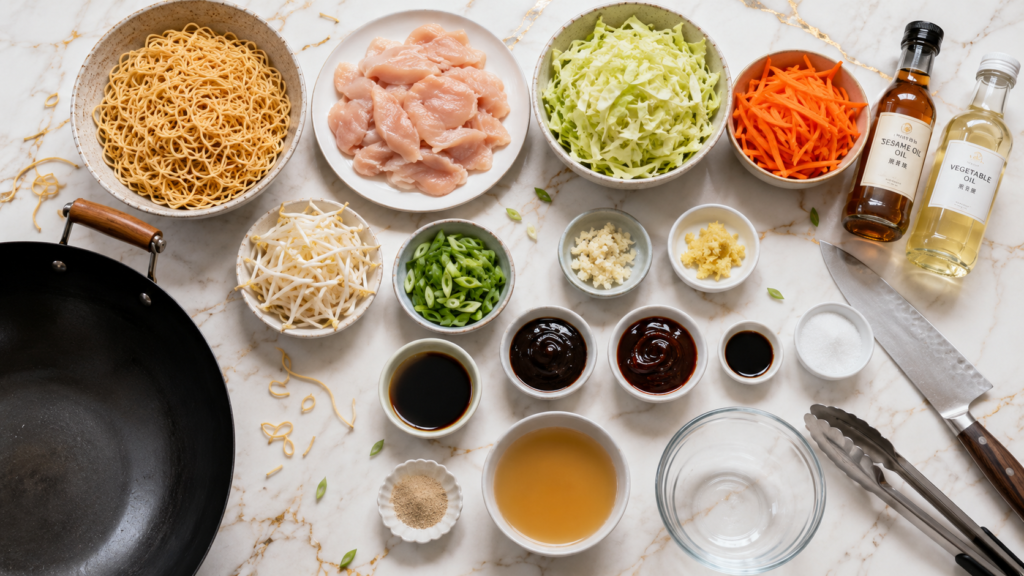
Here’s everything you’ll want to have ready before you start cooking.
For the noodles and chicken:
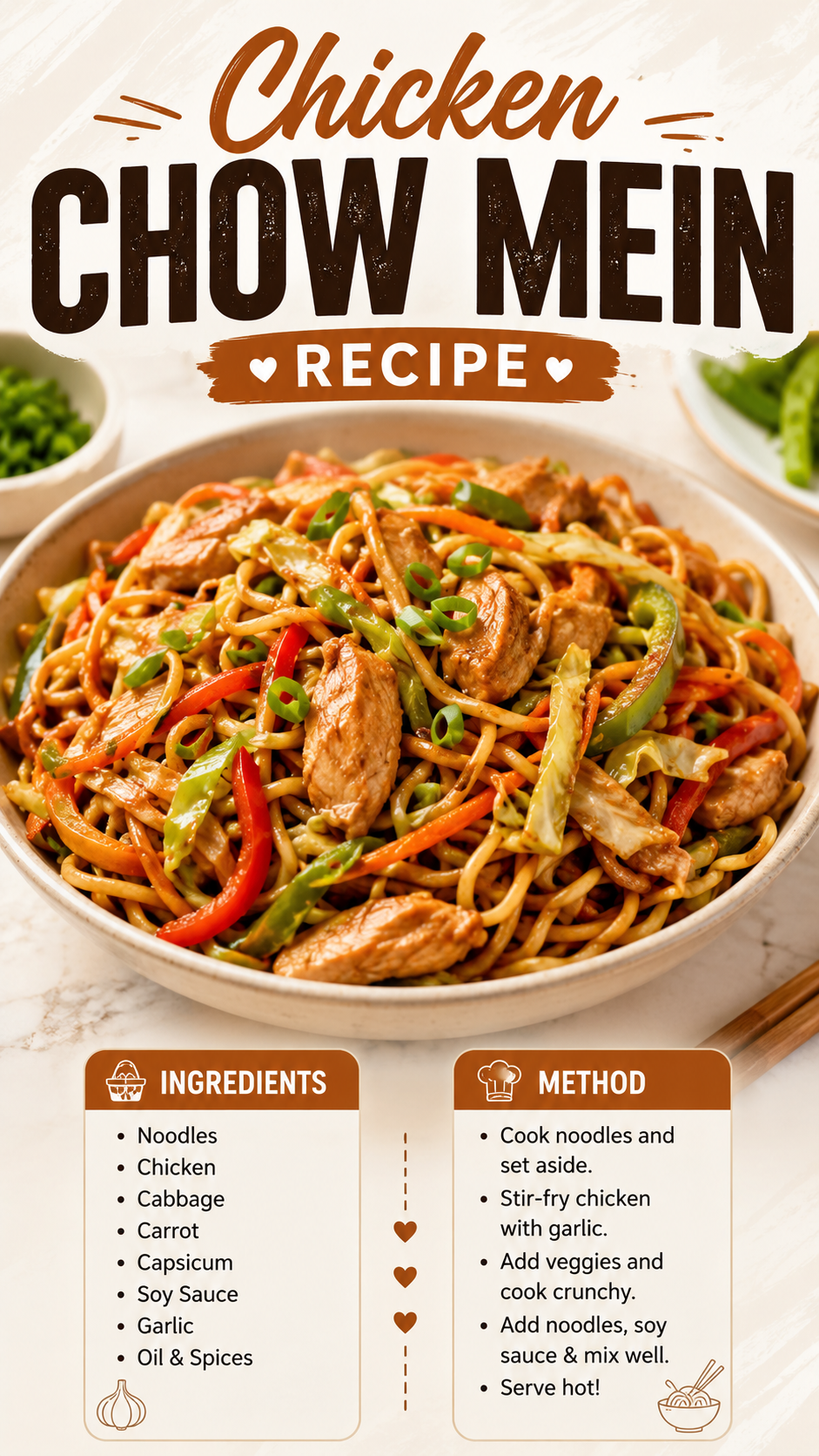
- 8 oz chow mein noodles (or thin spaghetti in a pinch)
- 1 lb boneless, skinless chicken breast or thighs, thinly sliced
- 2 tbsp vegetable oil, divided
- 1 tsp sesame oil
- 2 cups cabbage, shredded
- 1 cup carrots, julienned
- 1 cup bean sprouts
- 3 green onions, sliced
- 3 garlic cloves, minced
- 1 tsp fresh ginger, grated
For the sauce:
- 3 tbsp soy sauce
- 1 tbsp oyster sauce
- 1 tbsp hoisin sauce
- 1 tsp dark soy sauce (optional, but it makes a difference)
- 1 tsp sugar
- 1/2 tsp white pepper
- 1/4 cup chicken broth
Tools You’ll Need
- A large wok or wide skillet
- Tongs (trust me, this makes tossing the noodles so much easier)
- A small mixing bowl for the sauce
- A sharp knife for slicing the chicken thin
Pro Tips
These are the things I wish someone had told me the first time I made this.
1. Don’t skip pre-cooking the noodles separately. Cook them just until tender, then rinse with cold water. This stops them from turning into a gummy mess once they hit the wok.
2. Slice your chicken thin. Like, really thin. Thin pieces cook fast and stay juicy. Thick chunks dry out before the outside even browns.
3. Mix your sauce before you start cooking. This dish moves quick once it’s going. You don’t want to be measuring soy sauce while your noodles are sticking to the pan. 😅
4. Use the highest heat your stove can handle. Chow mein lives and dies by that slightly smoky, charred flavor you only get from high heat. Low and slow is for other dishes.
5. Don’t overcrowd the pan. If your wok looks like a vegetable jungle, your noodles will steam instead of fry. Work in batches if you need to.
How to Make Chicken Chow Mein
Step 1: Cook the noodles
Boil the chow mein noodles according to the package instructions, usually 2-3 minutes.
Drain and rinse with cold water right away. Set aside.
Step 2: Make the sauce
In a small bowl, whisk together the soy sauce, oyster sauce, hoisin sauce, dark soy sauce, sugar, white pepper, and chicken broth.
Set this aside too. You’ll need it fast later.
Step 3: Cook the chicken
Heat 1 tablespoon of vegetable oil in your wok over high heat.
Add the sliced chicken and cook for 3-4 minutes, until it’s no longer pink and has a little color on the edges.
Remove the chicken and set it on a plate.
Step 4: Cook the vegetables
Add the remaining tablespoon of oil to the same wok.
Toss in the garlic and ginger first, just for about 15 seconds. You’ll smell it the second it’s ready.
Add the cabbage and carrots and stir-fry for 2 minutes.
Add the bean sprouts and cook for another minute.
Step 5: Bring it all together
Add the noodles, cooked chicken, and sauce back into the wok.
Use your tongs to toss everything together until the noodles are coated and the sauce has soaked in. About 2 minutes.
Step 6: Finish and serve
Drizzle the sesame oil over the top and toss one more time.
Sprinkle with the sliced green onions and serve immediately while it’s hot.
Substitutions and Variations
This recipe is pretty forgiving, so here’s how you can switch it up.
| Ingredient | Substitution |
|---|---|
| Chicken | Shrimp, beef, tofu, or just extra vegetables |
| Chow mein noodles | Thin spaghetti, lo mein noodles, or rice noodles |
| Oyster sauce | Vegetarian oyster sauce or extra soy sauce |
| Bean sprouts | Snap peas or thinly sliced bell peppers |
| Cabbage | Bok choy or napa cabbage |
If you want it spicier, a spoonful of chili crisp at the end takes it to a whole different level. 🌶️
Make Ahead Tips
You can prep a lot of this in advance, which makes weeknights so much easier.
- Slice your chicken and vegetables up to a day ahead and store them in the fridge.
- Mix the sauce up to 3 days ahead. It keeps just fine in a sealed container.
- Cook the noodles ahead of time too, just toss them lightly in oil so they don’t stick together while they wait.
When everything’s prepped, the actual cooking takes less than 10 minutes.
Nutritional Breakdown (Per Serving)
This recipe makes about 4 servings.
| Nutrient | Amount |
|---|---|
| Calories | ~420 |
| Protein | 28g |
| Carbohydrates | 45g |
| Fat | 12g |
| Sodium | 980mg |
Want to lighten it up? Swap in low-sodium soy sauce and add an extra cup of vegetables to stretch the dish further.
Leftovers and Storage
Chow mein actually holds up surprisingly well, which is one of my favorite things about it.
- Fridge: Store in an airtight container for up to 4 days.
- Reheating: A quick toss in a hot skillet works better than the microwave. It brings back some of that fried texture.
- Freezer: I don’t recommend freezing this one. The noodles and vegetables don’t bounce back the same way once thawed.
FAQ
Can I make this vegetarian? Yes. Swap the chicken for tofu or extra vegetables, and use a vegetarian oyster sauce.
Why is my chow mein soggy? This usually means the noodles weren’t drained well enough, or the pan wasn’t hot enough. High heat is non-negotiable here.
What’s the difference between chow mein and lo mein? Chow mein noodles are stir-fried until slightly crispy in spots. Lo mein noodles are softer and mixed with sauce rather than fried.
Can I use a regular skillet instead of a wok? Definitely. A wide, flat-bottomed skillet works just fine. Just make sure it can handle high heat.
Do I need dark soy sauce? It’s optional, but it adds a deeper color and a slightly richer flavor. If you skip it, your dish will just look a little lighter.
Wrapping Up
This chicken chow mein has saved more weeknights in our house than I can count.
It’s quick, it’s loaded with flavor, and honestly, it tastes better than most of the takeout containers I’ve opened over the years.
Give it a try this week and let me know how it turns out in the comments.
And if you run into any questions while you’re cooking, drop them below. I read every single one. 🍜