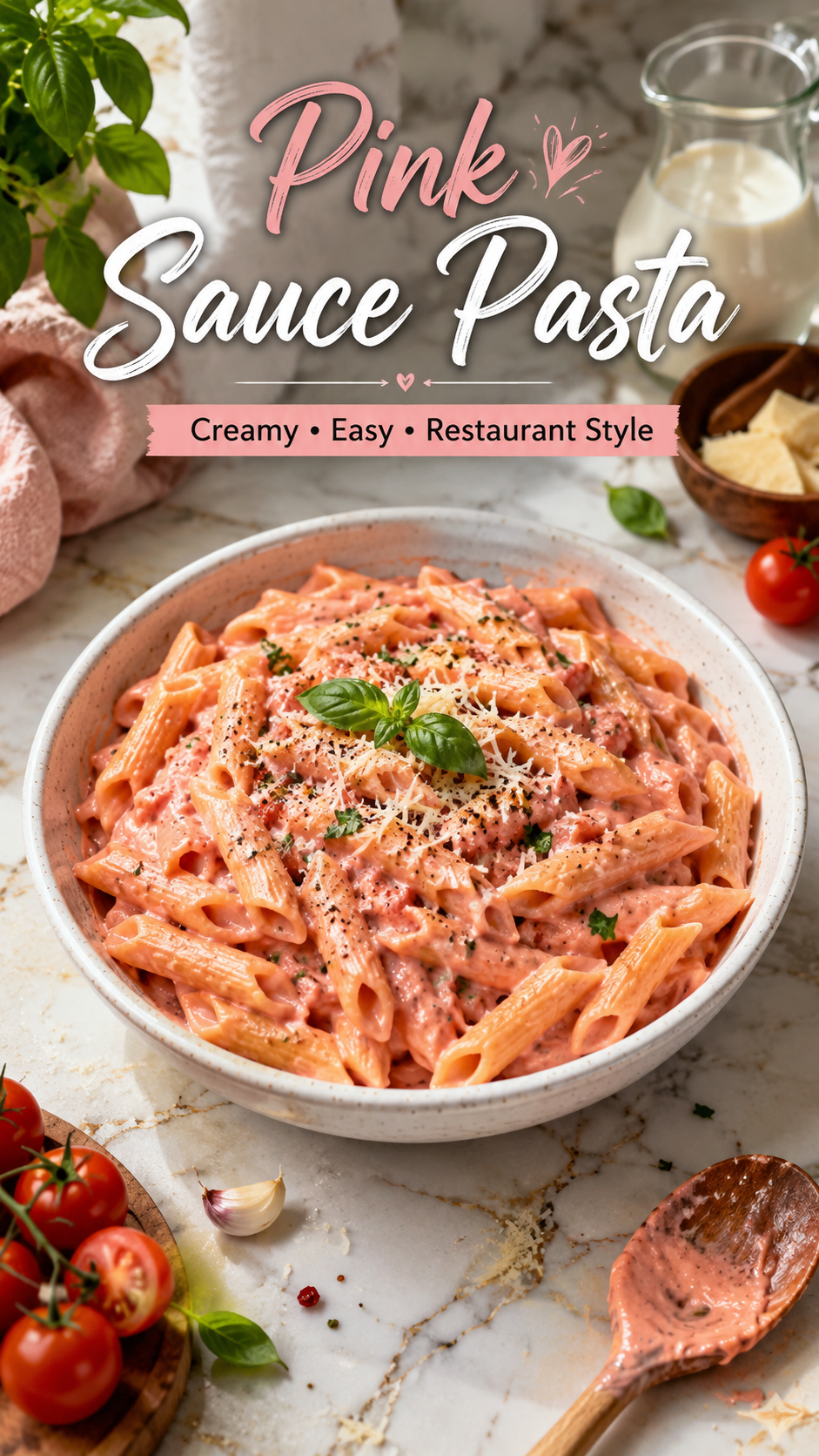
What do you get when you melt garlic and butter into tomato paste and finish it off with cream and parmesan?
You get a sauce so good it doesn’t even need a real name. People just started calling it pink sauce, and now it’s basically a whole personality on the internet.
I started making this on a random Tuesday when I had half a jar of tomato paste, a sad block of parmesan, and zero motivation to do anything complicated. Now it’s one of the recipes I trust the most when I want dinner to look like more effort than it actually was.
Here’s the part that surprised me. Pink sauce isn’t vodka sauce. It’s not marinara and alfredo mixed together either. It’s its own thing, with its own texture, and once you make it once, you’ll get why nobody can stop posting it.
There’s one ingredient timing trick further down that changes the whole texture of this dish. So don’t skip the Pro Tips section.
I also didn’t realize how easy it was to mess this up until I made it wrong a couple of times.
Dump cold cream into a hot pan too fast, and it splits. Toss the cheese in at the wrong moment, and you get clumps instead of silk.
None of that is happening here. I’m walking you through every step that matters, plus a few details nobody mentions until it’s already too late.
What You’ll Need
This makes enough for 4 servings.
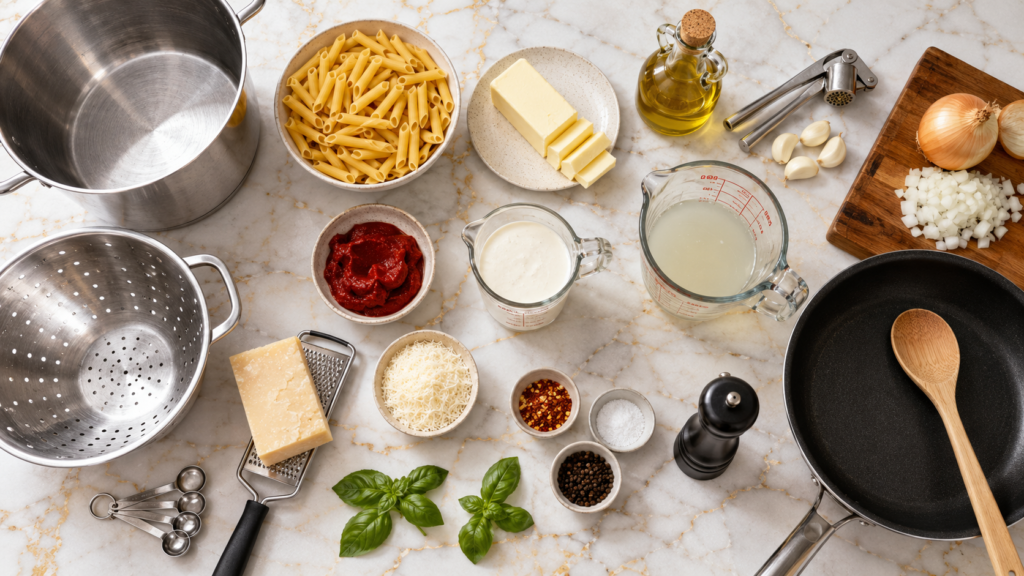
- 12 oz pasta (penne, rigatoni, or fusilli all work great)
- 3 tablespoons unsalted butter
- 1 tablespoon olive oil
- 4 cloves garlic, minced
- 1 small yellow onion, finely diced
- 3 tablespoons tomato paste
- 1 cup heavy cream
- 1 cup pasta water, reserved
- ¾ cup grated parmesan cheese
- ½ teaspoon red pepper flakes (optional)
- Salt and black pepper, to taste
- Fresh basil leaves, torn, for garnish
Tools You’ll Need
- Large pot, for boiling the pasta
- Colander
- Large skillet or saucepan (12-inch is ideal)
- Wooden spoon or silicone spatula
- Garlic press or a sharp knife
- Box grater
- Measuring cups and spoons
- Ladle, for scooping out pasta water
Pro Tips
A few things I learned the slightly hard way, so you don’t have to.
- Save more pasta water than feels necessary. About a full cup. The starch in it is what makes this sauce silky instead of greasy.
- Add the parmesan off the heat. Toss cheese into a screaming hot pan and you’ll end up with clumps instead of a smooth sauce. Pull the skillet off the burner first, then stir it in slowly.
- Let the tomato paste cook for a full 2 minutes before adding anything else. It darkens slightly and that’s where most of the deep flavor comes from. Rushing this step is the most common mistake.
- Undercook your pasta by about a minute. It finishes cooking right in the sauce, which means it soaks up flavor instead of just sitting there.
- Taste before you add salt. Parmesan and pasta water are both already salty, so salting too early can sneak up on you fast.
Substitutions and Variations
- No heavy cream? Half-and-half works, just expect a thinner sauce. A little extra parmesan helps thicken it back up.
- Dairy free? Swap the butter for olive oil and use a cashew cream or canned coconut cream instead of heavy cream.
- Want it spicier? Double the red pepper flakes, or sauté a diced jalapeño in with the onion.
- Need protein? Stir in cooked shrimp, grilled chicken, or crispy pancetta right at the end.
- Vodka sauce version: Add 2 tablespoons of vodka right after the tomato paste finishes cooking. Let it simmer for a minute before pouring in the cream.
- Extra veggies: Baby spinach or chopped sun-dried tomatoes stirred in during the last minute add a nice extra layer.
Make Ahead Tips
This sauce holds up well if you want to get ahead of dinner.
- Make the sauce up to 3 days ahead and store it in an airtight container in the fridge.
- Reheat it gently on low heat, adding a splash of milk or water to loosen it back up.
- Don’t toss the pasta into the sauce until you’re ready to eat. Pasta drinks up sauce fast, and it turns gummy if it sits too long beforehand.
A Few Extra Details
Roughly How It Breaks Down Nutritionally
These numbers are estimates per serving (recipe serves 4), and they’ll shift depending on the exact brands and substitutions you use.
| Nutrient | Approx. Amount |
|---|---|
| Calories | 520 |
| Protein | 14g |
| Carbs | 58g |
| Fat | 24g |
Diet Swaps
- Lower carb: swap regular pasta for chickpea or lentil pasta, or a low-carb noodle alternative.
- Gluten free: any gluten-free pasta brand works fine here, the sauce doesn’t care.
- Lower fat: use half-and-half instead of heavy cream and cut the butter down to 2 tablespoons.
What to Pair It With
- A simple arugula salad with lemon vinaigrette cuts through the richness nicely.
- Garlic bread or toasted ciabatta for soaking up extra sauce (and there will be extra sauce).
- A glass of light red wine like Pinot Noir, or sparkling water with lime if you’re skipping alcohol.
Saving Time
- Start boiling your pasta water before you even chop the garlic. It takes a while to come up to a boil, so get a head start.
- Dice the onion, mince the garlic, and measure out the cream and parmesan while the water heats up. Then you’re not scrambling once the skillet is hot.
Why This Sauce Actually Comes Together
A quick reason behind the method, because it actually matters here.
Pasta water isn’t just hot water. It’s loaded with starch from the cooking pasta, and that starch is what binds butter, cream, and cheese into one smooth sauce instead of a greasy mess sitting on top of your noodles.
That’s also why pulling the pan off the heat before adding parmesan matters so much. Cheese seizes up and clumps when it hits direct high heat too fast. Off the heat, it melts in slowly and evenly.
It’s a small detail, but it’s the difference between restaurant-smooth and grainy.
How to Make Pink Sauce Pasta
- Bring a large pot of salted water to a boil. Cook the pasta according to the package directions, but pull it about a minute early. Reserve 1 cup of pasta water, then drain.
- While the pasta cooks, melt the butter and olive oil together in a large skillet over medium heat.
- Add the diced onion and cook for 3 to 4 minutes, until soft and just barely golden.
- Stir in the garlic and cook for about 30 seconds, just until it smells incredible.
- Add the tomato paste and cook for a full 2 minutes, stirring often, until it darkens slightly.
- Lower the heat and pour in the heavy cream, stirring until everything’s combined.
- Add a splash of the reserved pasta water, about ¼ cup to start, to loosen the sauce.
- Let it simmer for 3 to 4 minutes, until it thickens slightly.
- Pull the skillet off the heat completely, then stir in the parmesan until it’s fully melted and smooth.
- Add the drained pasta straight into the skillet and toss to coat, adding more pasta water as needed to reach the texture you want.
- Season with salt, pepper, and red pepper flakes if you’re using it.
- Top with torn fresh basil and an extra sprinkle of parmesan right before serving.
Leftovers and Storage
- Store leftovers in an airtight container in the fridge for up to 4 days.
- Reheat on the stove over low heat with a splash of milk or pasta water to bring the sauce back to life. The microwave works too, just go in 30-second bursts and stir in between.
- This one doesn’t freeze well. The cream sauce tends to separate once it thaws, and the texture never quite recovers.
FAQ
Can I use a different pasta shape? Any short pasta works well. Penne, rigatoni, and fusilli all hold onto the sauce because of their ridges and curves.
Why is my sauce more orange than pink? That usually means too much tomato paste relative to cream. Stir in a little extra cream and parmesan to bring the color (and balance) back.
Is this just vodka sauce with a different name? Not quite. Vodka sauce uses alcohol to help emulsify the sauce. Pink sauce skips that step entirely and gets its smooth texture from butter, cream, and starchy pasta water instead.
Can I make this without cream at all? Whole milk works in a pinch, though the sauce will be noticeably thinner and lighter.
My sauce turned grainy. What went wrong? That almost always comes from adding the parmesan over high heat. Pull the pan off the burner first, then stir the cheese in slowly and off heat.
Wrapping Up
This is one of those recipes that looks like it took way more effort than it did, which honestly might be my favorite kind of recipe to have on hand.
It comes together in about 20 minutes, uses ingredients you probably already have, and somehow still feels like a treat.
It’s also the kind of meal that makes people ask what restaurant you ordered from, and you get to tell them you made it yourself in one pan.
Give it a try this week, even on a random Tuesday when cooking feels like the last thing you want to do.
Then come back and leave a comment letting me know how it turned out, what you swapped, or what questions popped up while you were making it. I read every single one.


